
- Services
- Discovery & Intelligence Services
- Publication Support Services
- Sample Work
Publication Support Service
- Editing & Translation
-
Editing and Translation Services
- Sample Work
Editing and Translation Service
-
- Research Services
- Sample Work
Research Services
- Physician Writing
- Sample Work
Physician Writing Service
- Statistical Analyses
- Sample Work
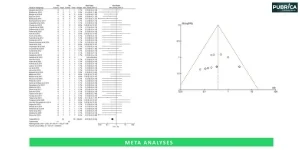
Statistical Analyses
- Data Collection
- AI and ML Services
- Sample Work
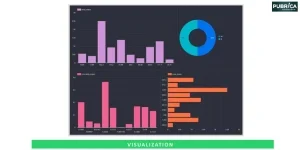
AI and ML Services
- Medical Writing
- Sample Work
Medical Writing
- Research Impact
- Sample Work
Research Impact
- Medical & Scientific Communication
- Sample Work
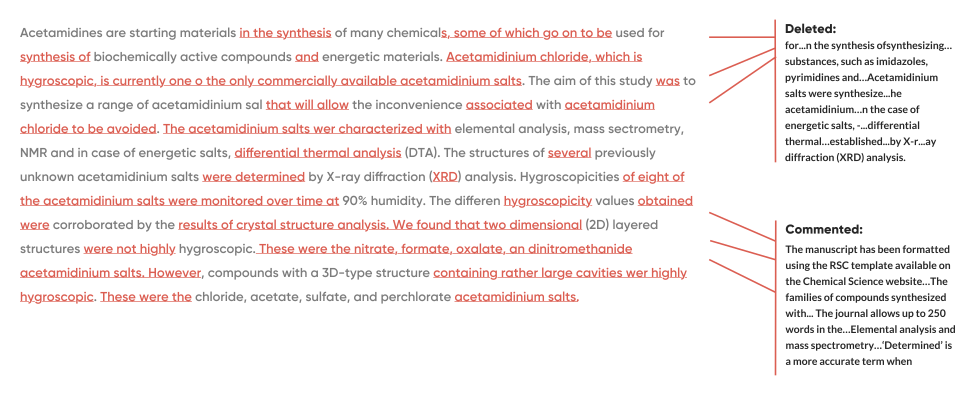
Medical & Scientific Communication
- Medico Legal Services
- Educational Content
- Academic Editorial Services
- Sample Work
Academic Editorial Services
- Educational Editorial Service
-
Education Editorial Services
- Sample Work
Education Editorial Services
-
- Industries
- Subjects
- About Us
- Academy
- Insights
- Contact Us
Targeted literature searches are a fundamental part of writing clinical manuscripts that will meet the standards of high-quality journals and contribute meaningfully to evidence-based practice. When physicians write clinical manuscripts, utilizing a targeted literature search can identify high-quality, relevant, and current evidence. While a general literature review is useful, a targeted literature search is specific to the clinical question and should be completed through frameworks established, such as PICO (Population, Intervention, Comparator, Outcome) and PRISMA [1].
A Detailed Guide to Journal Selection in Academic Publishing
- Home
- Academy
- Research Impact
- A Detailed Guide to Journal Selection in Academic Publishing
High-Impact Journals
Interesting topics
A Detailed Guide to Journal Selection in Academic Publishing
Table of Content
1. Criteria for Evaluating a Journal
2. Scientific Rigor
3. Editorial Quality
4. Peer Review Process
5. Types of Peer Review
6. Ethics
7. Editorial Board Members
8. Journal Reputation and Business Model
9. Author Rights and Copyright
10. Indexing Status
11. Impact Factor Scores
12. Journal Operations
13. Conclusion
Choosing the appropriate journal to submit a research paper to is an important decision that can impact the visibility, impact, and success of the article to reach its intended audience. It involves assessing a composite of issues, ranging from scientific rigor to editorial quality, must meet the research goals and objectives. This paper reviews key criteria for assessing peer-reviewed academic journals so that researchers are informed decisions when submitting their articles.[1]
1. Criteria for Evaluating a Journal
Selecting a journal can be confusing and researchers still need to consider many factors that will directly influence the acceptance, readership and therefore the impact of their research. Below are the most important criteria. [2]
2. Scientific Rigor
Scientific rigor implies that a journal publishes peer-reviewed research that represents high-quality research. Rigor includes not only the integrity of research methods, but also the strengths of results, and the openness of all data. Journals with a high commitment to scientific rigor may carry out a more rigorous review process which ensures that the papers they publish make a meaningful contribution to their field. [3]
3. Editorial Quality
Editorial quality reflects the consistent and professional expertise of a journal’s editorial team. High-quality journals use editors that have subject area knowledge and experience. Editorial quality shows that a journal is committed to upholding high academic standards, reducing error, and ensuring clarity of work published.[4]
4. Peer Review Process
Of all the factors contributing to the quality of a journal, an effective and transparent peer review system is one of the most significant. Researchers need to evaluate whether the journal utilizes double-blind, single-blind, or open-peer review and whether the process is fair and efficient. A strong peer review system can ultimately enhance the credibility of the journal, as well as the quality of the articles that it publishes. [5]

5. Types of peer review
following types of peer review.
- Open peer review: The reviewer knows who the author is, and vice versa, and the journals will publish the comments made by the reviewers and previous versions of the manuscript with the accepted paper. [6]
- Single anonymised peer review: The reviewer does not disclose their name to the author. This is the traditional way of reviewing, and is by far the most common form of single anonymised peer review
- Double anonymised peer review: The author does not know the reviewer, and vice versa. [7]
- Triple anonymised peer review: The handling editor, the reviewer, and the author do not know each other.
6. Ethics
Ethical issues are critical to credibility and trustworthiness of academic journals. Journals need to be ethical based on the ethical publishing guidelines by either the Committee on Publication Ethics (COPE) or the International Committee of Medical Journal Editors (ICMJE). The normal part researcher must consider is if the journal practices ethics such as checking for plagiarism, conflict of interests’ disclosures, and all other appropriate means of representing the data.
7. Editorial Board Members
Qualifying and experienced editorial board members have great significance for the quality of any journal. An established journal with strong editorial board members will have a diverse and reputable board which should include leaders in the field of research who are still good researchers themselves. This also indicates that the journal has quality submissions and an acceptable level of global recognition. [8]
8. Journal Reputation/Business Model
The reputation of a journal is one of the most critical components in article manuscript selection as a publication venue. Reputation can be measured by examining its
- Impact factor
- h-index
- Scopus
- CiteScore
Its placement in the academic space. Furthermore, the business model in which the journal operates (open access vs. subscription) may affect how far and wide the journal is able to disseminate information. Open-access journals tend to be broader in reach, as the audience has free access, whereas subscription access may be limited in reach.
9. Author Rights and Copyright
Authors need to have a good understanding of the copyright policies of the journal before sending in their manuscript. Journals vary in terms of whether authors retain copyright or cede copyright to the publisher. Some journals permit open-access publishing, which allows authors to retain their rights while making their work publicly available. Researchers should examine the journal’s policies if they plan on publishing their work. Be sure that copyright, licensing, and authorship right policies align with your needs.
10. Indexing Status
Journals that are indexed in trusted databases such as Web of Science, Scopus, or PubMed, are likely to get more visibility, impact and recognition. Many indexed journals have greater credibility or prestige and tend to have more citations; researcher’s goal is to maximize research impact. Researchers should always check if the journal is indexed in important databases of the relevant subject area of the study.
11. Impact Factor Scores
Impact factor is perhaps the most used metric to evaluate the value of a journal in any field. A higher impact factor will generally indicate that the journal publishes articles with substantial influence, and the articles are highly cited. Nevertheless, it is also necessary to consider impact factor in context, in relation to other metrics, such as article level metrics or CiteScore, since simply looking at one metric may not capture the value of a journal.[9]
12. Journal Operations
Journal operations refer to the efficiency and integrity of the submission, review, and publication process. Researchers should evaluate the journal’s timelines for the submission process and whether there is an organized submission portal, along with responsiveness to queries regarding the submission. Journals with good operational processes contribute to a better author experience, and efficient dissemination of research results. [10]
Connect with us to explore how we can support you in maintaining academic integrity and enhancing the visibility of your research across the world!
Conclusion
When selecting the best journal to submit your academic work to, there are many aspects that need to be determined and considered. When it comes to scientific rigour, the peer review and editorial processes, respectability of the journal, ownership, and rights as the author, researchers need to make both qualitative and quantitative considerations to stretch the true impact of their academic work. If researchers can consider the points laid out in this article, then they can make better decisions leading to more success in publishing their work and getting it out to the correct audience.
A Detailed Guide to Journal Selection in Academic Publishing? Our Pubrica consultants are here to guide you. [Get Expert Publishing Support] or [Schedule a Free Consultation]
References
- BeckerGuides: Selecting a Journal for Publication: Find a Journal. (2017, March 30). Wustl.edu. https://beckerguides.wustl.edu/c.php?g=648201&p=4545487
- The research process: A step-by-step guide. (2018, October 19). Unity.edu. https://library.unity.edu/research-process/evaluation-criteria
- Hofseth L. J. (2018). Getting rigorous with scientific rigor. Carcinogenesis, 39(1), 21–25. https://doi.org/10.1093/carcin/bgx085
- Singh, A., & Singh, S. (2006). What is a good editorial?. Mens sana monographs, 4(1), 14–17. https://doi.org/10.4103/0973-1229.27600
- Willis L. D. (2024). The Peer Review Process. Respiratory care, 69(4), 492–499. https://doi.org/10.4187/respcare.11838
- Henriquez T. (2023). Open peer review, pros and cons from the perspective of an early career researcher. mBio, 14(5), e0194823. https://doi.org/10.1128/mbio.01948-23
- Rules for the double-anonymous review process – IEEE Robotics and Automation Society. (n.d.). Ieee-ras.org. Retrieved September 8, 2025, from https://www.ieee-ras.org/publications/rules-for-the-double-anonymous-review-process
- Member editorial boards. (n.d.). Dei.Ac.In. Retrieved September 8, 2025, from https://www.dei.ac.in/dei/socialscience/index.php/teaching-faculty/faculty-acheivements/75-member-editorial-boards
- Scientists, A. (n.d.). Superfund research program. National Institute of Environmental Health Sciences. Retrieved September 8, 2025, from https://tools.niehs.nih.gov/srp/publications/highimpactjournals.cfm
- Vokurka, R. J. (1996). The relative importance of journals used in operations management research A citation analysis. Journal of Operations Management, 14(4), 345–355. https://doi.org/10.1016/s0272-6963(96)00092-7