
- Services
- Discovery & Intelligence Services
- Publication Support Services
- Sample Work
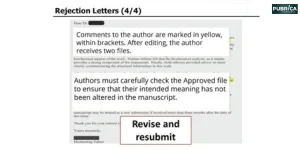
Publication Support Service
- Editing & Translation
-
Editing and Translation Services
- Sample Work

Editing and Translation Service
-
- Research Services
- Sample Work
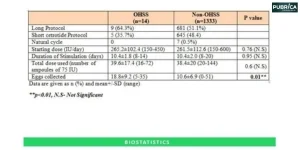
Research Services
- Physician Writing
- Sample Work
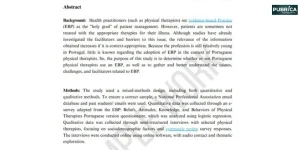
Physician Writing Service
- Statistical Analyses
- Sample Work
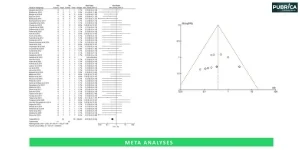
Statistical Analyses
- Data Collection
- AI and ML Services
- Sample Work
AI and ML Services
- Medical Writing
- Sample Work
Medical Writing
- Research Impact
- Sample Work
Research Impact
- Medical & Scientific Communication
- Sample Work
Medical & Scientific Communication
- Medico Legal Services
- Educational Content
- Academic Editorial Services
- Sample Work
Academic Editorial Services
- Educational Editorial Service
-
Education Editorial Services
- Sample Work
Education Editorial Services
-
- Industries
- Subjects
- About Us
- Academy
- Insights
- Contact Us
Graphical Abstracts for Case Reports: Turning a Single Case into a Shareable Visual
High-Impact Journals
- What Is a Graphical Abstract for a Case Report?
- Why Graphical Abstracts Are Becoming Important in Medical Publishing
- What Information Should a Case Report Graphical Abstract Include?
- Designing the Visual Narrative: From Patient Presentation to Key Outcome
- Current Trends in Case Report Graphical Abstracts
- Patient Privacy, Ethics, and Responsible Visual Communication
- Common Design Mistakes to Avoid
- Best Practices for Creating a Publication-Ready Graphical Abstract
- Pre-Submission Checklist for a Case Report Graphical Abstract
- Conclusion
Interesting topics
Graphical Abstracts for Case Reports: Turning a Single Case into a Shareable Visual
Case reports offer useful information in terms of describing unique presentations, challenges of diagnosis, response to treatment, adverse events, and new observations in a clinical setting. Nonetheless, the traditional form of the case report is highly textual in nature, thus making the absorption of crucial information difficult. A graphical abstract of a case report allows one to get a quick visual representation that summarises the entire story behind the clinical observation.
Currently, graphical abstracts for case reports are becoming a popular way to facilitate effective communication of scientific information. The recent literature identifies the graphical abstract as a new tool for the presentation of complicated clinical information. In the context of the case report, the goal is not to create the entire manuscript graphically, but to convey a clinical problem, the main steps taken for diagnosis or treatment, and its key outcome. [1]
1. What Is a Graphical Abstract for a Case Report?
A graphical abstract is a visual summary of a research paper. In a case report, it can serve as a visual abstract that highlights the key aspects of a single case in a clear and organized manner.
A possible structure includes Patient Presentation → Clinical Evaluation → Diagnostics → Treatment → Result → The Main Message from the Clinical Story
Such an organisation will help the reader comprehend the key points of the story prior to reading the whole case report. [2]
A graphical abstract and a regular figure have distinct roles. While a figure will be used to present one specific piece of data, an illustration or analysis in the paper, a graphical abstract will summarize the whole case study. It should incorporate the patient presentation, diagnosis, management, outcomes, and the message of the paper.
2. Why Graphical Abstracts Are Becoming Important in Medical Publishing
As a growing body of medical literature is being published, there is an increasing need for clear and effective means of scientific communication.
Graphical abstracts will be able to convey the main point of a case report without forcing the reader to understand all the clinical details right away. A well-designed visual summary for clinical case information can therefore make the central message easier to understand. [2]
Graphical abstracts can also serve as valuable resources for journal websites and other publication platforms, including those used for conferences. Research suggests that graphical abstracts may improve readers’ comprehension and engagement with research findings compared with traditional text-only abstracts, particularly when they are designed appropriately.
3. What Information Should a Case Report Graphical Abstract Include?
A strong visual should prioritise information that is clinically meaningful rather than attempting to include every detail from the case report.
| Component | Information to Present |
|---|---|
| Patient presentation |
Main symptoms, relevant clinical context |
| Investigation | Important laboratory, imaging, or diagnostic findings |
| Diagnosis | Confirmed or principal diagnosis |
| Intervention | Key treatment or clinical procedure |
| Outcome | Response, follow-up, or major result |
| Clinical message |
Main lesson or significance of the case |
The information should follow a logical sequence so that readers can understand the case without repeatedly moving between unrelated visual elements. This structure can also provide a foundation for case report infographic design when converting the clinical narrative into a concise visual format. [3]
4. Designing the Visual Narrative: From Patient Presentation to Key Outcome
The best graphical abstracts for case reports tell a visual story. Patient Presentation sets up the clinical problem, followed by Investigation, which points toward the diagnosis and Treatment Management.
The last segment highlights the Outcome and the key clinical message. Authors don’t have to fill their graphics with paragraphs of text but can instead employ labels, icons, arrows, diagrams, and even certain clinical images when appropriate. Advice from graphical abstract studies suggests keeping focus on the key elements of the study and a limited set of messages to get across.
The overall approach is how to create a graphical abstract that communicates the clinical journey without overwhelming the reader with unnecessary detail.
5. Current Trends in Case Report Graphical Abstracts
Several factors influence the creation and distribution of graphical abstracts. [1]
- Social and digital distribution: Graphical abstracts become ever more appropriate for digital spaces as they allow conveying key information instantly and are adaptable to social media for professionals, web pages of journals, conferences, and educational material.
- Simple visual storytelling: In modern graphical abstracts, a visual hierarchy, conciseness, readability of fonts, and simplicity of icons prevail over complex scientific images.
- Need help structuring your case report graphical abstract? Explore practical guidance for presenting key clinical information with clear visual hierarchy and readability.
- Mobile-Friendly Design: Graphical abstracts should be designed with legible text, clear visual hierarchy, and appropriately sized elements so that key information remains readable when viewed at smaller screen sizes. These are practical design considerations rather than a claim about established usage trends.
- AI-assisted design: AI-assisted tools become more relevant for scientific publishing, including image generation and figure creation. But still the work with AI needs careful control by humans. According to ICMJE Recommendations 2026, the authors remain responsible for the accuracy, integrity, originality, correct attribution and lack of plagiarism in material created with the help of AI. In addition, the use of AI should be disclosed in accordance with journal requirements.
- Accessible communication: Readable fonts, clear structure, right contrast and reasonable use of colour improve the accessibility of graphical abstracts.
6. Patient Privacy, Ethics, and Responsible Visual Communication
In case reports, the issue of patient confidentiality must be given special consideration. Patient images, imaging, personal information, date, or unique combination of these elements could identify a patient. [4]
Patient consent and de-identification: When photographs, radiological images, pathology images, or other patient-related information are included, authors should follow the consent and privacy requirements of the target journal and institution. Removing names alone may not be sufficient; dates, locations, rare clinical characteristics, and combinations of details can also contribute to patient identification. Graphical abstracts should not misrepresent the clinical implications of a case report. A case report provides a clinical observation but generally cannot establish causality, treatment efficacy, or generalizability. it is not sufficient for determining causality or efficacy. The graphical abstract, in turn, should not have language or graphical content that implies anything more than the case report is able to support.
7. Common Design Mistakes to Avoid
Some difficulties may arise in the creation of graphical abstracts, such as:
- The presence of too much text or too many clinical information.
- Use of decoration graphics that do not add to the clinical message.
- The presentation of results without the use of a visual flow.
- The use of non-readable fonts or excessive use of colour.
- Oversimplification of the results to the extent where it alters their meaning.
- The use of identifiable patient data without the appropriate measures in place.
The issue of oversimplification is especially important since graphical abstracts have to combine accessibility with scientific accuracy. According to recent commentary on graphical abstracts, data misrepresentation by oversimplification is among the potential issues.
8. Best Practices for Creating a Publication-Ready Graphical Abstract
An effective design process should:
- To identify the one key clinical finding.
- To include just those findings needed to back up the key finding.
- To organise the case chronologically or logically.
- To use clear terms and familiar visuals.
- To ensure scientific accuracy, privacy considerations, accessibility, and meet journal requirements.
- To receive feedback before publishing the case.
Journal Graphical Abstract & Cover Artwork Checklist
Before submitting a graphical abstract or journal cover artwork, authors should verify the journal’s current requirements:
| What to Verify | What Authors Should Check |
|---|---|
| Dimensions & Aspect Ratio | Required artwork dimensions, orientation, and aspect ratio |
| File Type | Accepted formats such as TIFF, JPEG, PNG, PDF, or EPS |
| Resolution | Minimum DPI and image-quality requirements |
| Text Limits | Permitted text, font size, labels, and word limits |
| Submission Stage | When and where artwork should be submitted |
| Permitted Imagery | Requirements for original, licensed, patient, or third-party images |
| Accessibility | Readability, contrast, clear labels, and alternative-text requirements where applicable |
| AI & Image Policies | Journal rules concerning AI-generated or AI-assisted images and image manipulation |
| Copyright | Permissions and attribution requirements for reused visual material |
| Final File Check | Ensure the artwork meets all technical specifications before submission |
All diagnoses, treatments, numerical values, image labels, and results presented in the graphical abstract should be consistent with those reported in the final case report. The graphical abstract should simplify the presentation of the case without changing the interpretation of the clinical findings. Before publication, authors should carefully compare the graphical abstract with the final manuscript to ensure that all information is accurate, consistent, and faithfully represented.
9. Pre-submission checklist for Graphical Abstract of a Case Report
Prior to submitting the graphical abstract, the authors need to verify that:
- Clinical accuracy: Do all the clinical details match those in the manuscript?
- Key message: Is the main clinical takeaway obvious?
- Visual clarity: Is the flow of the case from presentation to result comprehensible?
- Patient confidentiality: Are all patient identifiers either stripped out or managed properly?
- Consent: Has the necessary patient consent been obtained for any visual content?
- Readability: Is the text legible both on the desktop and mobile screen?
- Accessibility: Are the typography, contrast, symbolism and color choices appropriate?
- Compliance with journal guidelines: Does the graphical abstract meet the journal requirements?
- Disclosure of AI usage: Has the disclosure of any AI usage been provided when necessary?
- Final review: Has the graphical abstract been reviewed against the final manuscript prior to submission?
Get expert support from Pubrica for addressing reviewer comments, preparing point-by-point rebuttals, and strengthening manuscripts for journal resubmission. Prepare your revised manuscript with confidence.
Conclusion
The graphical abstract gives the case report writers a very effective tool to take all the clinical data described and create an image from it. This will enable the writer to present patient’s presentation, diagnosis process, treatment, outcome, and clinical lesson using a structured format to make the case report more understandable and distributable.
Current trends in medical publishing focus on visualization, digitalization, science writing concisely and use of new technology responsibly. However, the author needs to keep in mind the patient’s privacy and should avoid any distortion of the clinical data. The true power of the graphical abstract will only be achieved when all three aspects are combined.
Ready to Turn Your Case Report into a Powerful Visual Story? Let Pubrica’s experts create a clear, publication-ready graphical abstract for your case report, designed to communicate key clinical findings effectively.
Frequently Asked Questions (FAQs)
A graphical abstract supports visual presentation but does not guarantee acceptance. Authors should follow the target journal’s submission and reporting requirements.
Patient images should only be used when permitted by the journal and when appropriate consent, privacy, and image-use requirements have been addressed.
If the manuscript or study interpretation changes during peer review, the graphical abstract may need to be updated for consistency.
Requirements vary by journal. Common formats may include TIFF, JPEG, PNG, PDF, or EPS. Authors should verify the current journal specifications.
Support may include content structuring, visual organization, technical formatting, and journal-specific submission preparation, depending on the service scope.
Turnaround depends on the complexity of the case, number of revisions, artwork requirements, and journal specifications. A timeline should be confirmed before work begins.
References
- Jeyaraman, N., Jeyaraman, M., Ramasubramanian, S., Balaji, S., & Nallakumarasamy, A. (2025). Visualizing medicine: The case for implementing graphical abstracts in clinical reporting. World journal of methodology, 15(2), 95966. https://doi.org/10.5662/wjm.v15.i2.95
- Jeyaraman, M., Ratna, H. V. K., Jeyaraman, N., Maffulli, N., Migliorini, F., Nallakumarasamy, A., & Yadav, S. (2023). Graphical Abstract in Scientific Research. Cureus, 15(9), e45762. https://doi.org/10.7759/cureus.457
- Jambor, H. K., & Bornhäuser, M. (2024). Ten simple rules for designing graphical abstracts. PLoS computational biology, 20(2), e1011789. https://doi.org/10.1371/journal.pcbi.
- Househ, M., Grainger, R., Petersen, C., Bamidis, P., & Merolli, M. (2018). Balancing Between Privacy and Patient Needs for Health Information in the Age of Participatory Health and Social Media: A Scoping Review. Yearbook of medical informatics, 27(1), 29–36. https://doi.org/10.1055/s-0038-1641197