
- Services
- Discovery & Intelligence Services
- Publication Support Services
- Sample Work
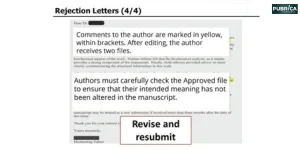
Publication Support Service
- Editing & Translation
-
Editing and Translation Services
- Sample Work
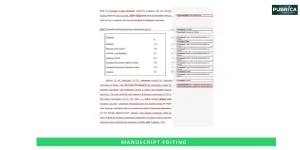
Editing and Translation Service
-
- Research Services
- Sample Work

Research Services
- Physician Writing
- Sample Work
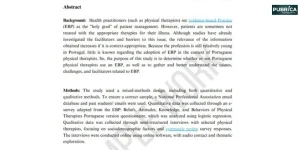
Physician Writing Service
- Statistical Analyses
- Sample Work

Statistical Analyses
- Data Collection
- AI and ML Services
- Sample Work

AI and ML Services
- Medical Writing
- Sample Work
Medical Writing
- Research Impact
- Sample Work
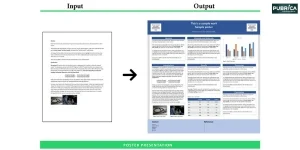
Research Impact
- Medical & Scientific Communication
- Sample Work
Medical & Scientific Communication
- Medico Legal Services
- Educational Content
- Academic Editorial Services
- Sample Work
Academic Editorial Services
- Educational Editorial Service
-
Education Editorial Services
- Sample Work
Education Editorial Services
-
- Industries
- Subjects
- About Us
- Academy
- Insights
- Contact Us
Medico-Legal Practice in Clinical Care: Principles, Documentation, and Applications
High-Impact Journals
- What Is Medico-Legal Practice?
- Importance of Medico-Legal Practice
- Core Principles of Medico-Legal Practice
- Applications of Medico-Legal Practice in Clinical Care
- Medico-Legal Documentation Process
- Essential Components of a Medico-Legal Report
- Common Medico-Legal Documents
- Who Benefits from Medico-Legal Practice?
- Conclusion
Interesting topics
Medico-Legal Practice in Clinical Care: Principles, Documentation, and Applications
Medico-Legal practice is one of the fundamental aspects of contemporary medicine which incorporates medical and legal aspects of practice. Medico-Legal Services in Clinical Practice ensure the possibility for health practitioners, hospitals, scientists, insurance companies, and legal entities to deal with medicolegal problems using proper documentation, medical examination, expert evaluation, injury assessment, and regulation compliance. Proper documentation and analysis of medical information allow make appropriate decisions and protect patients’ rights. The further development of healthcare regulations requires the implementation of advanced medico-legal practice for better documentation and lower risks of legal liability. Clinical Medico-Legal Services continue to strengthen the relationship between medicine and law by supporting accurate clinical assessments and legal compliance.[1]
1. What Is Medico-Legal Practice?
Medico-legal practice is an application of medical science in the fields of law, insurance, regulation, and judiciary. It consists of the preparation and examination of Medico-Legal Reports, examination of clinical files, expert witness, forensic medical examination, and collection of evidence in accordance with legal standards. Such procedures have significant importance for civil proceedings, criminal investigations, malpractice proceedings, disabilities certification, insurance claims, workplace health, and compliance in healthcare. These Clinical Medico-Legal Services support healthcare professionals by integrating medical expertise with legal requirements while ensuring compliance with professional standards.[2]
2. Importance of Medico-Legal Practice
Medico-legal practice improves the link between healthcare and legal fields because it guarantees that clinical documentation is factual, objective, and trustworthy. Good-quality medico-legal documentation will support evidence-based opinions about the medical case, ensure that healthcare professionals are protected from any possible litigation process, promote patient safety, foster accountability, and maintain adherence to healthcare regulations. Medico-legal documentation will also be helpful for insurance companies in their compensation assessment and for courts’ understanding of medical evidence. Medico-Legal Reports provide reliable documentation that supports fair legal and medical decision-making.
3. Core Principles of Medico-Legal Practice
There are certain core principles for an effective medico-legal practice. The principle of accuracy states that the results of clinical findings and any other information regarding patients should be recorded precisely and thoroughly. Objectivity means that healthcare providers should give unbiased opinions about patients’ health conditions only based on clinical information. Confidentiality guarantees that patient information will be protected in line with legal and ethical requirements. The principle of evidence-based practice states that any conclusions should be based on current scientific information and recommendations. Ethical behaviour means that there will be integrity during medico-legal proceedings. These principles form the foundation of high-quality Clinical Medico-Legal Services.
4. Applications in Clinical Practice
Various medical-legal applications can be found within a variety of fields. Medical-legal practice is widely utilised during the assessment of medical negligence cases, personal injuries, review of clinical documents, review of medical records, examination of insurance claims, assessments of disabilities, impairments, occupational medicine cases, forensic medical examination, and expert witnessing, among others. This practice provides decision-making for those involved in various healthcare and legal issues based on proper medical evidence. The role of forensic medicine in clinical practice is particularly important in injury assessment, forensic examinations, medical negligence investigations, and expert witness testimony.[3]
5. Medico-Legal Documentation Process
Structured Medico-Legal Documentation process is very effective in maintaining consistency and transparency. Generally, the process of Medico-Legal Documentation starts from receiving a Medico-Legal request, followed by gathering medical files as well as reviewing the Clinical History of the patient. In case of need, a medical assessment will be performed to understand the condition of the patient. Clinical Findings will be reviewed, and a detailed Medico-Legal Report will be prepared. In case of necessity, an independent medical expert opinion will be provided. This structured approach ensures that Medico-Legal Reports are accurate, evidence-based, and legally reliable. [4]
6. Essential Components of a Medico-Legal Report
The properly prepared medico-legal report gives an objective and evidence-based appraisal of the medical condition of the patient. The contents of the report include but are not limited to patient identification information, medical history of the patient, clinical examination results, diagnostic test results, treatment provided, chronology of clinical events, expert medical opinion, causation relating the medical condition to the event reported where necessary, prognosis, and scientific references.
7. Common Medico-Legal Documents
There are different reports produced during medico-legal practice depending on the reason for the assessment. The medico-legal report records the findings during the clinical examination for legal reasons, while the expert medical opinion is used to interpret the medical evidence. The disability assessment reports determine the extent of temporary or permanent disabilities, medical negligence assessments assess whether there was any negligence in terms of standard of care, injury assessment reports determine the existence of physical injuries, and the medical record review determines the completeness of the medical records and history.
8. Who Benefits from Medico-Legal Practice?
Medico-legal procedures have many advantages for various groups, including people in the medical field as well as those in the legal profession. Health care providers need proper documentation to ensure the safety of patients and avoid legal issues. Physicians, surgeons, and other specialists make use of medico-legal procedures in their decision-making. Legal practitioners make use of medical evidence for solving disputes and litigation. Insurance companies also utilize medico-legal assessments for analysing claims and compensation. Other parties that can take advantage of medico-legal procedures include government bodies, health care regulators, clinical research agencies, occupational health practitioners, and educational institutions. [5]
Connect with us to explore how we can support you in maintaining academic integrity and enhancing the visibility of your research across the world!
Conclusion
Medico-legal practice is an important component of contemporary healthcare, where clinical care is ensured through the presence of proper documentation, medical objectivity, ethics, and legality. The incorporation of medicine with evidence-based reporting and standardized Medico-Legal Reports strengthens healthcare by ensuring patient safety, improving accountability, supporting appropriate legal decisions, and reducing medico-legal risks. The role of forensic medicine in clinical practice continues to enhance the quality of medical evidence and legal investigations. The future of medico-legal services in healthcare will be driven by advances in digital health records, evidence-based reporting, interdisciplinary collaboration, and evolving healthcare regulations, enabling healthcare organizations and practitioners to deliver quality clinical care while meeting changing legal, regulatory, and ethical requirements.
Medico-Legal Practice in Clinical Care: Principles, Documentation, and Applications. Our Pubrica consultants are here to guide you. [Get Expert Publishing Support] or [Schedule a Free Consultation]
Frequently Asked Questions (FAQs)
Medico-legal practice is the application of medical knowledge to legal matters, including medical documentation, expert opinions, forensic examinations, injury assessments, and legal investigations.
Medico-legal services in clinical practice include preparing medico-legal reports, reviewing medical records, assessing injuries, evaluating medical negligence, disability assessments, and providing expert witness services.
Medico-legal reports provide objective, evidence-based medical documentation that supports legal proceedings, insurance claims, workplace injury cases, disability assessments, and regulatory compliance.
Forensic medicine helps investigate injuries, determine causes of illness or death, collect medical evidence, and provide expert opinions for criminal, civil, and medico-legal cases.
Clinical medico-legal services benefit healthcare professionals, hospitals, patients, lawyers, insurance companies, employers, government agencies, and courts by providing reliable medical evidence and expert evaluations.
The future of medico-legal services in healthcare includes digital medical records, AI-assisted documentation, evidence-based reporting, improved regulatory compliance, and stronger collaboration between healthcare and legal professionals.
References
- Raveesh, B. N., Nayak, R. B., & Kumbar, S. F. (2016). Preventing medico-legal issues in clinical practice. Annals of Indian Academy of Neurology, 19(Suppl 1), S15–S20. https://doi.org/10.4103/0972-2327.192886
- Naveen, S., & Kumar, M. V. (2013). Preparing medico legal report in clinical practice. The Indian journal of surgery, 75(1), 47–49. https://doi.org/10.1007/s12262-012-0538-0
- Institute of Medicine (US) Committee on Clinical Practice Guidelines; Field MJ, Lohr KN, editors. Guidelines for Clinical Practice: From Development to Use. Washington (DC): National Academies Press (US); 1992. References. Available from: https://www.ncbi.nlm.nih.gov/books/NBK234502/
- Mathioudakis, A., Rousalova, I., Gagnat, A. A., Saad, N., & Hardavella, G. (2016). How to keep good clinical records. Breathe (Sheffield, England), 12(4), 369–373. https://doi.org/10.1183/20734735.018016
- de Almeida G. (2025). Ethical reflections in legal medicine and forensic medical expertise: looking beyond the norm. Revista brasileira de medicina do trabalho : publicacao oficial da Associacao Nacional de Medicina do Trabalho-ANAMT, 23(3), e20251478. https://doi.org/10.47626/1679-4435-2025-1478