
- Services
- Discovery & Intelligence Services
- Publication Support Services
- Sample Work
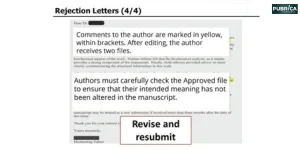
Publication Support Service
- Editing & Translation
-
Editing and Translation Services
- Sample Work

Editing and Translation Service
-
- Research Services
- Sample Work
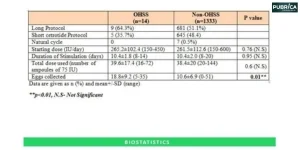
Research Services
- Physician Writing
- Sample Work
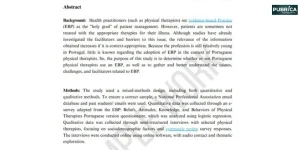
Physician Writing Service
- Statistical Analyses
- Sample Work
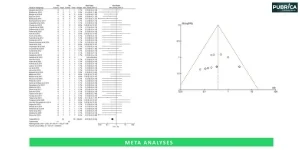
Statistical Analyses
- Data Collection
- AI and ML Services
- Sample Work
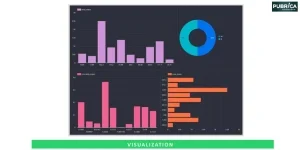
AI and ML Services
- Medical Writing
- Sample Work
Medical Writing
- Research Impact
- Sample Work
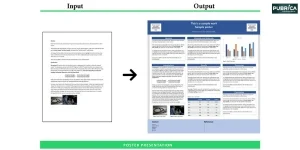
Research Impact
- Medical & Scientific Communication
- Sample Work
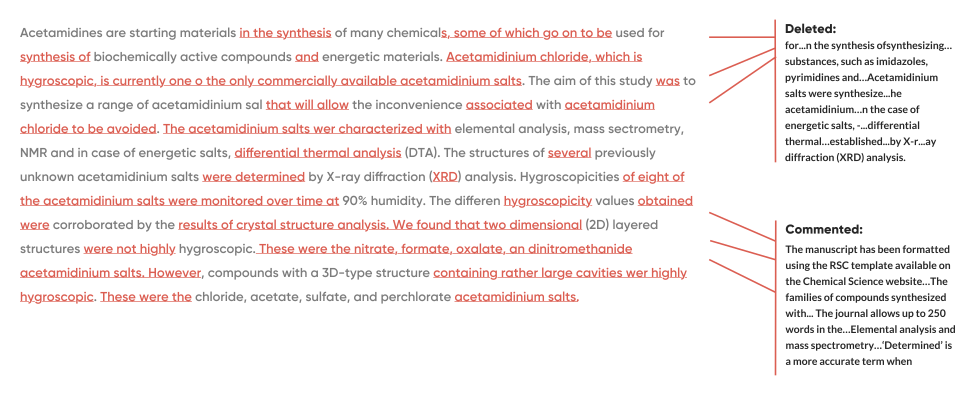
Medical & Scientific Communication
- Medico Legal Services
- Educational Content
- Academic Editorial Services
- Sample Work
Academic Editorial Services
- Educational Editorial Service
-
Education Editorial Services
- Sample Work
Education Editorial Services
-
- Industries
- Subjects
- About Us
- Academy
- Insights
- Contact Us
Original Research Articles: A Complete Guide for Researchers
High-Impact Journals
- Understanding Original Research Articles
- Standard Structure of an Original Research Article (IMRAD Format)
- Essential Components of an Original Research Article
- Presenting Research Results Effectively
- Writing an Effective Discussion Section
- Challenges in Publishing Original Research Articles
- Best Practices for High-Quality Research Articles
- Publication Workflow for Original Research Articles
- Conclusion
Interesting topics
Original Research Articles: A Complete Guide for Researchers
Original research articles provide the building blocks for communicating science and advancing academia. Such articles give readers information on the discoveries that have been made because of careful investigations carried out. Original research articles differ from review articles, whereby the latter provide an overview of the existing literature. In contrast, original research articles describe the results of the research done based on data from experiments, observations, clinical studies, surveys, or computational analysis.
To be able to write an original research article, researchers need to understand how to design a scientific investigation, collect valid data, carry out appropriate statistical tests on the collected data, interpret the data correctly, and communicate their work using international standards of scientific writing. Professional publication support for researchers and research paper publication help can assist authors in improving manuscript quality and navigating the publication process. It is important to understand the basics of the original research article if you want your work to be published in peer-reviewed journals. [1]
1. Understanding Original Research Articles
Original research paper is an academic writing, which contains the results of the scientific work done by the writers and has not been published anywhere else before. The main goal of the original research paper is to provide answers to a particular research question using proper methodology and scientifically proven conclusions. Original research papers undergo thorough peer review prior to being published.
They contribute to science by making new discoveries, verifying or refuting current knowledge on certain topics with the help of scientific evidence. As primary sources of scientific information, they are often cited and used for further research. Researchers, clinicians, and healthcare professionals may benefit from publication support for clinicians and clinical research publication support to ensure accurate reporting and successful journal submission.
2. Standard Structure of an Original Research Article
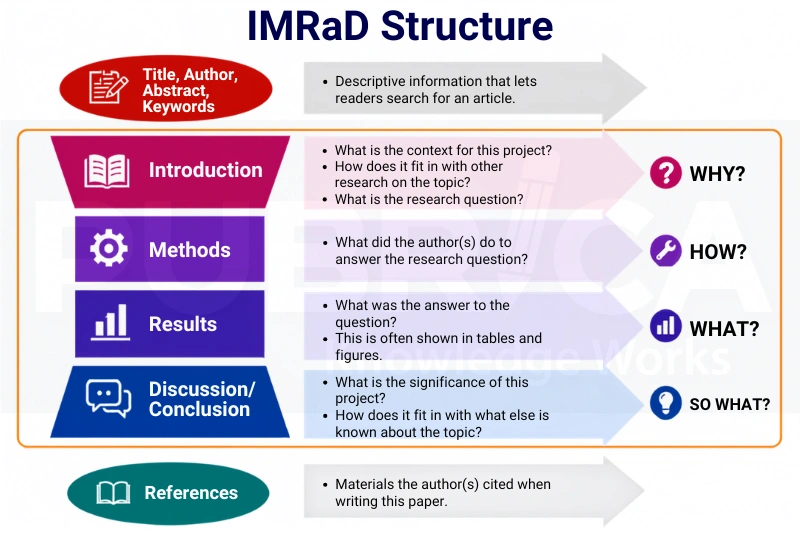
Most scientific journals follow the internationally accepted IMRAD format, which ensures logical organisation and consistency. [2]
Section | Purpose |
Title | Clearly describes the research topic |
Abstract | Summarises the entire study |
Introduction | Presents background, research gap, and objectives |
Methods | Describes study design and analytical procedures |
Results | Reports research findings objectively |
Discussion | Interprets findings and compares previous studies |
Conclusion | Summarises major outcomes and future implications |
References | Lists all cited scholarly sources |
Following this structure enables readers, reviewers, and editors to understand the research efficiently while ensuring transparency and reproducibility.
3. Essential Components of an Original Research Article
Each part of the manuscript has its own scientific function. Title must precisely indicate what the research paper is about, but it needs to be concise at the same time. A well-structured abstract summarizes the background, aims, method, main findings and conclusions, thus making it easy for reader to judge whether it is relevant to him or not.
Introduction helps to set up the research context by summarising literature, indicating the existing gap in knowledge and stating research objectives or hypotheses. Introduction shows why the research is needed and how it helps to increase scientific knowledge.
Methodology is one of the key parts of the paper because it ensures reproducibility. Researchers need to describe in detail research design, sample description and selection, data gathering techniques, instruments, analysis methods, and ethical approvals. Publication assistance for researchers can support authors in improving manuscript structure, scientific clarity, and compliance with journal standards.
4. Presenting Research Results
The discussion of results should be objective and free from any interpretation. The analyses, tables, charts, and figures should be well arranged to emphasise the most significant results. All tables and figures should have descriptive titles and should not duplicate the narrative. [3]
Researchers should provide statistics of significance, confidence intervals, effect sizes, and other important analytical measures whenever necessary. Proper presentation of results makes them easy to read and supports evaluation of the validity of the study. Expert peer review support can help researchers identify areas for improvement before journal submission.
5. Writing an Effective Discussion
This part of the discussion places the findings of the research in the context of the literature. This does not entail the reiteration of the findings but rather entails providing an explanation about the meaning of the findings, exploring potential reasons behind them, comparing the findings with previous works, and outlining their implications both theoretically and practically.
Limitations of the study are also mentioned in the discussion section so that scientific objectivity is achieved, and future directions can be suggested based on the limitations of the study. Finally, researchers must mention how their findings contribute to advancing knowledge in the field.
6. Challenges in Publishing Original Research
An original research article poses many challenges during the process of publishing the paper. These challenges include, among others, difficulty in formulating a precise research question, choosing the right design, dealing with huge data sets, and carrying out the necessary statistical analyses. Scientific writing itself can prove challenging, especially for young scientists and those whose native language is not English. [4]
The peer review process adds further challenges. Reviewers may request clarification of methodology, additional analysis, or revisions to the manuscript. Responding effectively to reviewer comments requires attention to detail and scientific accuracy. Research publication support services and peer review support can assist researchers in addressing reviewer feedback and improving manuscript quality.
7. Best Practices for High-Quality Research Articles
Good research papers need good planning and methodology. There is a need for researchers to plan their research and come up with good research protocols before data collection. The application of international reporting guidelines such as CONSORT, STROBE, PRISMA, CARE, and ARRIVE will be helpful in ensuring transparency and easier publication in journals. [5]
Ethical considerations should always be maintained, including ethical approval, informed consent, data confidentiality, and proper citation practices. Manuscripts should be carefully proofread and formatted according to the guidelines of the target journal. Professional publication assistance for researchers supports authors in maintaining quality and meeting publication requirements.
8. Publication Workflow
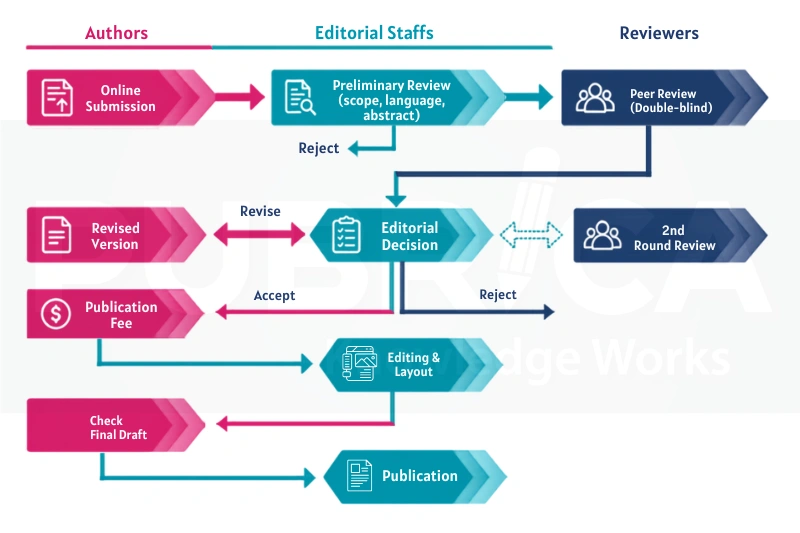
Successful publication follows a systematic sequence of stages from research planning to journal publication.
Stage | Research Activity |
Planning | Define research problem and objectives |
Identify research gaps | |
Study Design | Select methodology and sampling |
Data Collection | Gather research evidence |
Data Analysis | Apply statistical techniques |
Manuscript Writing | Prepare the research article |
Peer Review | Scientific evaluation by experts |
Revision | Address reviewer comments |
Publication | Final journal publication |
Following this structured workflow improves research quality and increases publication success. Access to professional clinical research publication support and research paper publication help can further assist researchers throughout the publication journey.
Connect with us to explore how we can support you in maintaining academic integrity and enhancing the visibility of your research across the world!
Conclusion
Original research papers continue to be the main channel of communication of scientific breakthroughs and scholarly knowledge development. The importance of such a paper is not limited to the presentation of new scientific information but also to showing the rigorous approach and transparency of the research process. A properly written manuscript has a logical structure, defines research objectives, uses appropriate analytical methods, and presents results within the wider scientific context. Researchers who invest time in proper study design, follow ethical principles, and develop scientific writing skills can greatly enhance their publications with the help of publication support for researchers, peer review support, and professional research publication support services.
Original Research Articles: A Complete Guide for Researchers. Our Pubrica consultants are here to guide you. [Get Expert Publishing Support] or [Schedule a Free Consultation]
Frequently Asked Questions (FAQs)
An original research article is a scientific manuscript that presents new findings obtained from experiments, clinical studies, observations, surveys, or computational analyses. It provides evidence-based answers to a specific research question and contributes new knowledge to a particular field.
An original research article reports new data collected and analysed by researchers, whereas a review article summarises and evaluates previously published studies without presenting new experimental findings.
Most original research articles follow the IMRAD structure: Introduction, Methods, Results, and Discussion, along with a title, abstract, conclusion, and references. This structure improves clarity, transparency, and reproducibility.
Researchers should follow internationally recognised reporting guidelines based on their study type, such as CONSORT for clinical trials, STROBE for observational studies, PRISMA for systematic reviews, CARE for case reports, and ARRIVE for animal research.
Successful publication depends on a well-defined research question, appropriate study design, reliable data analysis, ethical research practices, clear scientific writing, proper journal selection, and effective response to peer reviewer feedback.
References
- Rison, R.A. A guide to writing case reports for the Journal of Medical Case Reportsand BioMed Central Research Notes . J Med Case Reports 7, 239 (2013). https://doi.org/10.1186/1752-1947-7-239
- Cooper I. D. (2015). How to write an original research paper (and get it published). Journal of the Medical Library Association : JMLA, 103(2), 67–68. https://doi.org/10.3163/1536-5050.103.2.001
- Scherer, R. W., Meerpohl, J. J., Pfeifer, N., Schmucker, C., Schwarzer, G., & von Elm, E. (2018). Full publication of results initially presented in abstracts. The Cochrane database of systematic reviews, 11(11), MR000005. https://doi.org/10.1002/14651858.MR000005.pub4
- Chirukandath, R., Sunil, G., Balakrishnan, V., Menon, R. A., Gayathry P, S., Sulaiman, S. V., George, M., Mohan, K., & Maria Joseph, D. (2024). Difficult Terrains of Research Publications Faced by Researchers: A Cross-Sectional Study. Cureus, 16(7), e64787. https://doi.org/10.7759/cureus.64787
- Grech, V., & Eldawlatly, A. A. (2024). STROBE, CONSORT, PRISMA, MOOSE, STARD, SPIRIT, and other guidelines – Overview and application. Saudi journal of anaesthesia, 18(1), 137–141. https://doi.org/10.4103/sja.sja_545_23