
- Services
- Discovery & Intelligence Services
- Publication Support Services
- Sample Work
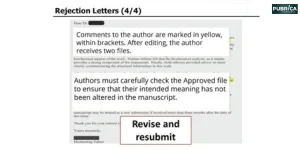
Publication Support Service
- Editing & Translation
-
Editing and Translation Services
- Sample Work

Editing and Translation Service
-
- Research Services
- Sample Work
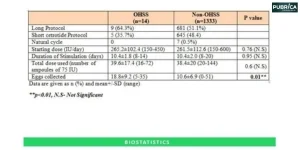
Research Services
- Physician Writing
- Sample Work
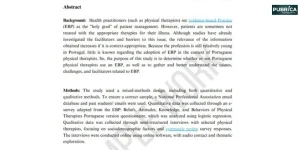
Physician Writing Service
- Statistical Analyses
- Sample Work
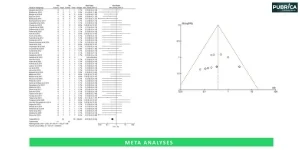
Statistical Analyses
- Data Collection
- AI and ML Services
- Sample Work

AI and ML Services
- Medical Writing
- Sample Work
Medical Writing
- Research Impact
- Sample Work

Research Impact
- Medical & Scientific Communication
- Sample Work
Medical & Scientific Communication
- Medico Legal Services
- Educational Content
- Academic Editorial Services
- Sample Work
Academic Editorial Services
- Educational Editorial Service
-
Education Editorial Services
- Sample Work
Education Editorial Services
-
- Industries
- Subjects
- About Us
- Academy
- Insights
- Contact Us

How to Write Effective Introduction and Discussion Sections in a Literature Review
High-Impact Journals
- Why These Sections Matter
- Writing an Effective Introduction
- Tips for Writing a Strong Introduction
- Writing an Effective Discussion
- Key Elements of a Strong Discussion
- Common Differences Between Introduction and Discussion
- Common Mistakes to Avoid
- Practices for High-Quality Literature Reviews
- Conclusion
Interesting topics
How to Write Effective Introduction and Discussion Sections in a Literature Review
In other words, the introduction and the discussion form the base and end of a literature review respectively. A good introduction is one that sets the context for the research, states the purpose of the review, and describes the scope of the review, whereas a discussion is one that analyzes the evidence, shows the trends, reveals the research gaps, and relates the results with the research question. A well-structured Literature Review Structure helps researchers present evidence clearly, develop strong academic arguments, and improve the overall quality of the review. Writing a Literature Review requires careful planning, critical thinking, and logical organization to ensure a comprehensive analysis of existing research. [1]
1. Why These Sections Matter
A lot of scholars put considerable effort into gathering information from various sources; however, the presentation of this information can be difficult. Two main parts usually make the success of the literature review: [2]
- The Introduction – Describes the topic of the review and its significance.
- The Discussion – Interprets data rather than summarises it.
These two parts helps to turn a set of papers into a scholarly story and strengthen the overall Research Literature Review.
2. Writing an Effective Introduction
Introduction is the initial step for any reader to have. An introduction needs to provide adequate information to make the reader understand the significance of the topic. An effective Literature Review Structure ensures that the research background, objectives, and scope are presented in a clear and logical manner, making writing an effective literature review easier. [3]
Elements of a Good Introduction
- Topic of the research
- The significance of the topic
- Problem statement
- Scope of the review
- Objectives
- Structure of the review
Recommended Structure
Section | Purpose |
Background | Introducing a broader research area. |
Research Problem | Explain the issue being addressed. |
Importance | Describe why the review is necessary. |
Objectives | State what the review aims to achieve. |
Scope | Define inclusion and exclusion boundaries. |
Overview | Briefly explain how the review is organized. |
3. Tips for Writing a Strong Introduction
Avoid attempting to synthesize all the studies at hand.
- Start with contemporary background material.
- State the importance of the research topic.
- Choose reliable sources.
- Define the topic of your research clearly.
- Maintain a clear and logical introduction.
- Do not reveal too much about your studies too soon.
A good introduction will prompt readers to continue reading and understand the purpose of the review immediately. Following the best way to write a literature review helps researchers create a strong first impression.
4. Writing an Effective Discussion
This is where the analytical ability of researchers is tested. This part does not just include the presentation of the results, but it includes analysis and evaluation of evidence.
An excellent discussion addresses key questions like:
- What were the commonalities across studies?
- Where is there consensus among researchers?
- Why are there differences between the results?
- Where are the areas of knowledge deficiency?
5. Key Elements of a Strong Discussion
Discussion that is well carried out consists of the following elements:
Evidence Synthesis: The findings of several pieces of literature should be synthesized rather than being discussed separately.
Critical Analysis: Assessment of the strengths, weaknesses, and methods used in the research.
Comparison of Findings: Similarities and differences in the results of published articles.
Research Gaps: Areas in which there has been no research. [4]
These elements are essential for Writing evidence-based literature reviews that provide meaningful insights and support future research.
6. Common Differences Between Introduction and Discussion
Introduction | Discussion |
Introduction of the topic | Interprets the evidence |
Defines the research problem | Explains the meaning of findings |
Establishes the scope | Identifies research gaps |
States objectives | Recommend future research |
Provides background | Draws overall conclusions |
Understanding these differences helps maintain a logical flow throughout the literature review.
7. Common Mistakes to Avoid
However, many literature reviews lack effectiveness due to some writing mistakes that can be easily avoided.
Introduction Section Mistakes
- Excessive background written for the paper
- Too many summaries of studies provided
- The failure to state research purpose
- Lack of clear review scope
Discussion Mistakes
- The mere listing of results
- Lack of critical assessment
- The absence of contradictory findings
- Lack of identified gaps
- Conclusion without practical suggestions.
8. Practices for High-Quality Literature Reviews
Introduction and discussion parts can be improved by researchers if they adopt an organized process. [5]
- Read papers prior to conducting writing.
- Classify articles according to topics not chronology.
- Concentrate on analysis not description.
- Back up claims with reliable data.
- Have smooth transitions from one part to another.
- Use clear academic language.
- Revise work repeatedly.
- Be consistent throughout the introduction, results, and discussion.
The organized process helps readers follow the development of ideas and makes the entire review more effective. Adopting the best way to write a literature review also improves clarity, coherence, and academic quality.
Connect with us to explore how we can support you in maintaining academic integrity and enhancing the visibility of your research across the world!
Conclusion
A good literature review is not only about gathering studies but also an effective introduction that explains the reasons for conducting the research, along with a discussion of evidence. A strong Research Literature Review demonstrates the skills of analysis, synthesis, and presentation of knowledge while identifying new areas for investigation. Writing an effective literature review strengthens academic arguments, improves readability, and increases the likelihood of publication.
Pubrica Literature Review Writing Services assists in carrying out a complete literature review, including searching literature, analyzing evidence, critically evaluating evidence, structuring academic writing, and delivering a good paper which is ready to be submitted to universities, funding institutions, or scientific journals.
Frequently Asked Questions (FAQs)
The introduction provides research background, explains the significance of the topic, defines the problem, and outlines the scope and objectives of the review.
The discussion section analyses existing evidence, compares findings, identifies research gaps, and connects results with the research objectives.
A good introduction includes the research topic, significance, problem statement, scope, objectives, and overall structure of the review.
Researchers can improve the discussion by critically analysing studies, synthesizing evidence, comparing findings, and highlighting future research opportunities.
Researchers should avoid excessive summarization, poor organization, lack of critical analysis, unclear objectives, and insufficient support from reliable sources.
References
- Hess D. R. (2023). How to Write an Effective Discussion. Respiratory care, 68(12), 1771–1774. https://doi.org/10.4187/respcare.11435
- Marian A. J. (2023). What ails the NIH peer review study sections and how to fix the review process of the grant applications. The journal of cardiovascular aging, 3(1), 11. https://doi.org/10.20517/jca.2023.3
- Armağan A. (2013). How to write an introduction section of a scientific article?. Turkish journal of urology, 39(Suppl 1), 8–9. https://doi.org/10.5152/tud.2013.046
- Wong, E. C., Maher, A. R., Motala, A., Ross, R., Akinniranye, O., Larkin, J., & Hempel, S. (2022). Methods for Identifying Health Research Gaps, Needs, and Priorities: a Scoping Review. Journal of general internal medicine, 37(1), 198–205. https://doi.org/10.1007/s11606-021-07064-1
- Varpio, L., Parker, R., & MacLeod, A. (2024). Understanding the Differences That Differentiate: A Model for Deciding Which Literature Review to Conduct. Journal of graduate medical education, 16(2), 146–150. https://doi.org/10.4300/JGME-D-24-00151.1