
- Services
- Discovery & Intelligence Services
- Publication Support Services
- Sample Work
Publication Support Service
- Editing & Translation
-
Editing and Translation Services
- Sample Work
Editing and Translation Service
-
- Research Services
- Sample Work
Research Services
- Physician Writing
- Sample Work
Physician Writing Service
- Statistical Analyses
- Sample Work
Statistical Analyses
- Data Collection
- AI and ML Services
- Sample Work
AI and ML Services
- Medical Writing
- Sample Work
Medical Writing
- Research Impact
- Sample Work
Research Impact
- Medical & Scientific Communication
- Sample Work
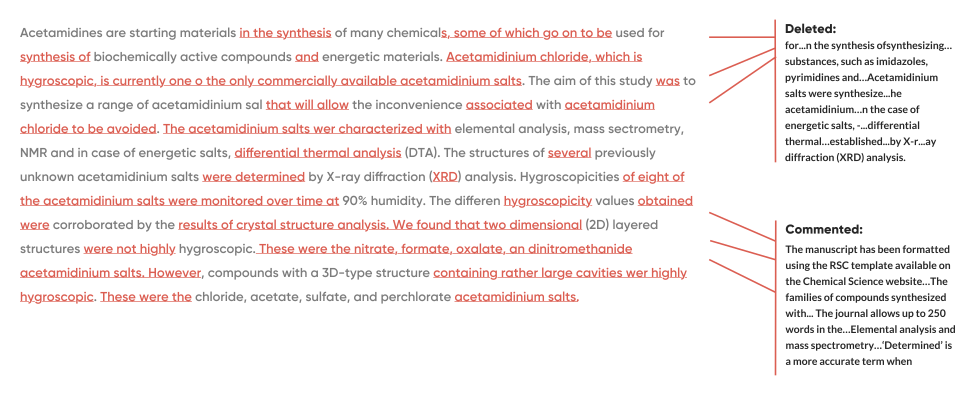
Medical & Scientific Communication
- Medico Legal Services
- Educational Content
- Academic Editorial Services
- Sample Work
Academic Editorial Services
- Educational Editorial Service
-
Education Editorial Services
- Sample Work
Education Editorial Services
-
- Industries
- Subjects
- About Us
- Academy
- Insights
- Contact Us
Overcoming Challenges in Academic Writing: Articles and Grant Applications
High-Impact Journals
- Understanding Academic Writing for Research Articles and Grant Applications
- Common Challenges in Academic Writing
- Research Articles vs. Grant Applications: Key Differences
- Strategies for Developing High-Quality Academic Writing
- Writing Effective Grant Applications
- The Role of Digital Technologies in Academic Writing
- Maintaining Academic Integrity Throughout the Writing Process
- Future Directions in Academic Writing
- Conclusion
Interesting topics
Overcoming Challenges in Academic Writing: Articles and Grant Applications
Academic writing holds a crucial place in research in that it allows scholars to disseminate their scientific knowledge and acquire money for further studies. Among all types of academic writing, the research article writing process and grant application writing can be identified as the two most significant, yet difficult documents. The former is written as a report on the finished research project, while the latter is used to persuade funding bodies to provide financial support for one’s future study. [1]
Researchers might face numerous academic writing challenges in the process of writing, which include structuring, using the evidence properly, maintaining scientific integrity, and complying with the requirements of funding organisations or journals. Coping with these problems demands, apart from knowledge of the topic, good writing skills, planning and constant editing. Understanding the major obstacles is the first step toward overcoming academic writing challenges and improving the quality of scholarly communication.
1. Understanding Academic Writing for Research Articles and Grant Applications
2. Common Challenges in Academic Writing
For a great number of researchers, systematically organising scientific ideas and making their thoughts flow smoothly is very difficult. One of the main common academic writing challenges and solutions involves organising technical information in such a way that it is both scientifically accurate and comprehensible for reviewers.
Another difficulty faced by many researchers is the presentation of the methodology and statistics clearly and concisely. The use of too many technical terms without sufficient explanations always makes the research less understandable for its readers. The shortage of time, lack of writing skills, and unfamiliarity with journal/grants format can also contribute to poor-quality manuscripts. Consistency within the manuscript is another issue to be considered.
3. Comparison Between Research Articles and Grant Applications
Aspect | Research Articles | Grant Applications |
Primary Objective | Report completed research findings | Secure funding for proposed research |
Main Audience | Journal editors and peer reviewers | Funding agencies and review panels |
Primary Focus | Results, interpretation, and discussion | Research significance, innovation, and feasibility |
Supporting Evidence | Experimental findings | Preliminary evidence and research rationale |
Success Measure | Publication acceptance | Funding approval |
4. Strategies for Developing High-Quality Academic Writing
Academic writing requires proper planning at the initial stage. The researcher needs to determine the purpose of his/her research and organise all the ideas in a coherent structure. Creating an outline before the actual writing will help ensure that every point made serves the overall research purpose. These are among the most effective grant writing strategies and scientific writing practices.[3]
Another key element in good academic writing is presenting the evidence effectively. Instead of just stating the results of other research, researchers need to critique the existing literature, state the knowledge gaps and show why their research is relevant in addressing the gaps in the existing body of knowledge. The revision stage is also critical in generating quality manuscripts. This is achieved through repeated revisions, which enhance clarity, coherence and consistency. Learning how to overcome academic writing challenges requires continuous practice and revision.
5. Writing Effective Grant Applications
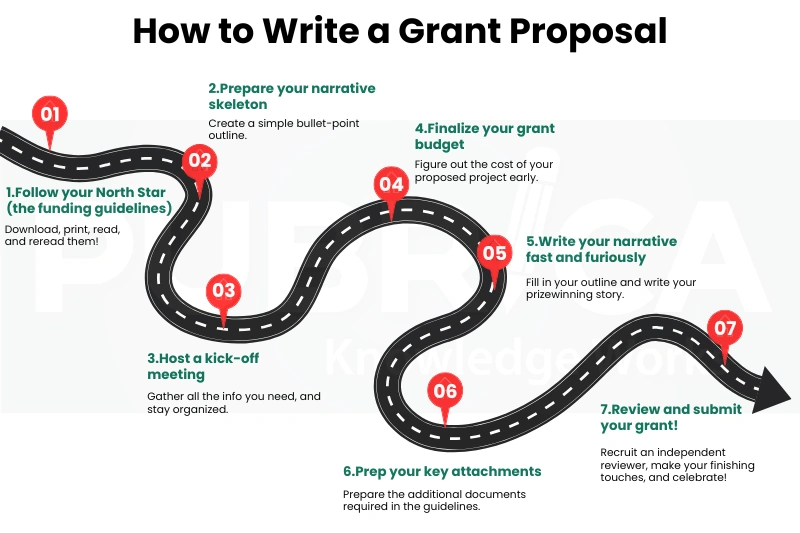
In contrast to research articles, grant application writing and grant proposal writing must convince reviewers prior to conducting any research. Research agencies require proof of the significance of the research problem, innovativeness of the study, and proof of the ability to conduct the research successfully within the time frame and budget suggested.
Successful grant applications include research goals defined, realistic methods described, and the impact of the research on science or society forecasted. Reviewers evaluate if researchers have the necessary qualifications and access to the necessary resources to conduct research successfully. Thus, clarity, feasibility and justification play as important role as originality.
6. The Role of Digital Technologies in Academic Writing
Technological development has changed academic writing by introducing various tools that enhance productivity and quality of academic writing. Various tools help in managing citations, grammar and language correction, plagiarism detection, and effective team collaboration through collaborative writing. The role of artificial intelligence has become more prominent lately in facilitating literature search, language and document editing. Nonetheless, it is the responsibility of researchers to ensure scientific accuracy, originality, and proper use of artificial intelligence at universities. [4]
7. Maintaining Academic Integrity Throughout the Writing Process
Academic integrity forms the basis of scholarly communication. Scientists are supposed to provide correct reporting, acknowledge their predecessors appropriately, and refrain from plagiarism, fabrication, and data manipulation. Ethical scholarship is not confined to citation but also involves the honest reporting of methodology, truthful presentation of results, and proper attribution of authorship.
Journals and funding agencies increasingly evaluate research integrity alongside scientific quality. Maintaining ethical standards is therefore essential for both research article writing and grant proposal writing.
8. Future Directions in Academic Writing
The practice of academic writing is still evolving along with developments in the field of digital publishing, artificial intelligence, and open science. Technologies of today enable automatic formatting, language editing, and literature search, making it possible for scientists to concentrate more on scientific rather than administrative writing.
At the same time, publishers and funding agencies are placing greater emphasis on transparency, data sharing, and reproducibility. Future success in overcoming academic writing challenges will require researchers to combine strong communication skills with technological proficiency and ethical research practices.
Connect with us to explore how we can support you in maintaining academic integrity and enhancing the visibility of your research across the world!
Conclusion
Surmounting academic writing challenges involves not only scientific expertise but also effective planning and continuous improvement of writing skills. Whether preparing research article writing, grant application writing, or grant proposal writing, researchers must communicate their ideas clearly, provide strong supporting evidence, and adhere to academic standards and ethics. By applying effective grant writing strategies, understanding how to overcome academic writing challenges, and addressing common academic writing challenges and solutions, researchers can improve their publication success and increase their chances of securing research funding.
Overcoming Challenges in Academic Writing: Articles and Grant Applications. Our Pubrica consultants are here to guide you. [Get Expert Publishing Support] or [Schedule a Free Consultation]
Frequently Asked Questions (FAQs)
The most common challenges include organising ideas logically, presenting evidence clearly, maintaining scientific accuracy, following journal or funding guidelines, managing citations, and ensuring academic integrity.
A research article reports completed research findings, while a grant application proposes future research to secure funding. Research articles focus on results and discussion, whereas grant applications emphasize research significance, innovation, feasibility, and expected impact.
Researchers can improve their writing by creating a clear outline, using strong evidence, maintaining logical flow, revising multiple drafts, seeking peer feedback, and following the target journal’s or funding agency’s guidelines.
Academic integrity ensures that research is honest, original, and credible. Proper citation, accurate reporting of methods and results, and avoiding plagiarism or data manipulation help maintain trust in scientific research.
Digital tools support academic writing through reference management, grammar and language editing, plagiarism detection, collaborative writing, literature searches, and AI-assisted document editing, improving both efficiency and quality.
A strong grant application clearly explains the research problem, objectives, methodology, expected outcomes, budget justification, and potential scientific or societal impact while demonstrating the research team’s expertise and project feasibility.
Researchers can overcome writing challenges by planning their manuscripts carefully, writing clearly and concisely, using evidence effectively, revising thoroughly, obtaining feedback from colleagues, and staying updated on publication and funding requirements.
References
- Zvonar, I., Tabatabai, N., & Chen, E. H. (2025). The write of passage: Overcoming barriers to academic writing during emergency medicine fellowship training. AEM education and training, 9(2), e70008. https://doi.org/10.1002/aet2.70008
- Weidmann, A. E., Cadogan, C. A., Fialová, D., Hazen, A., Henman, M., Lutters, M., Okuyan, B., Paudyal, V., & Wirth, F. (2023). How to write a successful grant application: guidance provided by the European Society of Clinical Pharmacy. International journal of clinical pharmacy, 45(3), 781–786. https://doi.org/10.1007/s11096-023-01543-7
- Gopee, N., & Deane, M. (2013). Strategies for successful academic writing – institutional and non-institutional support for students. Nurse education today, 33(12), 1624–1631. https://doi.org/10.1016/j.nedt.2013.02.004
- Timotheou, S., Miliou, O., Dimitriadis, Y., Sobrino, S. V., Giannoutsou, N., Cachia, R., Monés, A. M., & Ioannou, A. (2023). Impacts of digital technologies on education and factors influencing schools’ digital capacity and transformation: A literature review. Education and information technologies, 28(6), 6695–6726. https://doi.org/10.1007/s10639-022-11431-8