
- Services
- Discovery & Intelligence Services
- Publication Support Services
- Sample Work
Publication Support Service
- Editing & Translation
-
Editing and Translation Services
- Sample Work
Editing and Translation Service
-
- Research Services
- Sample Work
Research Services
- Physician Writing
- Sample Work
Physician Writing Service
- Statistical Analyses
- Sample Work
Statistical Analyses
- Data Collection
- AI and ML Services
- Sample Work
AI and ML Services
- Medical Writing
- Sample Work
Medical Writing
- Research Impact
- Sample Work
Research Impact
- Medical & Scientific Communication
- Sample Work
Medical & Scientific Communication
- Medico Legal Services
- Educational Content
- Academic Editorial Services
- Sample Work
Academic Editorial Services
- Educational Editorial Service
-
Education Editorial Services
- Sample Work
Education Editorial Services
-
- Industries
- Subjects
- About Us
- Academy
- Insights
- Contact Us
Machine Learning: The Art of Crafting Effective Research Grant Proposals
High-Impact Journals
- Machine Learning in Modern Grant Proposal Development
- AI-Assisted Literature Analysis and Research Gap Identification
- Predictive Analytics for Funding Success
- Machine Learning Applications Across Grant Proposal Components
- Challenges and Ethical Considerations
- Future Directions of AI-Driven Grant Writing
- Conclusion
Interesting topics
Machine Learning: The Art of Crafting Effective Research Grant Proposals
Research grant proposal submission has become increasingly competitive due to an increasing need for research funding in academia, industry, and healthcare areas. The number of research grant proposal submissions received from various applicants is so large that the quality of research grant proposals, along with their novelty and methodology, is a major criterion for receiving research funds. Up until now, grant proposal writing has been associated with a lot of manual work that included literature review, expert consultation, and revision. Now, many innovations in Artificial Intelligence (AI) and machine learning in research have changed the research proposal development process. [1]
By using Machine Learning for Research Grant Proposals, it is possible to analyse large databases of scientific literature, previously funded grants, reviewers’ feedback, and research funding trends. In contrast to replacing scientific knowledge, ML helps researchers prepare high-quality grant proposals, improve grant proposal writing, and reduce administrative burden.
1. Machine Learning in Modern Grant Proposal Development
ML algorithms denote computational algorithms that can learn from large datasets without programming. In research funding, ML algorithms use historical grant databases, publication records, citation patterns, and funding agency priorities to detect elements of successful proposals. [1]
Contrary to standard keyword searches, ML models assess semantic relations of research interests, funding interests, expertise, and institutional capacity. Natural Language Processing (NLP), a sub-discipline of machine learning, facilitates automatic processing of proposal narratives, helping scientists develop better scientific goals and increase the readability of proposals before submission. Hence, machine learning in research has become a useful decision-making technology that supplements existing grant development approaches.
2. AI-Assisted Literature Analysis and Research Gap Identification
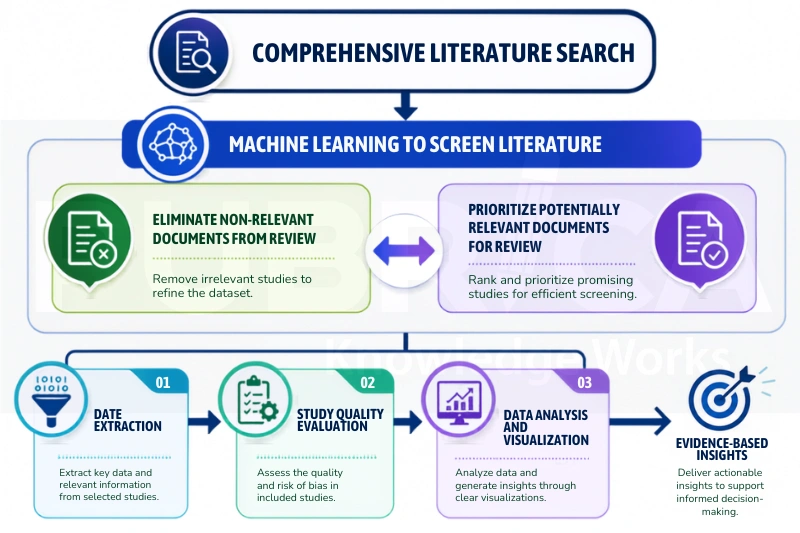
The process of grant application that consumes the most time is finding an existing research gap that is backed up by scientific literature. This problem is solved efficiently by machine learning, which helps in analysing thousands of articles at once.
Today, literature mining algorithms help categorise articles based on methodologies, diseases, interventions, outcomes, and citations. Rather than reviewing hundreds of articles individually, researchers receive structured information about emerging research trends and unanswered scientific questions. These AI tools for writing research grant proposals significantly improve the efficiency of literature review. [2]
3. Predictive Analytics for Funding Success
Machine learning models increasingly support predictive analysis of grant proposal success by evaluating characteristics associated with previously funded projects. [3]
Algorithms assess multiple variables, including:
Evaluation Parameter | Machine Learning Contribution |
Research Novelty | Identifies emerging research topics |
Literature Coverage | Evaluates evidence completeness |
Methodological Quality | Detects missing methodological details |
Budget Consistency | Flags unrealistic budget estimates |
Alignment with Funding Priorities | Measures proposal relevance |
Rather than predicting funding decisions with certainty, these predictive models identify proposal strengths and weaknesses before submission, allowing researchers to improve proposal quality proactively. This contributes to greater machine learning for grant proposal success.
4. Machine Learning Applications Across Grant Proposal Components
The use of machine learning is evident in all stages of the process of preparing a research proposal. When choosing topics for funding, the recommendation system finds grants that correspond to the area of expertise of the researcher. In case of literature search, NLP helps to summarise the findings and determine research gaps.
Furthermore, budget prediction algorithms analyse previous funding trends to calculate realistic project costs, while proposal evaluation algorithms check the consistency of goals, methods, expected results, and impact statements. Thus, machine learning supports efficient research proposal development across multiple proposal components. [4]
5. Challenges and Ethical Considerations
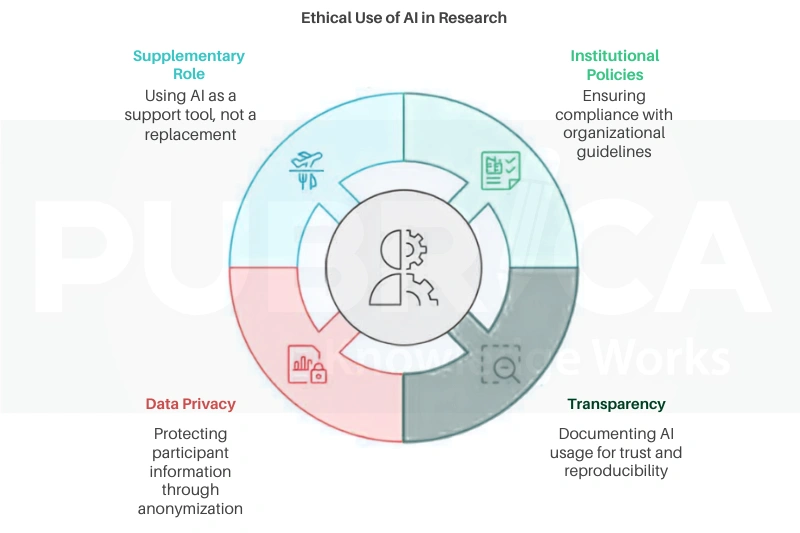
Despite all the benefits that it has, machine learning raises several issues in a scientific and ethical context. Most machine learning systems utilise data related to previous funding decisions that can have different biases – from geographical to discipline-related ones.
Moreover, there is no point in uploading any confidential data about grants into an artificial intelligence platform without proper security measures. The authors are totally responsible for making sure that their proposal is original and scientific. Thus, machine learning should be considered as a helper in analysing information rather than replacing scientific expertise during grant proposal writing.
6. Future Directions of AI-Driven Grant Writing
Future advancements in this area will involve using machine learning in conjunction with knowledge graphs, citation intelligence, explainable AI, and automation of research planning. Future applications would make real-time suggestions about funding priorities, multidisciplinary teamwork, application writing, and reviewer considerations.
Large Language Models in conjunction with predictive analytics will change the nature of research proposal development into a more data-driven approach while retaining the critical element of human scientific ingenuity. The continued evolution of AI tools for writing research grant proposals is expected to further enhance proposal quality and efficiency.
Connect with us to explore how we can support you in maintaining academic integrity and enhancing the visibility of your research across the world!
Conclusion
In this regard, Machine Learning for Research Grant Proposals plays an instrumental role in transforming the development of research grant proposals through literature review, research gap identification, proposal writing, and predictive quality assessment. Even though these technologies greatly improve efficiency and decision-making processes, the process of applying for research grants still relies on the scientific innovation, methodology, and competence of the researcher. In the future, machine learning for grant proposal success will increasingly combine intelligent technologies with human expertise to strengthen competitive research funding applications.
Machine Learning: The Art of Crafting Effective Research Grant Proposals. Our Pubrica consultants are here to guide you. [Get Expert Publishing Support] or [Schedule a Free Consultation]
Frequently Asked Questions (FAQs)
Machine learning helps researchers analyse scientific literature, identify research gaps, evaluate proposal quality, match funding opportunities, and improve proposal clarity using data-driven insights.
AI and machine learning can assist with literature reviews, drafting, editing, and proposal evaluation, but researchers are responsible for developing the scientific ideas, methodology, and final content.
Machine learning analyses large collections of research publications to detect emerging topics, underexplored areas, citation patterns, and unanswered scientific questions that can support a strong grant proposal.
Machine learning cannot guarantee funding success. However, it can assess factors such as novelty, methodology, alignment with funding priorities, and proposal completeness to identify areas for improvement before submission.
Key concerns include protecting confidential research data, avoiding bias in AI models, maintaining originality, ensuring transparency, and using AI as a support tool rather than replacing scientific judgment.
Machine learning can save time, improve literature analysis, identify suitable funding opportunities, strengthen proposal quality, support budget planning, and help researchers create more competitive grant applications.
References
- Godwin, R. C., DeBerry, J. J., Wagener, B. M., Berkowitz, D. E., & Melvin, R. L. (2024). Grant drafting support with guided generative AI software. SoftwareX, 27(101784), 101784.https://doi.org/10.1016/j.softx.2024
- Apata, O. E., Kwok, O. M., & Lee, Y. H. (2025). The Use of Generative Artificial Intelligence (AI) in Academic Research: A Review of the Consensus App. Cureus, 17(7), e87297. https://doi.org/10.7759/cureus.87297
- Zhang Z. (2020). Predictive analytics in the era of big data: opportunities and challenges. Annals of translational medicine, 8(4), 68. https://doi.org/10.21037/atm.2019.10.97
- Kanapari, A., Lorenzoni, G., Ocagli, H., & Gregori, D. (2025). Current applications and future challenges of machine learning and artificial intelligence in clinical trials: A scoping review. Digital health, 11, 20552076251393272. https://doi.org/10.1177/205520762513932