
- Services
- Discovery & Intelligence Services
- Publication Support Services
- Sample Work

Publication Support Service
- Editing & Translation
-
Editing and Translation Services
- Sample Work

Editing and Translation Service
-
- Research Services
- Sample Work

Research Services
- Physician Writing
- Sample Work

Physician Writing Service
- Statistical Analyses
- Sample Work

Statistical Analyses
- Data Collection
- AI and ML Services
- Sample Work

AI and ML Services
- Medical Writing
- Sample Work
Medical Writing
- Research Impact
- Sample Work

Research Impact
- Medical & Scientific Communication
- Sample Work
Medical & Scientific Communication
- Medico Legal Services
- Educational Content
- Academic Editorial Services
- Sample Work
Academic Editorial Services
- Educational Editorial Service
-
Education Editorial Services
- Sample Work
Education Editorial Services
-
- Industries
- Subjects
- About Us
- Academy
- Insights
- Contact Us

What Is AMSTAR? Understanding Quality Assessment in Systematic Reviews
- Home
- Academy
- Systematic review
- What Is AMSTAR? Understanding Quality Assessment in Systematic Reviews
High-Impact Journals
Interesting topics
What Is AMSTAR? Understanding Quality Assessment in Systematic Reviews
Due to their use of systematic and reproducible methods, systematic reviews are generally considered to provide some of the highest levels of evidence in healthcare, social science, or policy research. Nevertheless, the quality of systematic reviews is not consistent. Some systematic reviews use well-defined search processes, have well-defined inclusion/exclusion criteria, and tease out relevant studies using sound methodology. Other reviews may demonstrate bias, lack rigorous reporting, or simply have poor analytic methodology, creating a need for reliable research reliability tools to evaluate the methodological precision of published systematic reviews; AMSTAR is one of the best-known tools developed to carry out this function. [1]
AMSTAR provides patients, healthcare providers, and researchers with an impartial way to assess whether systematic reviews are carried out and written to an acceptable level of quality. Systematic reviews are relied upon by individuals making policy, treatment and/or future research decisions. [2]
1. What Is AMSTAR?
A Measurement Tool to Assess Systematic Reviews (AMSTAR) is a measurement tool that was developed for the purpose of evaluating the methodological quality of systematic reviews (SRs) of randomised and non-randomised studies of interventions in the healthcare profession. [3]
AMSTAR is a structural checklist that looks at whether a systematic review methodology follows recognised standards of synthesising evidence. AMSTAR looks not only at the final findings of systematic reviews, but it also looks at how the systematic review was planned, conducted, and reported.
- Researchers in the healthcare profession
- Evidence-based practitioners in the healthcare profession
- Academic students in the healthcare profession
- Journal article peer reviewers
- Policymakers who review evidence-based summaries
The general purpose of AMSTAR is to identify high-quality systematic reviews from those with methodological limitations.
2. Why Quality Assessment Matters in Systematic Reviews
Systematic reviews may provide an overview of the field, but the application of weak methodologies can render conclusions unreliable. Must-have quality appraisal instruments (AMSTAR) allow users to interpret the systematic review findings in a more cogent manner. [4]
A quality assessment is necessary to:
- Identify bias in the review process
- Establish transparency and reproducibility
- Make conclusions more trustworthy
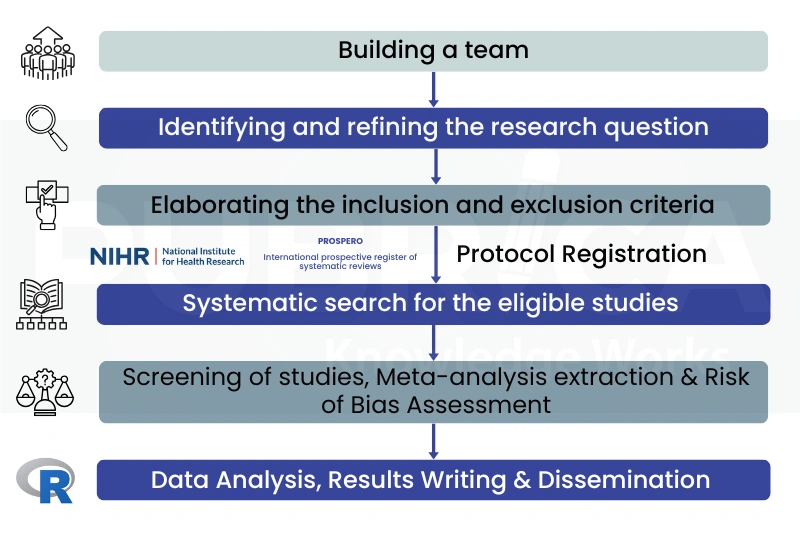
- Allow comparison between two or more reviews with respect to the same topic (medical intervention).
- Affect both clinical and policy decision-making based on evidence
For example, two systematic reviews regarding a single medical intervention may produce contradictory conclusions due to differing review methodology, which may include searching for literature, determining inclusion/exclusion criteria, and utilising different bias assessment methodology.
3. Key Domains Covered by AMSTAR
AMSTAR examines several methodological dimensions that influence the reliability of reviews.
Assessment Area | What It Examines |
Protocol and Planning | Whether the review methods were established in advance |
Literature Search | Whether databases and sources were searched comprehensively |
Study Selection | Whether inclusion and exclusion criteria were clear |
Data Extraction | Whether the extraction was conducted systematically |
Risk of Bias | Whether the included studies were critically appraised |
Synthesis Methods | Whether statistical or narrative synthesis was appropriate |
Publication Bias | Whether missing or selective reporting was considered |
Conflict of Interest | Whether funding or author conflicts were disclosed |
These criteria allow reviewers to make structured judgments rather than relying on subjective impressions.
4. AMSTAR vs AMSTAR 2
AMSTAR 2 is an evolvement of the original AMSTAR tool, providing more specific appraisal frameworks for systematic reviews with both randomised and non-randomised studies. Differences include: [5]
- Increased detail within checklist items.
- Emphasis more on critical domains.
- More applicable for reviews regarding complex interventions.
- Offers nuanced levels of confidence as opposed to providing traditional numerical scoring.
AMSTAR 2 has become the predominantly chosen tool for health research since most current systematic evidence reviews incorporate multiple study designs.
5. How Researchers Use AMSTAR in Practice
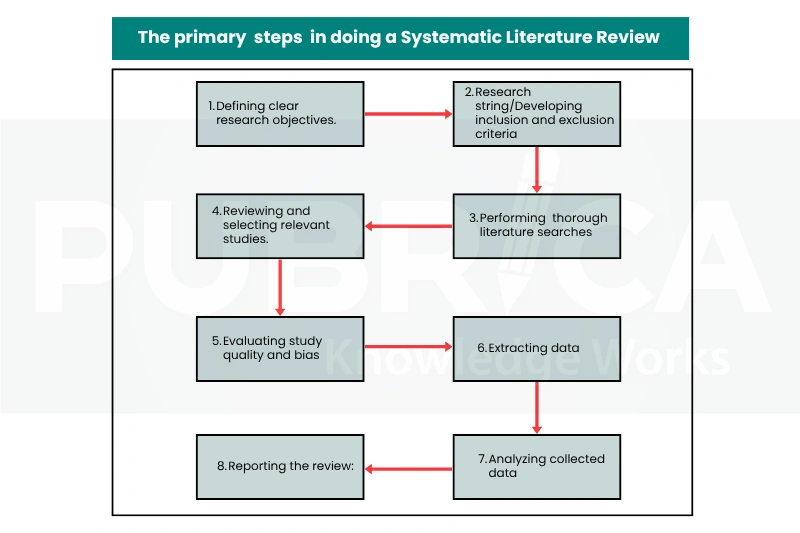
The AMSTAR tool is frequently utilised by researchers working on umbrella reviews, reviews of reviews, or evidence summaries. This is usually done by: [6]
- Determining which systematic review(s) you would like to evaluate
- Carefully reading through the methods and results sections of the selected systematic review(s)
- Assigning an AMSTAR rating to the items
- Identifying the critical strengths and/or weaknesses of the systematic review and/or its authors
- Assigning an overall confidence rating for the systematic review
This method will allow the researcher to evaluate how much weight the results of a review should be given when making recommendations for practice and/or how cautiously researchers should interpret the results of a systematic review.
6. Strengths and Limitations of AMSTAR
| Pros: | Cons: |
|---|---|
|
|
By combining a careful reading with an overall understanding of the methodology, AMSTAR produces a better result.
Connect with us to explore how we can support you in maintaining academic integrity and enhancing the visibility of your research across the world!
Conclusion
AMSTAR is an essential tool for evaluating the quality of systematic reviews and providing rigorous support for evidence-based decision-making. By exploring elements such as study design planning, literature search strategies, assessment of bias, synthesis of findings and transparency of the review process, AMSTAR equips users with information that enables them to evaluate and interpret the reliability of the findings of systematic reviews. The number of systematic reviews continues to increase, making tools such as AMSTAR and AMSTAR 2 even more beneficial for evidence-based medicine and research, and for researchers, clinicians, and students in distinguishing between studies with strong methodological quality and those with weak methodology.
What Is AMSTAR? Understanding Quality Assessment in Systematic Reviews. Our Pubrica consultants are here to guide you. [Get Expert Publishing Support] or [Schedule a Free Consultation]
References
- Lu, C., Lu, T., Ge, L., Yang, N., Yan, P., & Yang, K. (2020). Use of AMSTAR-2 in the methodological assessment of systematic reviews: protocol for a methodological study. Annals of translational medicine, 8(10), 652. https://doi.org/10.21037/atm-20-392a
- Pieper, D., Koensgen, N., Breuing, J., Ge, L., & Wegewitz, U. (2018). How is AMSTAR applied by authors – a call for better reporting. BMC medical research methodology, 18(1), 56. https://doi.org/10.1186/s12874-018-0520-z
- Delavari, S., Pourahmadi, M., & Barzkar, F. (2023). What Quality Assessment Tool Should I Use? A Practical Guide for Systematic Reviews Authors. Iranian journal of medical sciences, 48(3), 229–231. https://doi.org/10.30476/IJMS.2023
- Shea, B. J., Reeves, B. C., Wells, G., Thuku, M., Hamel, C., Moran, J., Moher, D., Tugwell, P., Welch, V., Kristjansson, E., & Henry, D. A. (2017). AMSTAR 2: a critical appraisal tool for systematic reviews that include randomised or non-randomised studies of healthcare interventions, or both. BMJ (Clinical research ed.), 358, j4008. https://doi.org/10.1136/bmj.j4008
- De Santis, K. K., Pieper, D., Lorenz, R. C., Wegewitz, U., Siemens, W., & Matthias, K. (2023). User experience of applying AMSTAR 2 to appraise systematic reviews of healthcare interventions: a commentary. BMC medical research methodology, 23(1), 63. https://doi.org/10.1186/s12874-023-01879-8