Pubrica

Sensor Technology

Expert guidance for medical imaging research, writing, and publication support, bridging technology, medicine, and innovation for precise diagnosis and improved patient care.

Transforming Healthcare Through Advanced Sensor Technology

The development of modern intelligent systems, as well as numerous industries (i.e., industrial automation and smart infrastructure), will be dependent on sensor technologies to enable real-time data collection, analysis, and decision making. These sensors enable the collection, monitoring, reporting, and interpretation of physical and chemical signals, biological signals, and other forms of data accurately and reliably. New advances in the development of materials and materials sciences, electronics, wireless communications, and data analytics continue to enhance the overall capabilities of sensor systems and further increase the level of innovation in connected intelligent environments.

At Pubrica, we acknowledge that sensor technology research involves precise technical requirements, interdisciplinary collaboration, and effective communication of scientific methodologies. Whether your research is based on a new design for a sensor, a biosensor, a wearable sensor, an implanted sensor, an IoT enabled sensor system, or a signal processing method, Pubrica’s editorial team can provide the technical support necessary to ensure that your work conforms to the highest standards in both the fields of academia and industry. We can help authors to successfully communicate their findings to their respective markets through peer-reviewed journal publications, conference presentations, and other worldwide platforms for scientific communication.

Sensor Technology

Our Core Disciplines in Sensor Technology

The broad expertise with which we work across the sensor domain enables us to continue to innovate for people around the world, wherever sensors and intelligence are found, including healthcare, industry, environmental monitoring and innovative smart infrastructures.

Design & Development of Sensors

Using modern techniques in the fabrication of. A TIM. Wireless Technologies. After the sensor is devised, it will be optimised to yield the greatest possible sensitivity and be manufactured using the highest quality of materials to maximise reliability and performance.
Notes Icon

Wearable & Portable
Sensors

Designing and manufacturing Wearable and Portable devices to be used as sensors for health monitoring, Fitness Tracking and Man-machine interactions. Being able to use these sensor devices will enable us to gather data continuously and instantaneously.

Notes Icon

Biosensors & Biomedical Sensors

Developing Biosensing Platforms for Medical Diagnosis, Disease Detection, and Health Monitoring. Integrating Bio-recognition elements into the Electronic Signal Processing systems.

User Tie Icon

Sensor Networks & IoT

Designing Sensor Networks and Systems that are Connected to the Internet using IoT. Enabling us to establish a connection between various environments for Communication, data acquisition and Remote Monitoring.

Book Icon

Microelectromechanical Systems (MEMS) & Nano sensors

Designing & Manufacturing small, very sensitive sensors using MEMS and Nano sensor Technology. This technology is used to develop sensors that can be utilised in applications relating to Health Care, Environmental Sensing, Industrial Automation etc.

Graduate Icon

Calibration Testing & Validation of Sensors

To Ensure that Sensors are Accurate, Reliable, and in Compliance with Standards, They Must be Rigorously Tested, Calibrated, and Performance Evaluated.


Book Open Reader Icon

Our Expertise in Sensor Technology

Pubrica delivers professional support for sensor technology research, ensuring clarity, accuracy, and global publication standards.

Comprehensive review to refine and validate your research pre-submission
Enhance clarity, grammar, and style for polished, professional manuscripts.
Structured data gathering tailored for artificial intelligence and machine learning.
Accurate scientific translations to broaden the reach of your research.
Expert guidance on project planning, execution, and data analysis.
Comprehensive literature reviews and evidence synthesis for clinical and academic research.
Helping select the right journals and manage the submission process seamlessly.
Strategic journal selection to maximize publication success.

Importance of Sensor Technology and Healthcare

Importance of Sensor Technology and Healthcare

Modern-day healthcare, industries, and smart systems depend heavily on sensor technology since it allows for real-time data gathering and decision-making for a variety of uses. The advancement of sensor technology has allowed for the monitoring, assessing, and collecting information on physical, chemical, and biological variables with great accuracy, allowing for intelligent decision-making in a multitude of different types of applications and areas of use. Here are some of the most notable advantages of sensor technology:

Real-Time Tracking

Continuous tracking of physiological, environmental and operational parameters, enables quick identification of changes to the system and abnormalities in the Physiological parameters being monitored.

Early Identification and Prevention

The use of advanced sensors provides the ability to identify and/or eliminate many problems at the earliest possible time, thereby enhancing preventive medical treatment, predictive maintenance, and risk prosperity.

Non-Invasively and Remote

The data gathered by most sensor technologies can be done without the need for any kind of physical interventions; thus, they provide for comfort, safety and access in both industrial and healthcare settings.

Improved Accuracy and Automation

High-precision radar sensors produce improved dependability of measurements and are the foundation of automated systems and equipment such as diagnostic, manufacturing, and intelligent infrastructures.

Decision Making Based on Data

The data generated from sensors is utilized to provide intelligent analytic processes along with real-time information required for making informed decisions across many medical, industrial, and environmental sectors.

Emerging Trends in Sensor Technology

The acceleration of sensor technology is being driven by notable advancements made in the fields of material sciences, artificial intelligence, and connectivity. With these advancements comes the development of a large variety of sensor capabilities that address healthcare, industrial applications, environmental monitoring, and smart infrastructures. The trends that are currently emerging include:

Intelligent and Smart Sensors

Through the incorporation of AI and machine learning techniques with sensors, sensor technologies can analyze data instantly, calibrate themselves, and make adaptive decisions thus creating opportunities for improved accuracy and efficiency.

Wearable and Implantable Sensors

Wearable and implantable sensors enable the monitoring of patients' health continuously and remotely in a way that is more comfortable and dependable than the traditional models using very small and flexible sensors.

Sensors with Internet of Things (IOT) Functionality

IoT-enabled sensors can communicate with each other, which allows for real-time monitoring, the collection of large amounts of data and the ability to be designed in such a way that they can integrate seamlessly into our current systems.

Sensor Development with Nanomaterials and Advanced Materials

Nanotechnology and advanced material are utilized to make this new generation of sensors more sensitive, specific, durable, and thereby enhancing all aspects of sensing such as environmental, biological, or chemical.

Smart and Efficient Sensor Technology

A few different technologies such as solar, piezoelectric, and thermal harvesting technologies can provide a sensor with the ability to use naturally occurring energy, thus supporting the need for longer-lasting sensors' operational lifetime while also creating an energy-efficient sensor.

Fusion of Sensors and Data Analytics

The fusion of multiple sensors provides increased accuracy, reliability, and contextual understanding when working within complex environments.

Clinical Applications of Sensor Technology

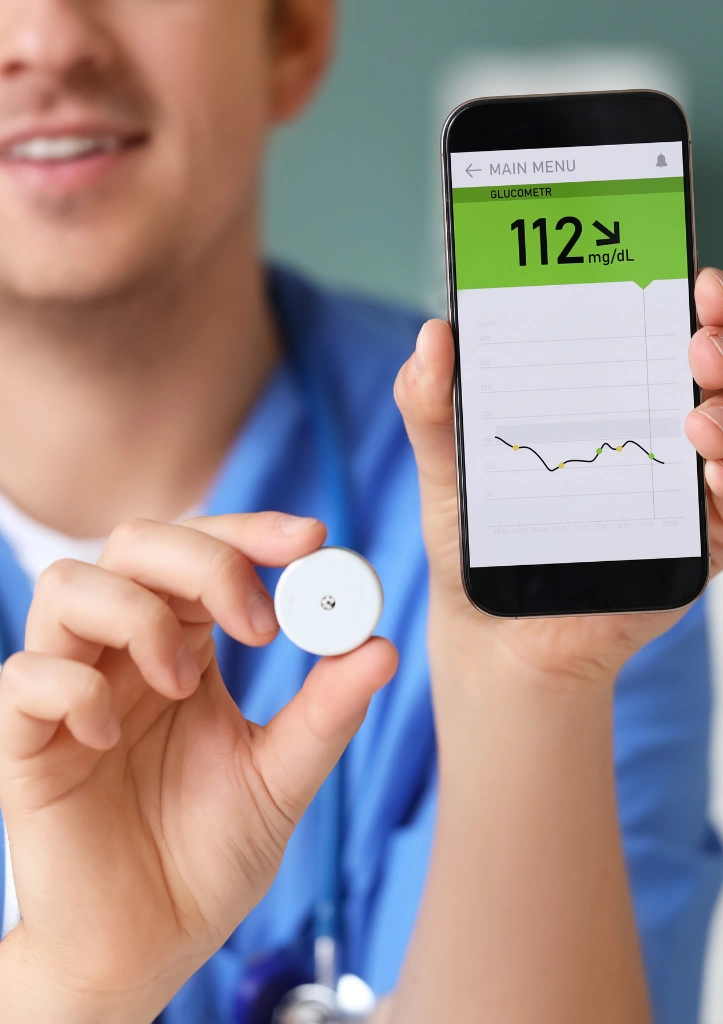
Sensor technology plays a transformative role in modern clinical practice by enabling accurate diagnosis, continuous monitoring, and personalized patient care. Advanced sensors enhance clinical efficiency, improve patient outcomes, and support data-driven medical decisions across a wide range of healthcare settings:

Precision Agriculture

Patient Monitoring: Ongoing assessment of vital signs can facilitate the early identification of illness and produce better health results.

Climate Smart Farming

Wearable and Implantable Devices: Sensors allow for prolonged health monitoring and customized therapy.

Biotechnology and Genomics

Diagnostic Support: Advanced sensors will improve diagnosis of disease and improve the diagnostic image.

Sustainable Resource Management

Remote Healthcare: Sensor based systems support remote medical care and telehealth services.

Agri Business

Precision medicine: The use of real-time data will provide tailored treatment and enhance the ability to make better clinical decisions.

Clinical Applications of Sensor Technology

Where Our Authors Publish

Our authors share Pubrica’s expert content across top-tier journals, conferences, and platforms, maximizing its recognition and reach. Our placement will enhance our visibility and elevate our standing in an authoritative capacity.

sample works

Paper Title: Extended Strand-Mediated Target Unmasking Synergized with Lyophilized Hairpin Probes for One-Step Viral RNA Detection.

Author: Jiwei Wang, Chuankun Yang, Ran Xu,
Shuo Ma, Ai Chen, YumingYao, Guoqiu Wu.

Journal Name: Biosensors & Bioelectronics

Publisher: Elsevier

Impact factor: 2.0 (2024)

Our Expert Sensor Technology Editors

Pubrica’s team of subject matter experts brings unparalleled expertise and diverse perspectives to deliver comprehensive solutions with precision and innovation. With a blend of experience and specialization, they ensure excellence in every project they undertake.

Dr. Ravi Kumar
UK
Dr. Alex Carter
PhD in Sensor Technology

Dr. Isaac Newton Rajkumar
USA
Dr. Neha Rao
PhD in Embedded Systems and Sensors

Dr. Krishna
USA
Dr. Rahul Mehta
PhD in Smart Sensor Systems

What Our Client Says About Us

Testimonials

Learn how Pubrica’s meta-analysis service has empowered researchers to generate high-impact, publication-ready analyses that advance evidence-based research and elevate their academic and clinical visibility. Here is what our clients say:

Testimonial Slider

Insights

Organize journal matching by different decision-making filters:

How to Structure Case Reports and Review Articles for Medical Journals

Medical journals expect a structure for case reports and review articles, with clear objectives....

Article

How Should Physicians Choose the Right Journal for Submitting a Case...

Publishing a case report involves more than clinical knowledge; it also demands strategic journal ....

Article

How Physicians Can Write Clear and Impactful Patient Education Materials

Effective patient education materials (PEMs) are crucial for promoting health literacy, enhancing....