
Tools to Make Meta-Analysis Easier for Medical Researchers
High-Impact Journals
Interesting topics
Tools to Make Meta-Analysis Easier for Medical Researchers
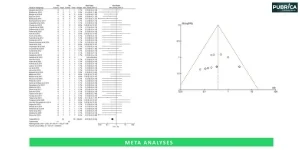
Meta-analysis is an important aspect of evidence-based medicine in which scientists integrate results from different studies to make more accurate conclusions. Nevertheless, carrying out a proper meta-analysis requires several steps, such as literature search, data extraction, analysis of statistics, testing for heterogeneity, and visualising results. Fortunately, computer programs can make it much easier. [1]
The current paper provides five examples of the most common software for conducting systematic reviews and meta-analyses.
1. Why Software Tools Matter in Meta-Analysis
Meta-analyses involve handling huge amounts of data with adherence to methodological accuracy. [2]
Advantages associated with the use of meta-analysis tools for medical research are:
- More rapid literature search and review of studies
- Greater precision in statistical calculations
- Creation of forest and funnel graphs through automated means
- Better coordination between researchers
- Conformity to evidence synthesis guidelines
2. Rev Man (Review Manager)
Rev Man (Review Manager) is a software developed by the Cochrane Collaboration. It is among the most popular Rev Man meta-analysis software applications in the healthcare field. [3]
Features of Rev Man
- Developed for systematic reviews and meta-analysis
- Forest plot construction
- Tools to assess risk of bias
- Management of data from clinical trials
- Friendly interface
Rev Man is suitable for use in conducting intervention research within the healthcare field.
3. Comprehensive Meta-Analysis (CMA)
Comprehensive Meta-Analysis (CMA) is a dedicated statistics program used for meta-analysis. It is one of the key Comprehensive Meta-Analysis (CMA) tool options used by researchers. [4]
Features
- Capable of performing several types of effect sizes
- Fixed and random effects models
- Publication bias tests
- Meta-regression techniques
- Graphical presentation
Researchers specialising in medical research may find CMA useful because of its complex statistical analysis without knowing much programming.
4. R and Meta-Analysis Packages
R is an open-source software for statistical computing commonly used in medical and epidemiological studies. [5] It is widely used with R packages for meta-analysis such as:
| Commonly used libraries in Rare: | Pros: |
|
|
Despite its difficulty to learn, R offers great flexibility in analysis.
5. Stata
Stata is a statistical software often used for clinical research and epidemiological studies. It supports Stata meta-analysis commands.
Features
- Command for conducting meta-analyses
- Feature of meta-regression
- Options for sensitivity analysis
- Ability to assess publication bias
- Efficient data management
A variety of organisations rely on Stata because of its efficient integration of usability and advanced statistics.
6. Rayyan
Rayyan is an online application developed for systematic review screening and is widely used as a Rayyan systematic review tool. [6]
Features
- Screening collaboration
- Study selection using artificial intelligence technology
- Duplicate identification
- Blinding reviewers
- Cloud support
Rayyan greatly helps save time on title/abstract screening when conducting systematic reviews.
7. Comparing Meta-Analysis Tools
These are some of the best meta-analysis tools for medical researchers and software for systematic review and meta-analysis:
| Tool | Primary Function | Ease of Use | Advanced Statistics | Best For |
| Rev Man | Systematic reviews and meta-analyses | High | Moderate | Healthcare reviews |
| CMA | Dedicated meta-analysis | High | High | Clinical researchers |
| R | Statistical programming | Moderate-Low | Very High | Advanced analysts |
| Stata | Statistical analysis | Moderate | High | Epidemiology and public health |
| Rayyan | Literature screening | Very High | Low | Systematic review teams |
8. Choosing the Right Tool
The choice of suitable software will depend on many things: [7]
Remember the following:
- Objectives of research: Clearly define what the study aims to achieve and guide the entire research process, including design, data collection, and analysis.
- Complexity of statistics: Refers to how advanced the statistical methods are; complex studies may require advanced models, while simple studies use basic descriptive or inferential statistics.
- Availability of budget: Determines the scale of the research, including data collection methods, tools, software, manpower, and time resources.
- Programming skill: Indicates the ability to use software tools (like R, Python, SPSS) needed for data analysis, modelling, and visualisation.
- Collaborative effort: Involves teamwork among researchers, which improves idea sharing, workload distribution, and the quality of research outcomes.
For novice users, Rev Man and Rayyan will be ideal. For complex analysis, including meta-regression or network meta-analysis, R and Stata can work well.
Connect with us to explore how we can support you in maintaining academic integrity and enhancing the visibility of your research across the world!
Conclusion
A meta-analysis is a critical method in current medical research. Several clinical research data analysis tools make processes from screening to statistical modelling easier, including Rev Man, CMA, R, Stata, and Rayyan.
Using the right tools in healthcare research improves efficiency, accuracy, and saves time for researchers. These technologies will continue to play an important role in the future of medical research.
Tools to Make Meta-Analysis Easier for Medical Researchers. Our Pubrica consultants are here to guide you. [Get Expert Publishing Support] or [Schedule a Free Consultation]
Frequently Asked Questions (FAQs)
Meta-analysis software is used to combine and analyse data from multiple studies. It helps researchers perform statistical analysis, create forest plots, assess heterogeneity, and improve the accuracy of evidence synthesis.
Some of the best meta-analysis tools for medical researchers include Rev Man, Comprehensive Meta-Analysis (CMA), R, Stata, and Rayyan. The best choice depends on the research complexity and user expertise.
Rev Man (Review Manager) is used for conducting systematic reviews and meta-analyses. It helps in building forest plots, managing clinical trial data, and assessing risk of bias.
Yes. R (programming language) is widely used for meta-analysis due to its flexibility and powerful packages like metafor and meta. It is ideal for advanced statistical analysis and custom modelling.
Rayyan is used to speed up systematic review screening. It helps researchers with study selection, duplicate detection, and collaborative screening using AI-assisted tools.
References
- Al-Namaeh M. (2025). Meta-Analysis: A to Z for Healthcare Professionals. Cureus, 17(3), e80846. https://doi.org/10.7759/cureus.80846
- Bax, L., Yu, L. M., Ikeda, N., & Moons, K. G. (2007). A systematic comparison of software dedicated to meta-analysis of causal studies. BMC medical research methodology, 7, 40. https://doi.org/10.1186/1471-2288-7-40
- Schmidt, L., Shokraneh, F., Steinhausen, K., & Adams, C. E. (2019). Introducing RAPTOR: RevMan Parsing Tool for Reviewers. Systematic reviews, 8(1), 151. https://doi.org/10.1186/s13643-019-1070-0
- Abbas, A., Hefnawy, M. T., & Negida, A. (2024). Meta-analysis accelerator: a comprehensive tool for statistical data conversion in systematic reviews with meta-analysis. BMC medical research methodology, 24(1), 243. https://doi.org/10.1186/s12874-024-02356-6
- Shim, S. R., & Kim, S. J. (2019). Intervention meta-analysis: application and practice using R software. Epidemiology and health, 41, e2019008. https://doi.org/10.4178/epih.e2019008
- Ouzzani, M., Hammady, H., Fedorowicz, Z., & Elmagarmid, A. (2016). Rayyan-a web and mobile app for systematic reviews. Systematic reviews, 5(1), 210. https://doi.org/10.1186/s13643-016-0384-4
- Caplan, A. L., Plunkett, C., & Levin, B. (2015). Selecting the right tool for the job. The American journal of bioethics : AJOB, 15(4), 4–10. https://doi.org/10.1080/15265161.2015.1010993