
- Services
- Discovery & Intelligence Services
- Publication Support Services
- Sample Work
Publication Support Service
- Editing & Translation
-
Editing and Translation Services
- Sample Work
Editing and Translation Service
-
- Research Services
- Sample Work
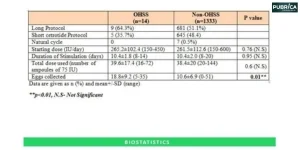
Research Services
- Physician Writing
- Sample Work

Physician Writing Service
- Statistical Analyses
- Sample Work
Statistical Analyses
- Data Collection
- AI and ML Services
- Sample Work
AI and ML Services
- Medical Writing
- Sample Work
Medical Writing
- Research Impact
- Sample Work
Research Impact
- Medical & Scientific Communication
- Sample Work
Medical & Scientific Communication
- Medico Legal Services
- Educational Content
- Academic Editorial Services
- Sample Work
Academic Editorial Services
- Educational Editorial Service
-
Education Editorial Services
- Sample Work
Education Editorial Services
-
- Industries
- Subjects
- About Us
- Academy
- Insights
- Contact Us
Targeted literature searches are a fundamental part of writing clinical manuscripts that will meet the standards of high-quality journals and contribute meaningfully to evidence-based practice. When physicians write clinical manuscripts, utilizing a targeted literature search can identify high-quality, relevant, and current evidence. While a general literature review is useful, a targeted literature search is specific to the clinical question and should be completed through frameworks established, such as PICO (Population, Intervention, Comparator, Outcome) and PRISMA [1].
Predictive Analytics: Model Types, How it Works and Uses
- Home
- Academy
- Research Impact
- Predictive Analytics: Model Types, How it Works and Uses
Predictive Analytics
Interesting topics
Predictive Analytics: Model Types, How it Works and Uses
Predictive analytics is an advanced analytics technique that involves using historical data, statistical algorithms, and machine learning techniques to determine the probability of future outcomes. Rather than simply understanding what has occurred in the past, an effective predictive analytics framework will provide a predictive forecast of what will likely happen in the future. Predictive analytics is used to help organizations and industries predict future events, enhance operational efficiencies, and drive decision making.[1]
1. Predictive Analytics Defined
Predictive analytics is the use of historical data in conjunction with statistical models or machine learning techniques to determine what will happen in the future, or what behaviours are likely in the future. Predictive analytics works by establishing patterns and trends based on past data and foretelling what is likely to happen in the future, often with great accuracy.[2]
For example, in a retail setting, predictive analytics can forecast which products will be in demand based on historical sales data, seasonal trends, and external factors like promotions or weather. In healthcare, predictive models can anticipate patient outcomes, helping medical professionals make better decisions.
2. How Predictive Analytics Works
Predictive analytics works by analysing massive quantities of data from varied data sources, for example, and using techniques such as regression analysis, time series analysis, decision tree modeling, machine learning models, and more. All these methods allow organizations to make sense of all the data to obtain meaningful insights and make predictions about future events. [3]
2.1. The process involves several key steps
| Data Collection and Acquisition | Data is gathered from various sources, such as sensors, transactional records, and online platforms. It can include structured data (e.g., numbers, dates) and unstructured data (e.g., text, images).[4] |
|---|---|
| Data Preprocessing | Raw data is cleaned, transformed, and prepared for analysis. This step involves handling missing values, normalizing data, encoding categorical variables, and addressing any inconsistencies in the dataset.[5] |
| Model Development | Statistical or machine learning models are built based on the pre-processed data. The choice of model depends on the type of problem (classification, regression, etc.), the complexity of the data, and the desired output.[6] |
| Model Training and Evaluation | Models are trained using historical data, where they learn patterns and relationships. Evaluation metrics such as accuracy, precision, recall, and AUC Area Under the Curve are used to assess the model’s performance.[7] |
| Prediction | After training, the model is used to make predictions based on new or unseen data. |
3. Steps in Predictive Analytics
The main steps in predictive analytics [8]
3.1. Define the Problem
The first step is to define the problem you are trying to solve. It doesn’t matter if you are forecasting demand, predicting customer churn, or estimating financial risks, defining an objective will help to ensure that your predictive analytics effort remains relevant and focused.
- What exact prediction are you trying to make?
- What data is required to make the prediction?
- What impact will the prediction have on the business?
Defining the problem will help you to focus on data collection and analysis later.
3.2. Acquire and Organize Data
After the problem has been articulated, the next phase is to procure pertinent data from an array of sources. The data accrual process consists of sources of data whether external (e.g., weather trends, social media activity) or internal (e.g., sales records, customer interactions), assessing the quality of the data, and ensuring the data is collected in a systematic schema. Data is typically collected in databases, spreadsheets, or data warehouses, which should be configured in organization for analysis
3.3. Pre-process Data
Raw data can often be messy, incomplete, or unorganized, so it is essential to clean and preprocess it before analysing. Data preprocessing includes many different steps,
- Cleaning: resolving missing values, fixing errors, removing outliers
- Transformation: normalizing with respect to a statistical measure, changing data types, aggregating data
- Encoding: converting categorical values to numerical values
The goal during preprocessing is to structure the data so it is easier to build a proportionate predictive model.
3.4. Develop Predictive Models
After your data is clean and organized, you can begin the next stage of model building. The available models depend on the question being asked.
- Regression models: these models are used to predict numerical outcomes, or continuous variables. For example, you may wish to estimate future sales revenue or temperature prediction.
- Classification models: these models are used to predict categorical outcomes. For example, a retailer may wish to know whether a customer is likely to become a churned customer after a shopping event, or a bank may wish to know whether the loan application will be approved or not approved.
- Time series models: these models are used to predict sequential data points. For example, you may wish to forecast the price of a stock or the total demand of a product over time.
Common algorithms in machine learning include decision trees, random forests, support vector machines, neural networks, and ensemble models.
3.5. Validate and Deploy Results
With the model developed, we must validate what we have created using cross-validation to ensure that it performs as expected when applied to new unseen data and that its prediction abilities are significant. This is done through measurement using several metrics (e.g. accuracy, precision, recall, F1 score) and then analysing them to measure the model’s performance.
4. Uses of Predictive Analytics
Predictive analytics is used across a wide range of industries for various applications. Some notable uses include [9]
- Retail and E-commerce: Predicting customer behavior, optimizing inventory levels, personalizing marketing offers, and improving customer retention.
- Healthcare: Forecasting patient outcomes, predicting disease outbreaks, recommending personalized treatments, and improving operational efficiency.
- Finance: Detecting fraud, assessing credit risk, predicting stock prices, and optimizing investment strategies.
- Manufacturing: Predicting equipment failures, optimizing production schedules, and improving supply chain efficiency.
- Telecommunications: Forecasting customer churn, optimizing network performance, and improving customer service.
- Marketing and Sales: Personalizing marketing campaigns, segmenting customers, predicting conversion rates, and optimizing ad targeting.
Connect with us to explore how we can support you in maintaining academic integrity and enhancing the visibility of your research across the world!
Conclusion
Predictive analytics is a powerful technique that allows organizations to forecast future trends, reduce risks, and improve efficiency. Using data, statistical models, and machine learning methods, organizations can use data to make informed decisions and drive competitive advantage. The four main phases of predictive analytics define the problem, collect and process data, create models, and verify outcomes can help you ensure your predictive models are functional and provide value in the real world.
Predictive Analytics: Model Types, how it Works and Uses? Our Pubrica consultants are here to guide you. [Get Expert Publishing Support] or [Schedule a Free Consultation]
References
- What is predictive analytics? (2025, July 31). com. https://www.ibm.com/think/topics/predictive-analytics
- What is Predictive Analytics and How does it Work?(2024, February 13). GeeksforGeeks. https://www.geeksforgeeks.org/data-analysis/what-is-predictive-analytics-and-how-does-it-work/
- What is predictive analytics and how does it work?(n.d.). Google Cloud. Retrieved September 11, 2025, from https://cloud.google.com/learn/what-is-predictive-analytics
- Data collection and acquisition. (n.d.). Ducat India. Retrieved September 11, 2025, from https://tutorials.ducatindia.com/data-analytics/data-collection-and-acquisition
- Data preprocessing in data mining. (2019, March 12). GeeksforGeeks. https://www.geeksforgeeks.org/dbms/data-preprocessing-in-data-mining/
- (N.d.). Sciencedirect.com. Retrieved September 11, 2025, from https://www.sciencedirect.com/topics/computer-science/model-development
- Machine learning model evaluation. (2023, January 7). GeeksforGeeks. https://www.geeksforgeeks.org/machine-learning/machine-learning-model-evaluation/
- (2022, September 13). The 6 steps of predictive analytics. Analytics Vidhya. https://www.analyticsvidhya.com/blog/2022/09/the-6-steps-of-predictive-analytics/
- Halton, C. (2013, December 30). Predictive analytics: Definition, model types, and uses. Investopedia. https://www.investopedia.com/terms/p/predictive-analytics.asp