
- Services
- Discovery & Intelligence Services
- Publication Support Services
- Sample Work
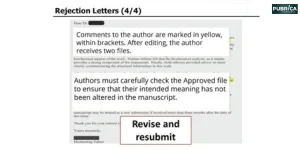
Publication Support Service
- Editing & Translation
-
Editing and Translation Services
- Sample Work

Editing and Translation Service
-
- Research Services
- Sample Work
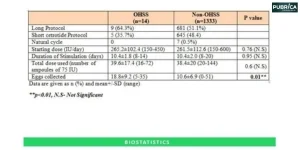
Research Services
- Physician Writing
- Sample Work

Physician Writing Service
- Statistical Analyses
- Sample Work

Statistical Analyses
- Data Collection
- AI and ML Services
- Sample Work
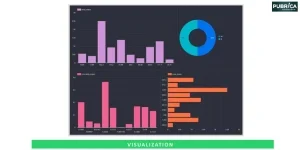
AI and ML Services
- Medical Writing
- Sample Work
Medical Writing
- Research Impact
- Sample Work
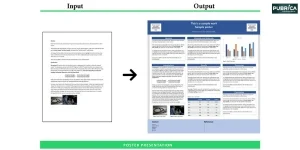
Research Impact
- Medical & Scientific Communication
- Sample Work
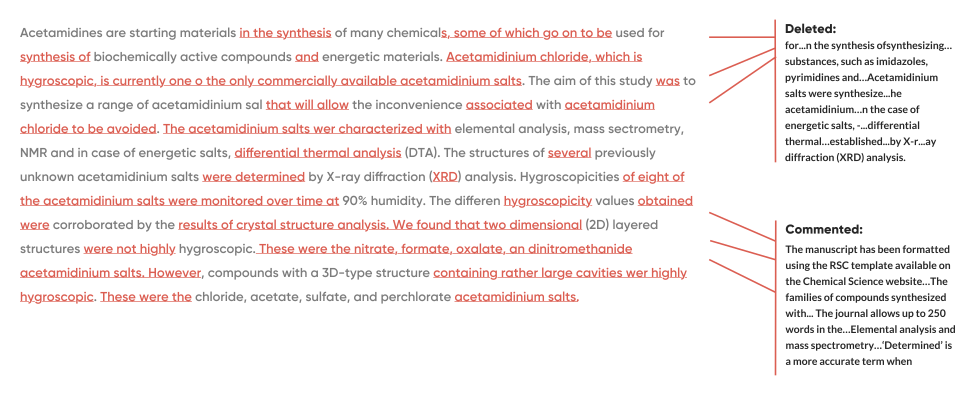
Medical & Scientific Communication
- Medico Legal Services
- Educational Content
- Academic Editorial Services
- Sample Work
Academic Editorial Services
- Educational Editorial Service
-
Education Editorial Services
- Sample Work
Education Editorial Services
-
- Industries
- Subjects
- About Us
- Academy
- Insights
- Contact Us
Targeted literature searches are a fundamental part of writing clinical manuscripts that will meet the standards of high-quality journals and contribute meaningfully to evidence-based practice. When physicians write clinical manuscripts, utilizing a targeted literature search can identify high-quality, relevant, and current evidence. While a general literature review is useful, a targeted literature search is specific to the clinical question and should be completed through frameworks established, such as PICO (Population, Intervention, Comparator, Outcome) and PRISMA [1].
How to Write and Publish a Research Manuscript as a Practicing Physician
- Home
- Academy
- Physician Writing
- How to Write and Publish a Research Manuscript as a Practicing Physician
Practicing Physician
- Research Topic Aligned with Clinical Practice
- Choose the Right Study Design
- Obtain Ethics Approval
- Structure Your Manuscript Properly
- Prepare Tables and Figures
- Choose an Appropriate Journal
- Reference Properly Using Standard Style
- Write a Persuasive Cover Letter
- Peer Reviewer Comments Professionally
- Avoid Common Pitfalls
Interesting topics
How to Write and Publish a Research Manuscript as a Practicing Physician
1. Introduction
2. Select a Research Topic Aligned with Clinical Practice
3. Choose the Right Study Design
4. Obtain Ethics Approval
5. Structure Your Manuscript Properly
6. Prepare Tables and Figures
7. Choose an Appropriate Journal
8. Reference Properly Using Standard Style
9. Write a Persuasive Cover Letter
10. Address Peer Reviewer Comments Professionally
11. Avoid Common Pitfalls.
12. Conclusion
13. References
Introduction
Physicians are increasingly contributing to scientific literature, not just to improve the delivery of patient care, but also in support of clinical innovations and career advancement. However, often, time constraints, inadequate training, and limited access to research mentors preclude the publication of a manuscript [1]. This guide provides a systematic, evidence-informed approach to writing and publishing a research manuscript for practicing physicians.
1. Select a Research Topic Aligned with Clinical Practice
Your manuscript must be grounded in real-world relevance. Select a research idea that addresses a clinical gap or supports evidence-based practice.
Examples of Physician-Originated Topics
| Clinical Area | Research Focus Example |
| Cardiology | Comparative outcomes of dual antiplatelet therapy |
| Internal Medicine | Diagnostic accuracy of AI-based decision support tools |
| Paediatrics | Nutritional interventions in childhood obesity |
| Critical Care | Early mobilization in the ICU and length of stay |
2. Choose the Right Study Design
Physicians can choose from several manuscript types based on their available data and intent [2]:
Study Designs for Physician Researchers
| Study Type | Best For | Example |
| Case Report/Series | Unique or rare presentations | Reporting a rare drug-induced reaction |
| Retrospective Study | Existing patient records | Comparing outcomes pre- and post-policy |
| Prospective Cohort | Future data collection | Monitoring post-vaccine adverse events |
| Cross-sectional Survey | Snapshot of knowledge or behaviour | Surveying vaccine hesitancy in the clinic |
| RCT | High-quality intervention trials | New surgical technique vs. standard |
3. Obtain Ethics Approval
All studies involving patient data require ethics clearance, even retrospective audits. In India, submission to the Institutional Ethics Committee (IEC) is mandatory under ICMR 2017 guidelines [3].
4. Structure Your Manuscript Properly
IMRaD Breakdown for Physicians
| I | Introduction |
|
| M | Methods |
|
| R | Results |
|
| D | Discussion |
|
5. Prepare Tables and Figures
Tables and graphs should communicate complex data concisely.
Sample Table for Clinical Research Paper
| Variable | Intervention Group | Control Group | p-value |
| ICU Length of Stay (days) | 4.2 ± 1.1 | 6.3 ± 1.5 | 0.021* |
| 30-day Readmission Rate | 10% | 18% | 0.047* |
*Statistically significant
Tips:
- Limit to 4–5 tables or figures
- Use consistent units and notation
- Avoid duplicating data in both text and tables
6. Choose an Appropriate Journal
7. Reference Properly Using Standard Style
Use referencing software (e.g., Zotero, EndNote) and adhere to journal-specific styles such as Vancouver, AMA, APA [8].
Example (Vancouver Style):
Sharma R, Gupta N. Risk factors of myocardial infarction in Indian males. Indian Heart J. 2020;72(3):205–10.
8. Write a Persuasive Cover Letter
The cover letter must:
- State the manuscript title
- Highlight clinical relevance
- Confirm originality and ethical compliance
- Mention conflict of interest disclosures
9. Address Peer Reviewer Comments Professionally
After submission, be prepared to revise the manuscript.
How to Respond to Reviewers:
- Use a point-by-point reply format
- Highlight changes with tracked revisions or coloured text
- Justify unchanged elements with scientific reasoning
Example
Reviewer Comment: “Clarify inclusion criteria.”
Response: “Thank you. We revised the Methods section (p. 4) to specify that patients aged 18–65 with a confirmed diagnosis were included.”
Connect with us to explore how we can support you in maintaining academic integrity and enhancing the visibility of your research across the world!
10. Avoid Common Pitfalls.
- Submitting before statistical validation
- Ignoring word count or formatting rules.
- Citing outdated sources.
- Plagiarism (even self-plagiarism).
Conclusion
Physicians can help advance medical knowledge through the publication of research articles. By choosing clinically relevant topics, using rigorous methods, and evaluating the appropriateness of mentorship, even busy clinicians can navigate their way to publishing in peer-reviewed journals.
Need expert support to publish your clinical research?
Pubrica offers end-to-end physician manuscript writing and editing services, adhering to ICMR and international publishing standards.
References
- Gonzalez-Perez, O., & Ramos-Remus, C. (2025). The importance of physician engagement in medical research. Frontiers in medicine, 12, 1537023. https://doi.org/10.3389/fmed.2025.1537023
- Süt N. (2014). Study designs in medicine. Balkan medical journal, 31(4), 273–277. https://doi.org/10.5152/balkanmedj.2014.1408
- Indian Council of Medical Research. (2017). National ethical guidelines for biomedical and health research involving human participants. New Delhi: ICMR. https://ethics.ncdirindia.org/asset/pdf/ICMR_National_Ethical_Guidelines.pdf
- Health Sciences Library. (2020). Research guides: Structure of a research paper : Home. https://libguides.umn.edu/StructureResearchPaper
- Sollaci, L. B., & Pereira, M. G. (2004). The introduction, methods, results, and discussion (IMRAD) structure: a fifty-year survey. Journal of the Medical Library Association: JMLA, 92(3), 364–367. https://pmc.ncbi.nlm.nih.gov/articles/PMC442179/
- Journal finder. (n.d.). Elsevier.com. https://journalfinder.elsevier.com/
- Journal / Author Name Estimator. (n.d.). Biosemantics.org. https://jane.biosemantics.org/
- com. https://www.scribbr.com/citing-sources/citation-styles/