
- Services
- Discovery & Intelligence Services
- Publication Support Services
- Sample Work

Publication Support Service
- Editing & Translation
-
Editing and Translation Services
- Sample Work

Editing and Translation Service
-
- Research Services
- Sample Work

Research Services
- Physician Writing
- Sample Work

Physician Writing Service
- Statistical Analyses
- Sample Work

Statistical Analyses
- Data Collection
- AI and ML Services
- Sample Work
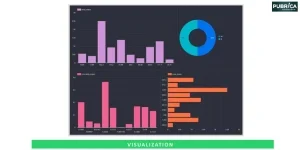
AI and ML Services
- Medical Writing
- Sample Work
Medical Writing
- Research Impact
- Sample Work
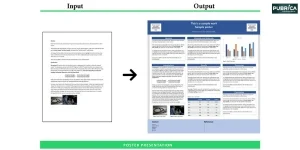
Research Impact
- Medical & Scientific Communication
- Sample Work
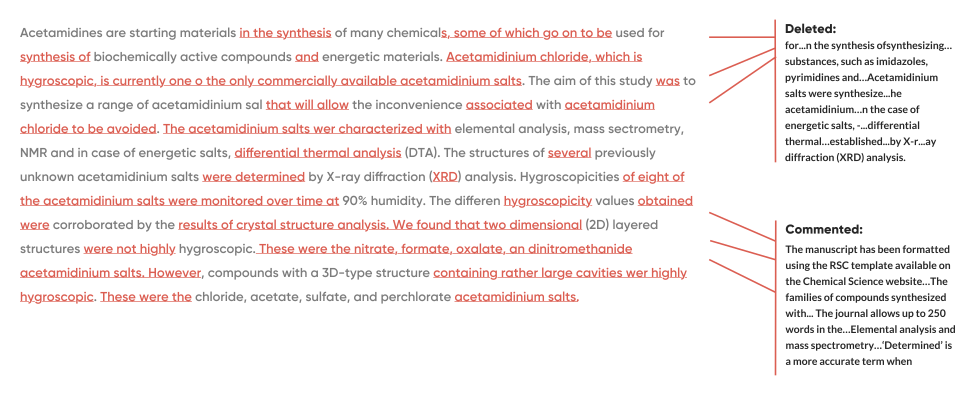
Medical & Scientific Communication
- Medico Legal Services
- Educational Content
- Academic Editorial Services
- Sample Work
Academic Editorial Services
- Educational Editorial Service
-
Education Editorial Services
- Sample Work
Education Editorial Services
-
- Industries
- Subjects
- About Us
- Academy
- Insights
- Contact Us
Targeted literature searches are a fundamental part of writing clinical manuscripts that will meet the standards of high-quality journals and contribute meaningfully to evidence-based practice. When physicians write clinical manuscripts, utilizing a targeted literature search can identify high-quality, relevant, and current evidence. While a general literature review is useful, a targeted literature search is specific to the clinical question and should be completed through frameworks established, such as PICO (Population, Intervention, Comparator, Outcome) and PRISMA [1].
Transforming the Patient Journey with Machine Learning: Data-Driven Insights for Better Healthcare Outcomes
- Home
- Academy
- Research Impact
- Transforming the Patient Journey with Machine Learning: Data-Driven Insights for Better Healthcare Outcomes
High-Impact Journals
Interesting topics
Transforming the Patient Journey with Machine Learning: Data-Driven Insights for Better Healthcare Outcomes
A patient’s journey includes all interactions with the healthcare system from the first moment a patient realizes he or she has symptoms, all the way through post-treatment follow-up. Understanding a patient’s journey is a key to improving patient outcomes and healthcare delivery. Machine learning (ML) has emerged as a transformative tool in this space due to its capacity to provide insights from data to enhance the patient experience. [1]
1. Understanding the Patient Journey
In the standard model of the patient journey, the phases are usually segmented into five sections: [2]
- Awareness discovering concerning symptoms or health issues
- Consideration of researching information and considering care options
- Decision deciding on a provider or a treatment plan
- Engagement receiving treatment interventions
- Post-Treatment ending follow-up care and recovery.
2. Role of Machine Learning in Enhancing Patient Journeys
By analyzing large amounts of data, machine learning can identify patterns and glean insights that traditional approaches may overlook. Important applications include the following, with additional examples from the Frontiers in Public Health article: [3]
Predictive patient outcomes and flagging at-risk patients and enhancing patient engagement. | |
Personalized Care | Customizing treatment plans according to individual patient data restored to the clinical context |
Operational Efficiency | Effective resource placement and scheduling, and improving feedback and follow-ups.
|
Sentiment Analysis | Gathering patient feedback to improve hospital services and the patient’s experience. |
3. Case Studies and Real-World Applications
Case studies and real-world applications provide practical insights into how theoretical concepts are implemented in practice. By examining specific examples, researchers and practitioners can bridge the gap between theory and evidence-based practice.
3.1. Early Detection of Ovarian Cancer
Researchers have created a blood test that employs a machine-learning-based algorithm to identify ovarian cancer early with accuracy rates up to 93%. By monitoring concentrations of specific biomarkers, the test is less invasive and more accurate than traditional methods of detection.
4. Benefits of Integrating Machine Learning into Patient Journey Mapping
Incorporating ML in patient journey mapping provides a few benefits: [4]
- Better Decisions: Data-driven insights will improve clinical perspectives.
- Better Patient Outcomes: Patient-centered treatment plans will lead to better outcomes for patients.
- Operational Improvements: More efficient use of resources and less backlog in the care process.
- Patient Satisfaction: Improved experience for patients and more responsive processes for patients.
5. Challenges and Considerations
Even though it has the potential, there are challenges surrounding the integration of ML into patient journey mapping [5]
- Data Privacy: Protecting patient data confidentiality and compliance with regulations.
- Data Quality: The quality of input data determines the accuracy of ML models.
- Implementation Costs: The time and resources of the initial system setup and training
- Interoperability: Integrating ML systems in the pre-existing healthcare systems.
6. Future Directions
The outlook for ML revolutionizing patient experience mapping is good:
- Real-Time Analytics: Constantly analyzing data about patient performance to derive insights immediately.
- Electronic Monitoring Integration: Using monitoring data from wearables to assist in tracking patients’ health.
- AI/ML Personalization: Creating care plans that are hyper-personalized based on information from sophisticated AI algorithms.
- Predictive Modeling: Predicting patient needs and complications before a patient needs them.
Connect with us to explore how we can support you in maintaining academic integrity and enhancing the visibility of your research across the world!
Conclusion
Machine learning is transforming our understanding and improvement of the patient journey. With advanced ML capabilities, healthcare providers can offer more personalized, efficient, and effective care, ultimately improving the quality of outcomes and patient satisfaction. Continued advancement in AI and ML holds promise for transformational change in the delivery of healthcare.
Using Analytics to Improve Patient Outcomes Across the Healthcare Journey? Our Pubrica consultants are here to guide you. [Get Expert Publishing Support] or [Schedule a Free Consultation]
References
- Bajwa, J., Munir, U., Nori, A., & Williams, B. (2021). Artificial intelligence in healthcare: transforming the practice of medicine. Future healthcare journal, 8(2), e188–e194. https://doi.org/10.7861/fhj.2021-0095
- Quinn, M., Engle, J. M., Fowler, K. E., Harrod, M., Clive, D., Ehrlinger, R., Houchens, N., Green, P., & Saint, S. (2025). Patient journeys: A qualitative assessment exploring patient availability and interest in whole health services. Journal of Patient Safety. https://doi.org/10.1097/PTS.0000000000001416
- Habehh, H., & Gohel, S. (2021). Machine Learning in Healthcare. Current genomics, 22(4), 291–300. https://doi.org/10.2174/1389202922666210705124359
- Chustecki M. (2024). Benefits and Risks of AI in Health Care: Narrative Review. Interactive journal of medical research, 13, e53616. https://doi.org/10.2196/53616
- Baniasadi, T., Ayyoubzadeh, S. M., & Mohammadzadeh, N. (2020). Challenges and Practical Considerations in Applying Virtual Reality in Medical Education and Treatment. Oman medical journal, 35(3), e125. https://doi.org/10.5001/omj.2020.43