
- Services
- Discovery & Intelligence Services
- Publication Support Services
- Sample Work
Publication Support Service
- Editing & Translation
-
Editing and Translation Services
- Sample Work

Editing and Translation Service
-
- Research Services
- Sample Work
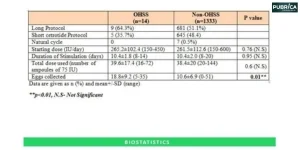
Research Services
- Physician Writing
- Sample Work
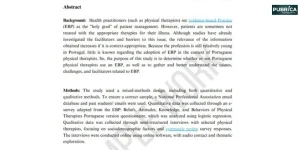
Physician Writing Service
- Statistical Analyses
- Sample Work
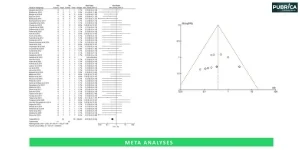
Statistical Analyses
- Data Collection
- AI and ML Services
- Sample Work

AI and ML Services
- Medical Writing
- Sample Work
Medical Writing
- Research Impact
- Sample Work
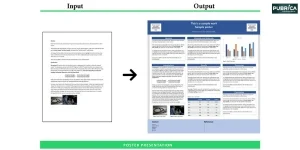
Research Impact
- Medical & Scientific Communication
- Sample Work
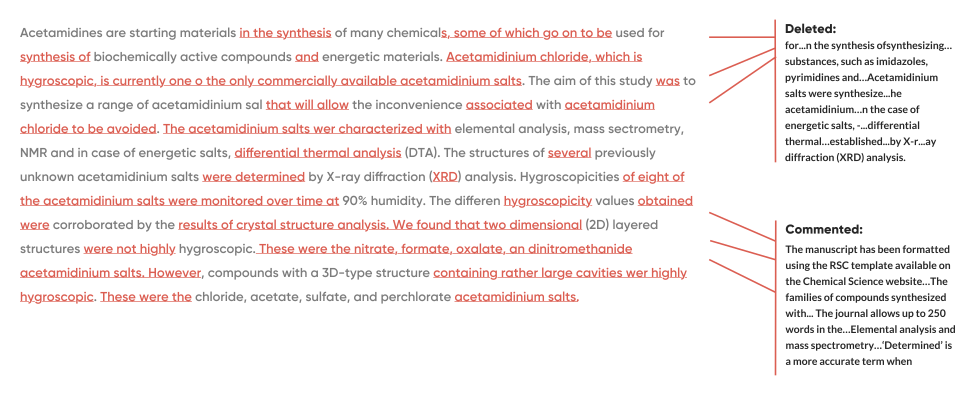
Medical & Scientific Communication
- Medico Legal Services
- Educational Content
- Academic Editorial Services
- Sample Work
Academic Editorial Services
- Educational Editorial Service
-
Education Editorial Services
- Sample Work
Education Editorial Services
-
- Industries
- Subjects
- About Us
- Academy
- Insights
- Contact Us

Maintaining Parallel Structure in Lists: Why It Matters in Medical Writing
- Home
- Academy
- Medical Writing
- Maintaining Parallel Structure in Lists: Why It Matters in Medical Writing
High-Impact Journals
Interesting topics
Maintaining Parallel Structure in Lists: Why It Matters in Medical Writing
1. What Is Parallel Structure?
2. Why Parallel Structure Matters in Medical Writing
3. Where Parallel Structure Is Most Critical
4. How Parallel Structure Improves Peer Review Outcomes
5. Advanced Strategies for Maintaining Parallelism
6. SEO Perspective: Why This Matters for Digital Scientific Publishing
Maintaining parallel structure in medical writing, using consistent grammatical forms for items in a list, is crucial for ensuring accuracy, clarity, and readability in clinical documentation, research reports, and patient education materials. Because medical information is often complex and high-stakes, parallelism reduces the cognitive load on readers, allowing them to grasp crucial information quickly without having to decipher inconsistent phrasing.
Medical writing must exhibit clarity, precision, and consistency. Each of these aspects is vital in any type of medical document – writing a clinical trial report, writing a systematic review, or submitting documents to a regulatory body. In all three categories, even minor types of structural consistency can lead to a lack of understanding and can interfere with the ability of the reader to interpret the document correctly. An often neglected but effective method to improve scientific clarity is by using parallel structure (also known as parallelism) when creating lists. In professional contexts such as medical writing services, maintaining parallel structure in writing is considered a foundational quality standard.
Parallel structure—also called parallelism—means presenting similar ideas in similar grammatical forms. In contrast to style, in the context of medical writing, parallelism is considered to be an important factor affecting reader comprehension, methodological transparency, and reporting quality.[1,2] This article will provide information on how and why parallelism is important for lists in medical manuscripts, how it affects scientific rigor, and how to implement parallelism effectively in medical manuscripts.
1. What Is Parallel Structure?
Parallel structure ensures that items in a list share the same grammatical pattern. This applies to:
- Bullet lists
- Numbered lists
- Table entries
- Inclusion/exclusion criteria
- Study objectives
- Outcome measures
- Methods subsections[3]
Non-Parallel Example
The study aimed to:- Evaluate patient adherence
- Reduction in hospital
ization rates - Improving quality of life
Parallel Revision
The study aimed to:- Evaluate patient adherence
- Reduce hospitali
zation rates - Improve quality of life
2. Why Parallel Structure Matters in Medical Writing
2.1 Enhances Readability and Cognitive Processing
The information contained in clinical research articles is often complex. Clinicians, reviewers, and policy makers read quickly through lists of items. Studies on the readability of scientific writing have found that the use of consistent syntax improves comprehension and reduces the cognitive load on the reader.
Using a parallel construction in the sentence improves:
- Successful guidance to readers about what type of grammatical pattern to expect;
- Successful flow and rhythm;
- Reduced ambiguity;
- successful haste of interpretation.
Clarity of structure is especially important in abstracts and key messages, where length is essential.[4]
2.2 Supports Reporting Standards Compliance
Several guideline reporting standards, including CONSORT, STROBE, PRISMA require structured presentation of methods, eligibility criteria, outcomes, and analyses.[5,6]
Inconsistent list structures for any of the following:
- Inclusion/exclusion criteria
- Primary and secondary outcomes
- Steps used to conduct statistical analyses
could indicate that there wasn’t a clear study methodology when it was peer-reviewed. Following a parallel format supports transparency requirements set by the guideline reporting standards.
2.3 Reduces Ambiguity in Clinical and Regulatory Documents
In regulatory submissions or clinical protocols, unclear lists can lead to misinterpretation.
Example for Ambiguous Criteria
Participants were excluded if they:- Had uncontrolled hypertension
- Diabetes
- Were taking anticoagulants
Parallel & Precise Version for the example:
Participants were excluded if they:- Had uncontrolled hypertension
- Had uncontrolled diabetes
- Were taking anticoagulant therapy
Regulatory writing frameworks stress clarity and consistency as critical quality markers.
3. Where Parallel Structure Is Most Critical
Parallel structure are the most critical in the following parts:
- Study Objectives- Ensure that objective structure matches all other objectives’ structure.
- Outcome Measures – Varying out comes makes hierarchy less clear.
- Inclusion & Exclusion Criteria – You can increase reproducibility of screening process through consistency.
- Methods & Statistical Analyses- Uniform verbs used within statistical plans, ie., conduct descriptive analysis, perform subgroup analysis, account for confounders, report confidence intervals.
4. How Parallel Structure Improves Peer Review Outcomes
Peer reviewers also evaluate the following items when doing manuscript evaluations:
- The logical flow of the manuscript.
- The clarity of the methodology of the study.
- The polish (i.e. “editorial) of the manuscript.
Research studies about manuscript rejection rates find that structural and language problems are major reasons for rejection at the editorial stage.[7]
Parallelism:
- Signals professional writing
- Reduces editorial corrections
- Strengthens perceived methodological rigor
It reflects attention to detail—an essential element in high-quality scientific communication.
This is why scientific manuscript editing and research paper editing services often prioritise structural consistency before submission.
5. Advanced Strategies for Maintaining Parallelism
To maintain consistency and clarity in medical manuscripts, consider the following practical strategies:
- Be Consistent in Verb Forms- If one list item has the verb form “To evaluate,” use that same form for the rest of the list items and so forth.
- Maintain Similar Length- Visually and syntactically balance these structures the same.
- Avoid Mixing Nouns and Clauses- Do not combine: a noun phrase, a (full) clause, and a gerund in the same bullet point. For example, “to evaluate the results,” “to evaluate the outcome,” etc.
- Review Lists Independently – Read the lists separately from the text. If the lists do not sound rhythmically equal, they will need to be revised.
- Apply to the Final Draft- Normally, parallelism will look its best with the copy that was finalised, not at the initial creation.
For this reason, journal manuscript proofreading services frequently include structural alignment checks as part of final quality control.
6. SEO Perspective: Why This Matters for Digital Scientific Publishing
Online journals and repositories are focusing on:
- Structuring the format of the information in a scannable way,
- Structuring headings,
- Creating clear bullet points.
Listing information in well-structured lists can:
- Increase readability statistics,
- Make it easier for users to find relevant keywords,
- Help support compliance with accessibility standards.
The formatting of documents also increases the visibility of documents containing structured abstracts in databases indexed by PubMed and Scopus. Professional academic proofreading services ensure that manuscripts are free from grammatical inconsistencies, structural errors, and formatting issues before journal submission.
Connect with us to explore how we can support you in maintaining academic integrity and enhancing the visibility of your research across the world!
Conclusion
Parallel structure in lists is more than grammar—it is a scientific clarity tool. In medical writing, where precision influences patient care, policy decisions, and regulatory approval, structural consistency enhances readability, transparency, reviewer confidence, and reporting compliance. By maintaining parallel construction in objectives, outcomes, methods, and criteria, medical writers elevate both the scientific and editorial quality of manuscripts. Academic editing services further strengthen this process by systematically reviewing sentence construction, list alignment, and structural consistency to ensure the manuscript meets high publication standards.
Strengthen your manuscript clarity and publication success with Pubrica’s expert medical writing, editing, and proofreading support. [Get Expert Publishing Support] or [Schedule a Free Consultation].
References
- Day RA, Gastel B. How to Write and Publish a Scientific Paper. 8th ed. Cambridge University Press; 2012. https://www.shuyiwrites.com
- Štětinová, I. (2010). Glasman-deal, H.: Science research writing for non-native speakers of English: Imperial college press, London 2010. ISBN: 978-1-84816-309-6, USD 58.00, GBP 44.00. ISBN: 978-1-84816-310-2 (pbk), USD 25.00, GBP 19.00. Pp. 257. Photosynthetica, 48(3), 436–436. https://doi.org/10.1007/s11099-010-0057-9
- Gopen, G. D., & Swan, J. A. (n.d.). The science of scientific writing. Ucl.ac.uk. from https://www.gatsby.ucl.ac.uk/~pel
- Plavén-Sigray, P., Matheson, G. J., Schiffler, B. C., & Thompson, W. H. (2017). The readability of scientific texts is decreasing over time. eLife, 6, e27725. https://doi.org/10.7554/eLife.27725
- von Elm, E., Altman, D. G., Egger, M., Pocock, S. J., Gøtzsche, P. C., Vandenbroucke, J. P., & STROBE Initiative (2007). Strengthening the Reporting of Observational Studies in Epidemiology (STROBE) statement: guidelines for reporting observational studies. BMJ (Clinical research ed.), 335(7624), 806–808. https://doi.org/10.1136/bmj.39335
- Page, M. J., McKenzie, J. E., Bossuyt, P. M., Boutron, I., Hoffmann, T. C., Mulrow, C. D., Shamseer, L., Tetzlaff, J. M., Akl, E. A., Brennan, S. E., Chou, R., Glanville, J., Grimshaw, J. M., Hróbjartsson, A., Lalu, M. M., Li, T., Loder, E. W., Mayo-Wilson, E., McDonald, S., … Moher, D. (2021). The PRISMA 2020 statement: an updated guideline for reporting systematic reviews. BMJ (Clinical Research Ed.), 372, n71. https://doi.org/10.1136/bmj.n71
- Bordage G. (2001). Reasons reviewers reject and accept manuscripts: the strengths and weaknesses in medical education reports. Academic medicine : journal of the Association of American Medical Colleges, 76(9), 889–896. https://doi.org/10.1097/00001888-200109000-00010