
- Services
- Discovery & Intelligence Services
- Publication Support Services
- Sample Work
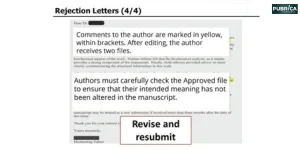
Publication Support Service
- Editing & Translation
-
Editing and Translation Services
- Sample Work

Editing and Translation Service
-
- Research Services
- Sample Work

Research Services
- Physician Writing
- Sample Work
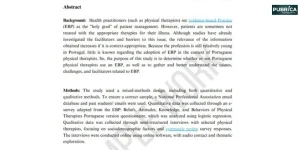
Physician Writing Service
- Statistical Analyses
- Sample Work
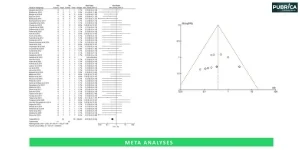
Statistical Analyses
- Data Collection
- AI and ML Services
- Sample Work
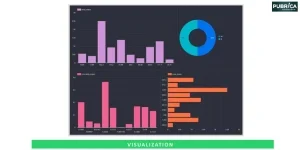
AI and ML Services
- Medical Writing
- Sample Work
Medical Writing
- Research Impact
- Sample Work
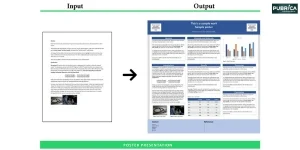
Research Impact
- Medical & Scientific Communication
- Sample Work
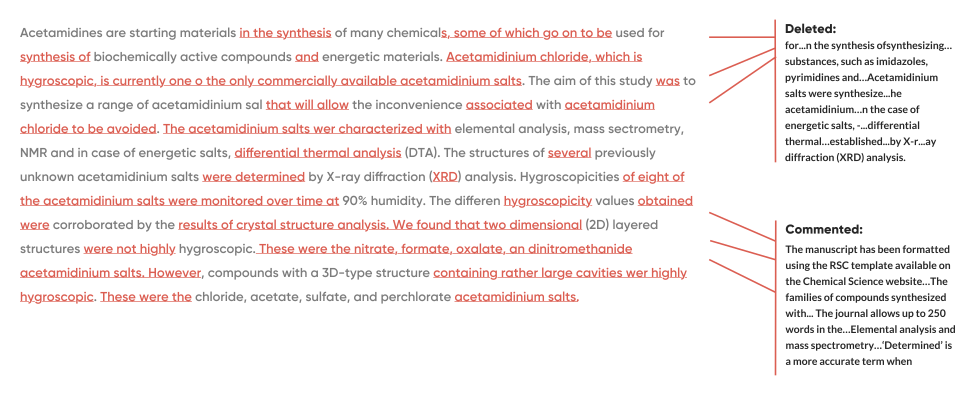
Medical & Scientific Communication
- Medico Legal Services
- Educational Content
- Academic Editorial Services
- Sample Work
Academic Editorial Services
- Educational Editorial Service
-
Education Editorial Services
- Sample Work
Education Editorial Services
-
- Industries
- Subjects
- About Us
- Academy
- Insights
- Contact Us
Targeted literature searches are a fundamental part of writing clinical manuscripts that will meet the standards of high-quality journals and contribute meaningfully to evidence-based practice. When physicians write clinical manuscripts, utilizing a targeted literature search can identify high-quality, relevant, and current evidence. While a general literature review is useful, a targeted literature search is specific to the clinical question and should be completed through frameworks established, such as PICO (Population, Intervention, Comparator, Outcome) and PRISMA [1].
Literature Search for Research Planning and Identification of Research Problem
- Home
- Academy
- Research Impact
- Literature Search for Research Planning and Identification of Research Problem
High-Impact Journals
- Objectives of a Literature Search
- Role of Literature Search in Research Planning
- Key Sources for Literature Search
- Identification of Research Problem
- Approaches to Identify Research Problem
- Best Practices in Literature Search for Research Planning
- Challenges in Literature Search and Problem Identification
- Strategies to Overcome Challenges
- Conclusion
Interesting topics
Literature Search for Research Planning and Identification of Research Problem
1. Role of Literature Search in Research Planning
2. Key Sources for Literature Search
3. Identification of Research Problem
4. Approaches to Identify Research Problem
5. Best Practices in Literature Search for Research Planning
6. Challenges in Literature Search and Problem Identification
7. Strategies to Overcome Challenges
8. Conclusion
Research is a methodical process that seeks to generate knowledge, make sense of events, and find solutions to problems. One of the most important preliminary steps in research is planning activities and identifying the research problem. A well-planned literature search will form the basis of research questions, giving assurance that the research study is timely, new, and methodologically appropriate.[1]
1. Objectives of a Literature Search
- Develop Research Questions: Find gaps in previous research to establish relevant questions.
- Choose Method: Select suitable research designs and methods to explore the research questions.
- Detect Gaps: Identify research areas that do not have enough research. Inform
- Study Design: Aid in decisions about the population, sampling, and data collection
2. Role of Literature Search in Research Planning
A literature search is a systematic examination of existing knowledge on a topic. The key purposes of a literature search are:[2]
- Understanding the research landscape: To help identify gaps and trends in the field.
- Avoiding duplication: To ensure that a research question addresses understandable topics.
- Developing theoretical framework: To assist in developing conceptual and/or theoretical models.
- Informing methodology: To provide considerations about research designs or instruments used in other studies.
2.1. Key Steps in Literature Search
- Identifying the Research Topic: Get specific about what interests you. Identify keywords and key phrases.
- Selecting Sources: Journals, books, conference proceedings.
- Databases: PubMed, Scopus, Web of Science, Google Scholar.
- Selecting Sources: Peer-reviewed, credible, recent, relevant research study.
- Organizing Information: Use reference management software (e.g., EndNote, Mendeley).
- Synthesizing Findings: Identify patterns, gaps, contradictions.[3]
3. Key Sources for Literature Search
Source Type | Examples | Advantages | Limitations |
Academic Journals | Nature, Science, JAMA | Peer-reviewed, high credibility | May require subscription |
Books | University Press publications | Comprehensive coverage | Can be outdated |
Conference Proceedings | IEEE, ACM | Latest research, innovative ideas | Less rigorous review |
Online Databases | PubMed, Scopus, Google Scholar | Easy access, keyword search | Information overload |
4. Identification of Research Problem
The research problem is the basis of any research project. A well-defined problem:
- Draws attention to a gap in knowledge.
- Is feasible and able to be researched.
- It is significant to the field.
5. Approaches to Identify Research Problem
- Gap analysis: Look at the studies that have already been done and identify gaps in our understanding.
- Identifying a practical problem: Look at issues in society, industry, or in clinical practice.
- Theoretical analysis: Look at the contradiction or missing questions from a theoretical perspective.
5.1. Steps in Formulating a Research Problem
Step | Description |
Topic Selection | Identify a broad research area |
Literature Review | Explore existing studies and gaps |
Problem Statement | Articulate a specific problem to address |
Research Questions | Define measurable and focused questions |
Objectives Formulation | Outline aims and expected outcomes |
6. Best Practices in Literature Search for Research Planning
- Use Boolean operators: AND, OR, NOT to refine searches.
- Track search history: Helps replicate search and ensures completeness.
- Review citations: Snowballing technique to identify seminal works.
- Stay updated: Set alerts for new publications on your topic.[4]
7. Tools and Software
Reference Management: EndNote, Zotero, Mendeley.
| Data Organization: Excel, NVivo for qualitative data.
| Plagiarism Check: Turnitin, Grammarly to ensure originality.
|
8. Challenges in Literature Search and Problem Identification
- Information Overload: There are too many sources to process.
- Access Limitations: Paywalls prevent us from accessing the full text.
- Bias in Studies: Some studies may be methodologically weak or biased.
- Rapidly Evolving Fields: New knowledge is continuously emerging, quickly making literature out of date.
9. Strategies to Overcome Challenges
Implement systematic review protocols (PRISMA guidelines). [5]
- Concentrate on quality, peer-reviewed literature.
- Consult experts in the field of study.
- Keep a research journal to outline progress.
Connect with us to explore how we can support you in maintaining academic integrity and enhancing the visibility of your research across the world!
Conclusion
A thorough literature review is essential for effective research design and for determining a research problem. It builds relevance for the study, examines whether the research is achievable, and allows for a meaningful advancement of knowledge in the field. A systematic review of the literature will help the researcher to determine precise research problems, develop an appropriate research question, and select suitable methods.
Literature Search for Research Planning and Identification of Research Problem. Our Pubrica consultants are here to guide you. [Get Expert Publishing Support] or [Schedule a Free Consultation]
References
- Grewal, A., Kataria, H., & Dhawan, I. (2016). Literature search for research planning and identification of the research problem. Indian journal of anaesthesia, 60(9), 635–639. https://doi.org/10.4103/0019-5049.190618
- Jha, R., Sondhi, V., & Vasudevan, B. (2022). Literature search: Simple rules for confronting the unknown. Medical journal, Armed Forces India, 78(Suppl 1), S14–S23. https://doi.org/10.1016/j.mjafi.2022.07.009
- Literature search: 4. Search and retrieval. (2021, March 23). Ruc.Dk. https://libguides.ruc.dk/literaturesearch/searchandretrieval
- Gionfriddo, M. R., McClendon, C., Nolfi, D. A., Kalarchian, M. A., & Covvey, J. R. (2024). Back to the basics: Guidance for designing good literature searches. Research in social & administrative pharmacy : RSAP, 20(4), 463–468. https://doi.org/10.1016/j.sapharm.2024.01.009
- Finch, S. A., Wasserman, R., Nabi-Burza, E., Hipple, B., Oldendick, R., & Winickoff, J. P. (2015). Overcoming challenges in the changing environment of practice-based research. Annals of family medicine, 13(5), 475–479. https://doi.org/10.1370/afm.1809