
- Services
- Discovery & Intelligence Services
- Publication Support Services
- Sample Work
Publication Support Service
- Editing & Translation
-
Editing and Translation Services
- Sample Work
Editing and Translation Service
-
- Research Services
- Sample Work
Research Services
- Physician Writing
- Sample Work
Physician Writing Service
- Statistical Analyses
- Sample Work
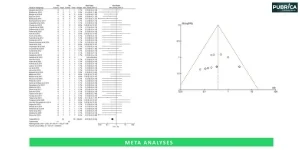
Statistical Analyses
- Data Collection
- AI and ML Services
- Sample Work
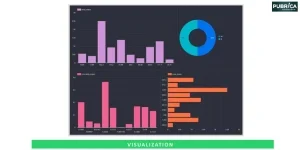
AI and ML Services
- Medical Writing
- Sample Work
Medical Writing
- Research Impact
- Sample Work
Research Impact
- Medical & Scientific Communication
- Sample Work
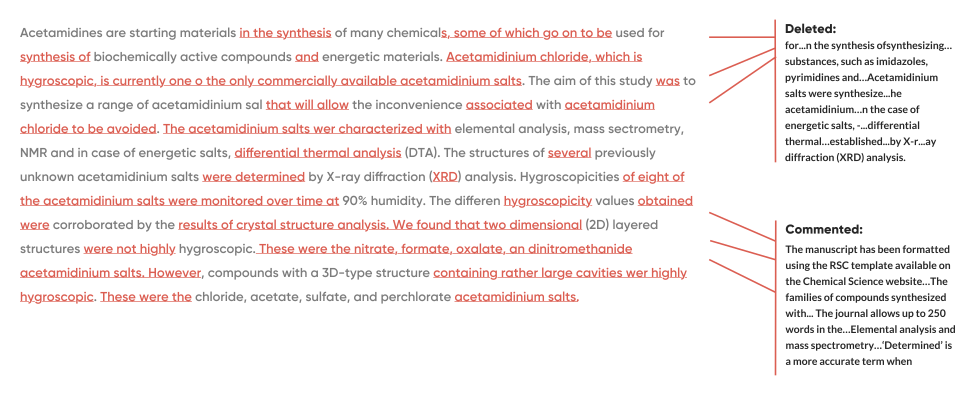
Medical & Scientific Communication
- Medico Legal Services
- Educational Content
- Academic Editorial Services
- Sample Work
Academic Editorial Services
- Educational Editorial Service
-
Education Editorial Services
- Sample Work
Education Editorial Services
-
- Industries
- Subjects
- About Us
- Academy
- Insights
- Contact Us
How to Communicate Research Impact Clearly in Grant Applications: A Practical Guide for Researchers
- Home
- Academy
- Poster Presentation
- How to Communicate Research Impact Clearly in Grant Applications: A Practical Guide for Researchers
Research Impact
- Understanding Research Impact in Grant Contexts
- Why Clear Impact Communication Matters to Reviewers
- What Funding Agencies Expect Beyond Scientific Excellence
- Writing for Grant Reviewers, Not for Academic Readers
- Embedding Relevance Across Key Proposal Sections
- Aligning the Proposal with the Funding Call Language
- Clearly Defining Who Will Use the Research Outputs
- Explaining How Proposed Activities Lead to Useable Outcomes
- Using Structure and Visual Elements to Aid Reviewer Decisions
Interesting topics
How to Communicate Research Impact Clearly in Grant Applications: A Practical Guide for Researchers
1. Understanding Research Impact in Grant Contexts
2. Why Clear Impact Communication Matters to Reviewers
3. What Funding Agencies Expect Beyond Scientific Excellence
4. Writing for Grant Reviewers, Not for Academic Readers
5. Embedding Relevance Across Key Proposal Sections
6. Aligning the Proposal with the Funding Call Language
7. Clearly Defining Who Will Use the Research Outputs
8. Explaining How Proposed Activities Lead to Useable Outcomes
9. Using Structure and Visual Elements to Aid Reviewer Decisions
Communicating research impact in grant applications requires moving beyond academic outputs (papers and citations) to demonstrate how research findings translate into real-world benefits for society, policy, or the economy. A strong, clear impact section convinces reviewers that the proposed project is necessary, well-planned, and beneficial. This discussion serves as a practical resource on communicating research impact for researchers seeking competitive funding opportunities.
Researchers are being held to an ever-increasing level of scrutiny by funding agencies regarding both scientific merit (as defined by the ability of one’s research to advance our understanding) and scientific impact (as defined by demonstrating meaningful impact outside of academic circles, such as through changes in policy, practice, health outcomes, and general societal outcomes). To effectively communicate these types of impacts in the context of a grant application, a comprehensive narrative should be created that describes how your research or the process of conducting the research will lead to a significant change (i.e., impact) on entities outside of academia. This section functions as a grant application writing guide for structuring clear and funder-aligned narratives.
1. Understanding Research Impact in Grant Contexts
The research impact encompasses the positive impact of research; it is not limited to publications or citations but goes on to depict hoe it can produce actual results.[1] Examples of research impact can include social, economic, environmental, clinical or political implications. Funders (such as UKRI and Horizon Europe) who support research projects state that researchers should demonstrate how they are helping to achieve change rather than make sure their research cause any change. This framing directly informs how to write research impact statement sections in funding proposals.
What Impact Is (and Isn’t)
Impact is: Improved patient outcomes, informed policy decisions, new technologies
Impact is not: Publishing papers, conference presentations, datasets alone
Funding organizations like UKRI and Horizon Europe place an emphasis on effecting change rather than guaranteeing change
2. Why Clear Impact Communication Matters to Reviewers
Peer reviewers evaluate impact sections to assess relevance, adequacy, and cost-effectiveness. Evidence indicates that proposals with ambiguous or exaggerated impact claims score significantly lower than those that have a strong scientific foundation, even when science is supported by high-quality and extensive data.[2] These considerations are central to how reviewers assess the grant proposal impact section during peer review.
Clearly communicating impact allows reviewers to quickly determine the following:
- Who is affected
- Why the research is relevant important now
- How the outcomes will be realistically achieved
Strong impact sections increase proposal credibility and effectiveness[3] This reflects established grant reviewer expectations for impact in competitive funding calls.
3. What Funding Agencies Expect Beyond Scientific Excellence
Most funding agencies evaluate proposals based on three primary criteria: excellence, feasibility, and relevance. With respect to the assessment of “relevance,” the granting body typically asks applicants to describe the anticipated benefits of the research for their stakeholders beyond simply being an academic contribution. By knowing this may assist applicants in developing the narrative surrounding their application in a way that supports the decision-making process instead of only describing it.
Funder Expectations: Funders expect applicants to demonstrate relevance to real-world needs, policy priorities, or societal challenges without overstating outcomes or guaranteeing change.
Such criteria are commonly applied during formal research funding impact assessment processes.
4. Writing for Grant Reviewers, Not for Academic Readers
When reviewing grant applications, reviewers do not read them for completeness but instead to score and compare them. Long theoretical discussions sometimes hide the true, practical benefit of a project. Research indicates that clarity in the application is important for funding decisions by reviewers.[2] Grant writing should:
- Have clear non-disciplined language
- State relevance early and clearly
- Do not make unsubstantiated/advertising claims
This approach is essential for effectively communicating research outcomes to funders.
Reviewer-Oriented Language
✘ “This study explores novel mechanisms…”
✓ “This study addresses an unmet need identified in the call by…”
5. Embedding Relevance Across Key Proposal Sections
Successful grant applications incorporate relevance throughout the entire proposal rather than locating relevance within a single section.
Proposal Section | Reviewer Question Addressed |
Background | Why is this issue important at this time? |
Objectives | What change will the project facilitate? |
Methods | Are the planned activities appropriate? |
Expected outcomes | What will the project deliver? |
Dissemination | How will results be used? |
This structure supports the clear articulation of impact pathways in grant proposals. This integrated manner of presentation demonstrates strategic planning, rather than being written from a technical standpoint.[4]
6. Aligning the Proposal with the Funding Call Language
One of the most common reasons for rejection is weak alignment with the call text. Reviewers expect applicants to reflect the funder’s stated priorities, terminology, and objectives. Mirroring call language demonstrates strategic fit, a major scoring factor. Such alignment is often reinforced through professional grant proposal support services.
Call-Aligned Framing
✘ This project advances general knowledge in healthcare.”
✓ “This project directly addresses the call priority on early diagnosis by generating evidence relevant to clinical decision-making.”
7. Clearly Defining Who Will Use the Research Outputs
Grant reviewers assess whether project outputs are likely to be used, not just produced. Applicants must clearly identify intended users and explain how outputs meet their needs. Specific user identification strengthens feasibility and value-for-money assessments (Reed et al., 2021).
Intended User | Planned Use of Results |
Clinicians | Inform treatment decisions |
Policymakers | Support guideline development |
Healthcare managers | Improve service delivery |
Industry partners | Enable product development |
This level of clarity is frequently strengthened through research impact consulting services.
8. Explaining How Proposed Activities Lead to Useable Outcomes
Reviewers look for an understandable link between the activities of the project and the anticipated results. The link is commonly established through the use of a straightforward pathway or logic model, which in turn provides the necessary narrative framework for reviewers to assess the reasonableness with which the anticipated outcomes can occur within the funding timeframe.[5] This linkage is a core focus area for grant writing services for researchers.
Grant Logic Pathway
Project activities → Research outputs → Stakeholder engagement → application
9. Using Structure and Visual Elements to Aid Reviewer Decisions
Given time constraints, reviewers value proposals that are easy to scan and understand.
- Highlight boxes for “Expected Outcomes”
- Flow diagrams to summarise project logic
- Bullet lists to clarify user groups and uses [6]
These elements are routinely evaluated during grant application review services.
Example for a Reviewer-Friendly Summary Statement
This project delivers clearly defined outputs that are directly relevant to the objectives of the funding call and intended end users.
Connect with us to explore how we can support you in maintaining academic integrity and enhancing the visibility of your research across the world!
Conclusion
Clear communication in grant applications is not about repeating the word impact, but about helping reviewers understand relevance, use, and alignment. By writing with reviewer decision-making in mind using structured narratives, call-aligned language, and logical pathways researchers can significantly improve the clarity and competitiveness of their grant proposals.
Need expert support to strengthen your grant proposal? Pubrica offers professional grant writing, impact articulation, and application review services tailored for researchers. [Get Expert Publishing Support] or [Schedule a free Consultation].
References
- Bornmann, L., & Marx, W. (2014). How should the societal impact of research be generated and measured? A proposal for a simple and practicable approach to allow interdisciplinary comparisons. Scientometrics, 98(1), 211–219. https://doi.org/10.1007/s11192-013-1020-x
- Gallo, S. A., Schmaling, K. B., Thompson, L. A., & Glisson, S. R. (2021). Grant review feedback: Appropriateness and usefulness. Science and Engineering Ethics, 27(2), 18. https://doi.org/10.1007/s11948-021-00295-9
- Rogers, P. J. (2008). Using programme theory to evaluate complicated and complex aspects of interventions. Evaluation (London, England: 1995), 14(1), 29–48. https://doi.org/10.1177/135638900
- Penfield, T., Baker, M. J., Scoble, R., & Wykes, M. C. (2014). Assessment, evaluations, and definitions of research impact: A review. Research Evaluation, 23(1), 21–32. https://doi.org/10.1093/reseval/rvt
- Davies, H., Nutley, S., & Walter, I. (2008). Why ‘knowledge transfer’ is misconceived for applied social research. Journal of health services research & policy, 13(3), 188–190. https://doi.org/10.1258/jhsrp.2008
- Graves, N., Barnett, A. G., & Clarke, P. (2011). Funding grant proposals for scientific research: retrospective analysis of scores by members of grant review panel. BMJ (Clinical Research Ed.), 343(sep27 1), d4797. https://doi.org/10.1136/bmj.d4797