
- Services
- Discovery & Intelligence Services
- Publication Support Services
- Sample Work

Publication Support Service
- Editing & Translation
-
Editing and Translation Services
- Sample Work

Editing and Translation Service
-
- Research Services
- Sample Work

Research Services
- Physician Writing
- Sample Work

Physician Writing Service
- Statistical Analyses
- Sample Work

Statistical Analyses
- Data Collection
- AI and ML Services
- Sample Work

AI and ML Services
- Medical Writing
- Sample Work
Medical Writing
- Research Impact
- Sample Work

Research Impact
- Medical & Scientific Communication
- Sample Work
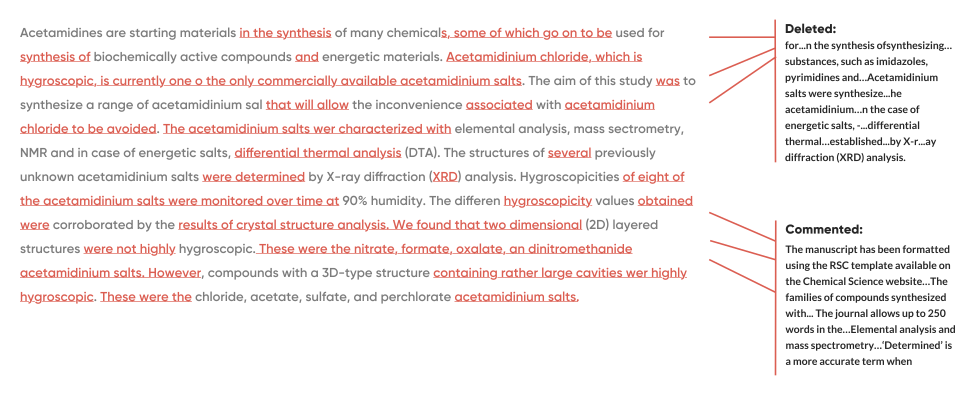
Medical & Scientific Communication
- Medico Legal Services
- Educational Content
- Academic Editorial Services
- Sample Work
Academic Editorial Services
- Educational Editorial Service
-
Education Editorial Services
- Sample Work
Education Editorial Services
-
- Industries
- Subjects
- About Us
- Academy
- Insights
- Contact Us
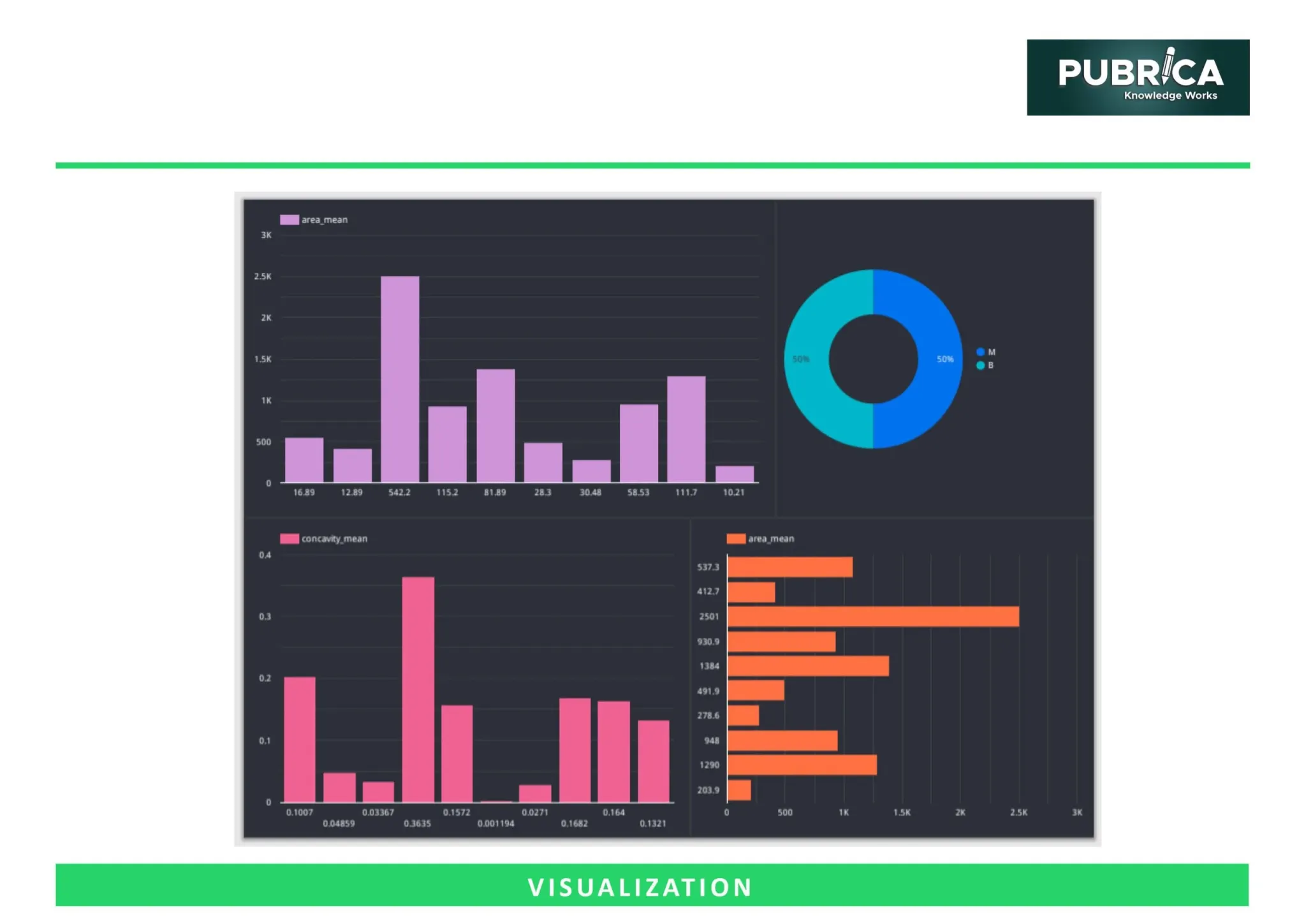
Optimising Survey-Based Research with Integrated SurveyMonkey Data Collection Solutions
- Home
- Academy
- Data Collection
- Optimising Survey-Based Research with Integrated SurveyMonkey Data Collection Solutions
Research Impact
- Why Integration Matters in Survey Research
- Designing High-Quality Instruments Within SurveyMonkey
- Enhancing Data Quality Through Built-In Controls
- Sampling and Recruitment Integration
- Real-Time Monitoring and Adaptive Data Collection
- Data Export and Statistical Integration
- Ethical and Compliance Considerations
- Improving Response Rates
Interesting topics
Optimising Survey-Based Research with Integrated SurveyMonkey Data Collection Solutions
1. Why Integration Matters in Survey Research
2. Designing High-Quality Instruments Within SurveyMonkey
3. Enhancing Data Quality Through Built-In Controls
4. Sampling and Recruitment Integration
5. Real-Time Monitoring and Adaptive Data Collection
6. Data Export and Statistical Integration
7. Ethical and Compliance Considerations
8. Improving Response Rates
Optimizing survey-based research with SurveyMonkey involves leveraging its AI-driven design tools, automated data collection, and extensive integrations to improve response rates and data quality. By using integrations with platforms like Salesforce, HubSpot, Slack, and Microsoft Teams, organizations can automate workflows, such as sending post-case surveys or updating customer profiles, reducing manual effort.
Survey-based methodology continues to be one of the most common methods employed in the fields of healthcare, social sciences, business analytics, and education. High-quality survey instruments that are thoughtfully constructed will create scalable, lower-cost, statistically strong datasets that can be used for policymaking, providing clinical practice and strategic decision-making through evidence. Unfortunately, common problems found with survey instruments include poor instrument design, biased sample selection, low response rates, and weak data management. Each of these problems poses a significant threat to the validity of the research.[1]
What is SurveyMonkey?
SurveyMonkey is an Internet-based survey tool that simplifies the process associated with the development of a questionnaire; recruiting participants; tracking their responses; and integrating their data into a researcher’s workflow. When successfully integrated into a researcher’s work process, SurveyMonkey enhances the methodological rigor of survey research and increases the quality level of the data.
As a leading Survey Data Collection Software, SurveyMonkey supports scalable and structured digital research implementation across disciplines. The following article describes best practices when conducting survey-based research using SurveyMonkey data collection products.
1. Why Integration Matters in Survey Research
Digital survey platforms provide a broad set of uses: the ability to provide digital survey instruments and automate workflows, provide real-time analytics, allow an organisation to be compliant with regulations, and securely export data. The advantages of proper system integration include:
- Creating a consistent deployment of instruments
- Automatic validation of data
- Reduce entry error rates associated with manual data entry
- Providing timely requests for response
- Use statistical software more effectively when executing analyses.
Digital survey systems reduce the number of administrative errors versus manual administrative tasks and improve efficiency in tracking responses to surveys compared with paper-based systems.[2] Digital survey systems increase timely response and decrease the cost of conducting large studies.[3] Such capabilities position it among widely adopted Online Survey Research Tools used in academic and industry settings.
2. Designing High-Quality Instruments Within SurveyMonkey
The validity of a survey will depend on how the questionnaires are constructed and SurveyMonkey offers templates that let you customise questions and set up survey skip logic, randomisation, and quality checks that comply with standard survey methods.
How to Optimize Your Surveys:
- When possible, use validated scales to increase construct validity.
- Use branching logic to decrease respondent fatigue.
- Pilots test your instruments before full implementation.
- Limit the number of questions in your survey to reduce drop-offs and satisficing behaviour.
- Use explicit and neutral language in your questions to mitigate response bias.
SurveyMonkey’s logic features allow for conditional question display, which helps to reduce cognitive burden and enhance survey completion. Its structured design framework also aligns with standard Data Collection Methods for Research practised in empirical investigations.
3. Enhancing Data Quality Through Built-In Controls
SurveyMonkey can assist researchers in reducing the effect of methodological threats to survey research by offering features that support commonly acknowledged best practices. The main methodological challenges in surveys, and how SurveyMonkey addresses them, are summarised in the following table.
| Survey Challenge | Methodological Risk | SurveyMonkey Solution |
| Missing data | Reduction in statistical power | Mandatory response settings |
| Duplicate responses | Increased sample size | IP tracking & response limits |
| Survey fatigue | Fall in completion rate | Progress indicators & skip logic |
| Social desirability bias | Response distortion | Anonymous mode settings |
| Sampling bias | Limited generalizability | Panel targeting options |
These features improve internal consistency and reduce measurement error.
4. Sampling and Recruitment Integration
Sampling is still one of the most important elements of external validity. Online panels and email distribution lists can provide scalable ways of attracting participants; however, attention must still be paid to match the population being sampled.[4]
SurveyMonkey Provides:
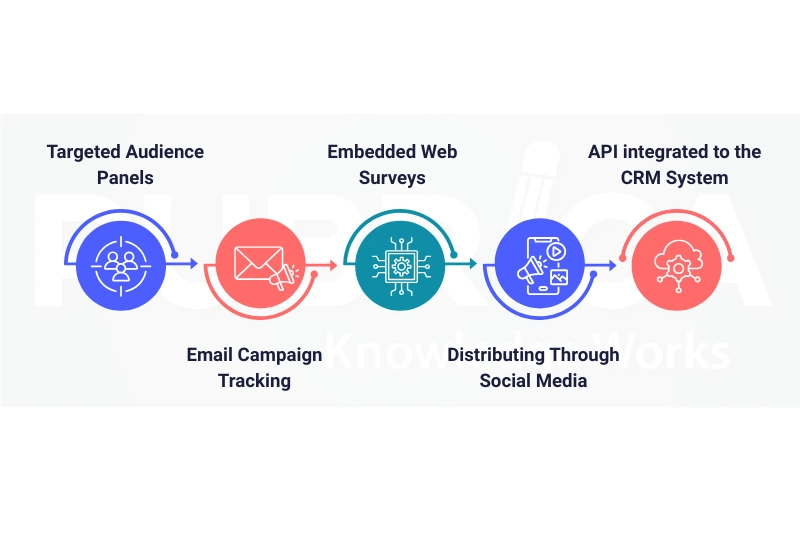
These capabilities make it suitable as a Market Research Survey Software for organisations requiring targeted respondent segmentation. In choosing a sampling strategy, researchers should look for consistency between the sampling strategy and the research purpose. The best way to sample from the general population continues to be by using probability sampling methods; however, nonprobability online panels can also be used to conduct exploratory research.[5]
5. Real-Time Monitoring and Adaptive Data Collection
Another benefit associated with digital integration is access to real-time information. Researchers can check their SurveyMonkey dashboards for information on:
- The number of responses received
- Whether they have a representative sample of respondents across different demographics
- Whether any respondent has completed an incomplete survey
- Whether they need to modify recruitment strategies during a research project
Real-time tracking reduces the likelihood of nonresponse bias, enabling the researcher to make adjustments while collecting data. For example, if certain demographics are not well represented in the use of a questionnaire, then targeted recruitment efforts can begin prior to closing the data collection period.
6. Data Export and Statistical Integration
SurveyMonkey enables exports to SPSS, CSV, Excel, and other formats compatible with R, Stata, and SAS. This seamless integration improves analytical workflow efficiency.
| Stage | SurveyMonkey Role | Output Integration |
| Survey Design | Instrument creation & validation logic | Questionnaire protocol |
| Data Collection | Real-time monitoring & response capture | Raw dataset |
| Data Cleaning | Automated validation & filtering | Clean dataset export |
| Statistical Analysis | SPSS/CSV export | Regression, factor analysis, modelling |
| Reporting | Graph exports & summary analytics | Manuscript tables & figures |
Efficient integration reduces manual data handling errors and shortens the timeline from data collection to manuscript submission.[2] Its scalability and integration capacity allow it to function effectively as an Enterprise Survey Platform for large-scale institutional studies.
7. Ethical and Compliance Considerations
In the context of survey-based studies, ethical reviews are fundamental to research using surveys. SurveyMonkey provides support for:
- Collecting anonymous responses,
- Storing data in accordance with the GDPR,
- Securing encrypted connections,
- Embedding questions to obtain informed consent,
Researchers are responsible for obtaining any necessary institutional review board (IRB) approvals and following their own standards of confidentiality.[6] Transparency in data handling enhances credibility and reproducibility.
8. Improving Response Rates
Statistical Power and Generalizability are threatened by low response rates. Evidence-Based Solutions Include:
- Personalized Invitations
- Reminder Emails
- Incentive Structure
- Mobile-Friendly Design
- Completion in a Short Timeframe
Meta-analysis has shown that using reminder emails will increase your response rates significantly for online surveys. Automated reminders from survey monkey will simplify the reminder process.
Limitations of Online Survey Integration
Despite its advantages, digital platforms present limitations:
- Coverage biases due to internet access disparities
- Self-selection bias in voluntary panels
- Potential cybersecurity concerns
- Reduced control over the respondent environment
Researchers should acknowledge these constraints in study limitations sections to ensure transparent reporting.
Connect with us to explore how we can support you in maintaining academic integrity and enhancing the visibility of your research across the world!
Conclusion
Integrating SurveyMonkey to improve survey research based on surveys will allow researchers to efficiently and effectively create quality data through survey research that is scalable and efficient. Key features include advanced logic, real-time data monitoring, automated survey quality validation, and seamless export of data that supports the overall methodology’s rigor and impact on how the analysis can be performed. Validating survey data is crucial for all research methodologies, and if the researchers have met the ethical standards for survey design, sample size requirements, transparent reporting, etc., then it is likely that the final product (research) produced will be reliable and publishable research from the researchers’ perspective.
Elevate your research with Pubrica specialized survey data collection services. From strategic survey design and targeted participant recruitment to secure data management and rigorous quality validation, we ensure accurate and reliable datasets that strengthen your research outcomes. [Get a Free Consultation] or [Schedule a Strategy Call].
References
- Groves, R. M., & Peytcheva, E. (2008). The impact of nonresponse rates on nonresponse bias: A meta-analysis. Public Opinion Quarterly, 72(2), 167–189. https://doi.org/10.1093/poq/nfn011
- Evans, J. R., & Mathur, A. (2005). The value of online surveys. Internet Research, 15(2), 195–219. https://doi.org/10.1108/106622405
- Fan, W., & Yan, Z. (2010). Factors affecting response rates of the web survey: A systematic review. Computers in Human Behavior, 26(2), 132–139. https://doi.org/10.1016/j.chb.2009.10.015
- Bethlehem, J. (2010). Selection bias in web surveys: Selection bias in web surveys. Revue Internationale de Statistique [International Statistical Review], 78(2), 161–188. https://doi.org/10.1111/j.1751-5823.2010.00112.x
- Couper, M. P. (2017). New developments in survey data collection. Annual Review of Sociology, 43(1), 121–145. https://doi.org/10.1146/annurev-soc-060116-053613
- Israel, M., & Hay, I. (2006). Research ethics for social scientists. SAGE Publications, Ltd, https://doi.org/10.4135/9781849209779