
Meta-Analysis of RCTs, Observational & Diagnostic Accuracy Studies: A PRISMA 2020 Guide
High-Impact Journals
Interesting topics
Meta-Analysis of RCTs, Observational & Diagnostic Accuracy Studies: A PRISMA 2020 Guide
A meta-analysis PRISMA 2020 approach is one of the top tiers of evidence synthesis in evidence-based research due to the combination of results from different studies, providing more accurate results. Scientists often conduct a meta-analysis of randomized controlled trials, observational research, and diagnostic accuracy studies for assessing the efficacy of therapy, connections between different diseases, and performance of diagnostic tests. To create a clear and reproducible systematic literature review, there should be standards of reporting. For this purpose, scientists use the PRISMA guidelines and PRISMA 2020 guidelines. [1]
1. Understanding PRISMA 2020
PRISMA 2020 is an upgraded reporting guideline with the aim of ensuring the quality of systematic reviews and meta-analysis. PRISMA 2020 consists of a checklist of 27 items and a flow diagram which help in reporting all stages of the review process. [2]
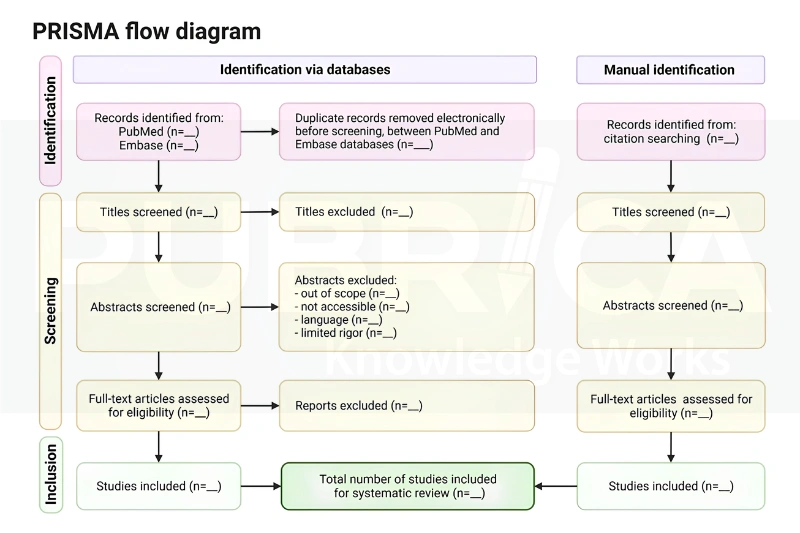
PRISMA 2020 workflow illustrating literature identification, screening, eligibility assessment, and study inclusion.
2. Types of Meta-Analyses Covered by PRISMA 2020
PRISMA 2020 supports reporting across several study designs, including RCT meta-analysis, observational study meta-analysis, and diagnostic accuracy meta-analysis.[3]
| Study Type | Purpose | Common Outcome Measures |
| Randomized Controlled Trials (RCTs) | Evaluate intervention effectiveness | Risk Ratio (RR), Odds Ratio (OR), Mean Difference (MD) |
| Observational Studies | Assess associations and risk factors | OR, Hazard Ratio (HR), Relative Risk (RR) |
| Diagnostic Accuracy Studies | Evaluate diagnostic test performance | Sensitivity, Specificity, ROC Curve, AUC |
Each study design requires different analytical methods, but all benefit from transparent reporting under PRISMA 2020.
3. Key Components of a PRISMA 2020 Meta-Analysis
Good quality meta-analysis PRISMA 2020 studies include:
- Clear definition of research question with use of PICO
- Systematic review strategy
- Clear selection of studies
- Bias risk assessment
- Statistical analysis of data
- Clear interpretation of results
The above criteria ensure the reproducibility of the study and make critical appraisal easier for reviewers conducting a systematic literature review.
4. Statistical Analysis Across Different Study Types
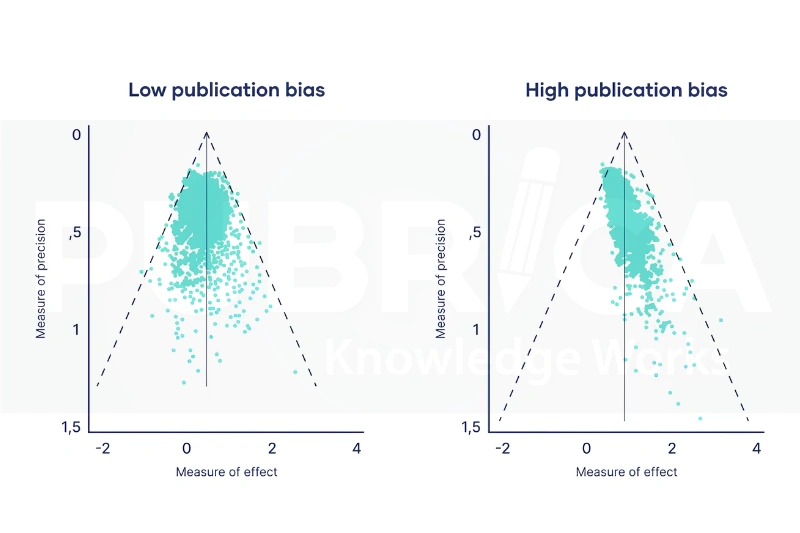
The statistical approach varies depending on the study design.[4]
Study Design | Common Statistical Methods |
RCT Meta-analysis | Fixed-effect model, Random-effects model, Forest plot |
Observational Meta-analysis | Meta-regression, Sensitivity analysis, Heterogeneity assessment (I²) |
Diagnostic Accuracy Meta-analysis | Hierarchical models, Summary ROC (SROC), Bivariate analysis |
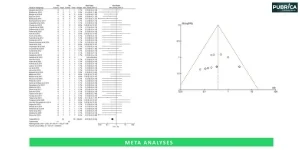
Researchers should also evaluate publication bias using funnel plots and assess heterogeneity before interpreting pooled estimates. These statistical methods improve the reliability of RCT meta-analysis, observational study meta-analysis, and diagnostic accuracy meta-analysis outcomes.
5. Importance of PRISMA 2020 in Evidence-Based Research
There are several benefits associated with the use of PRISMA 2020 and PRISMA guidelines in evidence synthesis: [5]
- Transparency of reporting
- Reproducibility
- Reporting bias reduction
- Fulfils journal requirements
- Basis for evidence-based decision making
All these factors contribute to the scientific credibility of systematic review and meta-analysis.
Connect with us to explore how we can support you in maintaining academic integrity and enhancing the visibility of your research across the world!
Conclusion
Evidence from meta-analysis PRISMA 2020 studies conducted on randomized controlled trials, observational studies, and diagnostic accuracy studies is considered good-quality evidence for practice and decision-making in healthcare. RCT meta-analysis, observational study meta-analysis, and diagnostic accuracy meta-analysis provide valuable information by combining results from multiple studies through structured evidence synthesis.
The PRISMA 2020 statement provides a standard way of conducting systematic literature review and systematic reviews that ensure transparency, methodology, and reproducibility throughout the review process. The PRISMA guidelines help researchers conduct high-quality systematic reviews that can be evaluated, replicated, and published.
Meta-Analysis of RCTs, Observational & Diagnostic Accuracy Studies: A PRISMA 2020 Guide. Our Pubrica consultants are here to guide you. [Get Expert Publishing Support] or [Schedule a Free Consultation]
Frequently Asked Questions (FAQs)
PRISMA 2020 is an updated reporting guideline that helps researchers prepare transparent and comprehensive systematic reviews and meta-analyses using a 27-item checklist and a flow diagram.
PRISMA 2020 can be used to report meta-analyses of randomized controlled trials (RCTs), observational studies, diagnostic accuracy studies, and other eligible evidence synthesis designs.
Common statistical methods include fixed-effect and random-effects models, forest plots, heterogeneity assessment (I²), meta-regression, funnel plots, and summary receiver operating characteristic (SROC) analysis for diagnostic studies.
The PICO framework (Population, Intervention, Comparison, Outcome) helps researchers formulate a focused research question, establish eligibility criteria, and conduct a structured literature search.
PRISMA 2020 enhances transparency, reproducibility, and completeness of reporting while reducing reporting bias and improving the reliability of evidence synthesis.
Meta-analyses combine data from multiple studies to increase statistical power, improve the precision of effect estimates, identify patterns across studies, and provide stronger evidence for clinical and healthcare decision-making.
References
- Calderon Martinez, E., Ghattas Hasbun, P. E., Salolin Vargas, V. P., García-González, O. Y., Fermin Madera, M. D., Rueda Capistrán, D. E., Campos Carmona, T., Sanchez Cruz, C., & Teran Hooper, C. (2025). A comprehensive guide to conduct a systematic review and meta-analysis in medical research. Medicine, 104(33), e41868. https://doi.org/10.1097/MD.00000
- Page, M. J., Moher, D., Bossuyt, P. M., Boutron, I., Hoffmann, T. C., Mulrow, C. D., Shamseer, L., Tetzlaff, J. M., Akl, E. A., Brennan, S. E., Chou, R., Glanville, J., Grimshaw, J. M., Hróbjartsson, A., Lalu, M. M., Li, T., Loder, E. W., Mayo-Wilson, E., McDonald, S., McGuinness, L. A., … McKenzie, J. E. (2021). PRISMA 2020 explanation and elaboration: updated guidance and exemplars for reporting systematic reviews. BMJ (Clinical research ed.), 372, n160. https://doi.org/10.1136/bmj.n160
- Ahn, E., & Kang, H. (2018). Introduction to systematic review and meta-analysis. Korean journal of anesthesiology, 71(2), 103–112. https://doi.org/10.4097/kjae.2018.71
- Smeltzer, M. P., & Ray, M. A. (2022). Statistical considerations for outcomes in clinical research: A review of common data types and methodology. Experimental biology and medicine (Maywood, N.J.), 247(9), 734–742. https://doi.org/10.1177/15353702221
- Page, M. J., McKenzie, J. E., Bossuyt, P. M., Boutron, I., Hoffmann, T. C., Mulrow, C. D., Shamseer, L., Tetzlaff, J. M., Akl, E. A., Brennan, S. E., Chou, R., Glanville, J., Grimshaw, J. M., Hróbjartsson, A., Lalu, M. M., Li, T., Loder, E. W., Mayo-Wilson, E., McDonald, S., McGuinness, L. A., … Moher, D. (2021). The PRISMA 2020 statement: an updated guideline for reporting systematic reviews. Systematic reviews, 10(1), 89. https://doi.org/10.1186/s13643-021-01626-4