
- Services
- Discovery & Intelligence Services
- Publication Support Services
- Sample Work
Publication Support Service
- Editing & Translation
-
Editing and Translation Services
- Sample Work
Editing and Translation Service
-
- Research Services
- Sample Work
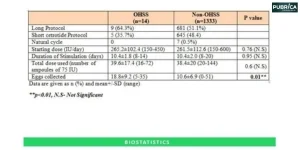
Research Services
- Physician Writing
- Sample Work
Physician Writing Service
- Statistical Analyses
- Sample Work
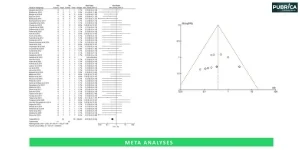
Statistical Analyses
- Data Collection
- AI and ML Services
- Sample Work
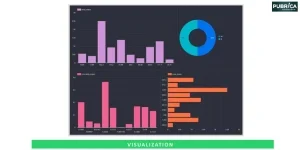
AI and ML Services
- Medical Writing
- Sample Work
Medical Writing
- Research Impact
- Sample Work
Research Impact
- Medical & Scientific Communication
- Sample Work
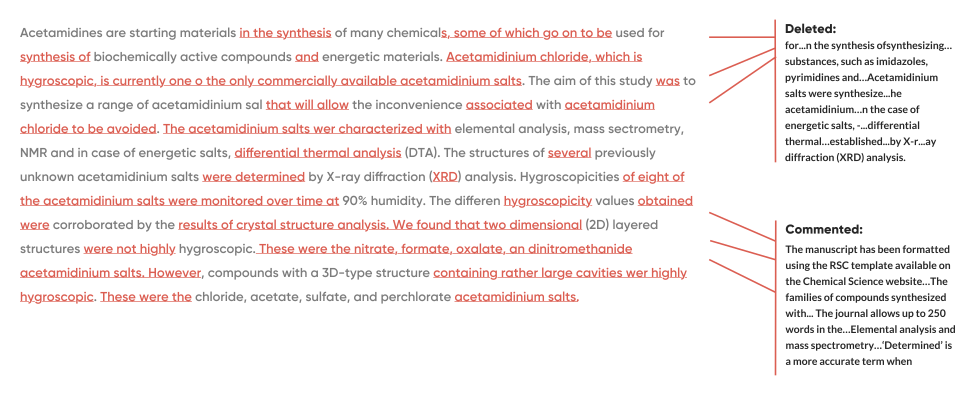
Medical & Scientific Communication
- Medico Legal Services
- Educational Content
- Academic Editorial Services
- Sample Work
Academic Editorial Services
- Educational Editorial Service
-
Education Editorial Services
- Sample Work
Education Editorial Services
-
- Industries
- Subjects
- About Us
- Academy
- Insights
- Contact Us
Comprehensive Grant Writing Solutions for Researchers
High-Impact Journals
- Understanding Grant Writing and Its Importance
- Developing a Strong Research Foundation
- Defining Research Objectives and Innovation
- Designing a Robust Research Methodology
- Budget Planning and Resource Management
- Demonstrating Scientific and Societal Impact
- Ensuring Compliance and Ethical Standards
- The Role of Professional Grant Writing Support
- Conclusion
Interesting topics
Comprehensive Grant Writing Solutions for Researchers
Grant money is fundamental for scientific breakthroughs, making it possible for scientists to convert innovative thoughts into discoveries which contribute to improvement in medicine, technology, and general public health. Yet gaining competitive grant money is now a difficult task since the level of competition, scarcity of resources and stringent rules set by grant funding organizations have risen. A successful grant application involves more than an innovative idea of research; it requires proper planning, science, good communication skills and compliance with the guidelines provided by the sponsor organization. Comprehensive grant writing services allow researchers to prepare winning proposals that highlight the importance, feasibility, innovation and expected outcomes of their research ideas. Through the fusion of science and writing techniques, researchers can greatly increase their chances of getting funded through effective research grant writing and professional support.[1]
1. Understanding Grant Writing
Grant writing is an organized and data-driven process of designing research proposals to be submitted to funding organizations offering money for conducting scientific research, developing novel medical treatments, educating people, and improving public health status. Proposals are thoroughly analyzed by funding organizations with respect to their scientific value, novelty, quality of methodology, feasibility, budget justification, and expected outcomes.
This means that apart from describing the research project itself, a well-prepared grant proposal must be able to demonstrate its significance to science or society and its capacity to produce scientific benefits. Successful scientific grant proposals require a combination of critical thinking, planning, and scientific persuasion to meet the expectations of funding agencies.
2. Developing a Strong Research Foundation
A well-conceived research question that is backed by a thorough literature review marks the start of every successful grant application. By conducting a literature review, investigators get the opportunity to find out what is known in the field, identify any scientific gaps that need to be solved, and show the importance of the proposed study. In this way, investigators show their knowledge of the field and demonstrate the importance of their study in generating new Researchers seeking funding opportunities for researchers must establish a strong scientific foundation and demonstrate the relevance of their proposed work. Reviewers for funding expect the applicants to make a logical link between the findings and proposed research goals.[2]
3. Defining Research Objectives and Innovation
Explicitly stated research aims form the bedrock of any grant proposal. The research aims must clearly specify what is expected but remain realistic, measurable, and attainable during the period for which the project is to be conducted. Innovative proposals tend to have some unique technology, methodology, treatment method, or interdisciplinarity that sets it apart from other funded projects. Innovation does not have to mean a revolutionary discovery; innovation can be the application of existing knowledge to a new setting or to address a newly emerging problem. Inclusion of innovative ideas in the proposal improves its chances of being funded.
4. Designing a Robust Research Methodology
Methodology is one of the most important sections of any grant application since it shows whether the aims of the research can actually be fulfilled. A good methodology should outline the approach to the study, inclusion/exclusion criteria, data gathering techniques, statistical analyses, ethics issues, quality control steps, and possible limitations of the study. [3]
The researchers should make sure that the methods used in their study are scientific, reliable, and in agreement with international standards of research. Effective biomedical grant writing requires researchers to clearly explain experimental approaches, clinical methods, data analysis procedures, and research validation strategies.
5. Budget Planning and Resource Management
The budget that is well formulated shows the realistic feasibility of the research proposal being submitted. For example, funding institutions require the budget to be very realistic and directly related to the activities of the project. Such budgeting involves the allocation of money for salaries, laboratory equipment, software, materials used in the research, subject payment, travel, writing, and administration. In this way, each and every expenditure in the budget needs to be clearly explained and directly related to the objectives of the research.
6. Demonstrating Scientific and Societal Impact
Present-day funding agencies have a tendency to focus on research projects that provide some measurable scientific, practical, and social benefits. In addition to publishing scholarly papers, investigators need to indicate how the results of their research can be used to enhance patient care practices, shape healthcare policies, foster technological developments in medicine, improve public health infrastructure, or meet the needs of sustainable development.
Research projects with strong interdisciplinary appeal tend to be evaluated more favorably since they deal with difficult questions that require cooperation of several branches of science. Strong impact statements help improve the possibility of receiving healthcare research funding from national and international organizations.[4]
7. Ensuring Compliance and Ethical Standards
Adherence to ethical and regulatory compliance is one of the critical elements in achieving success in grant writing. It is important for researchers to show that they are following the rules of the institutional review boards, rules on confidentiality of patients, informed consent rules, and the overall research process. Research projects with strong interdisciplinary appeal tend to be evaluated more favorably since they deal with difficult questions that require cooperation of several branches of science. Strong impact statements help improve the possibility of receiving healthcare research funding from national and international organizations.
8. The Role of Professional Grant Writing Support
Professional grant writing services offer a great deal of help during the entire grant writing process by assisting researchers in arranging scientific material, clarifying their ideas, formulating objectives, explaining methodology, preparing budgets, and complying with the regulations of funders. Moreover, skilled grant writers help researchers in editing, formatting, proofreading, and adjusting their proposals to reviewers’ demands. Such cooperation will allow researchers to focus on their scientific innovations without any concerns about the quality of the proposals. With the increase in competition for research funding, professional grant writing has turned into a very useful resource for both young and experienced researchers.[5]
Connect with us to explore how we can support you in maintaining academic integrity and enhancing the visibility of your research across the world!
Conclusion
Innovative solutions for grant writing enable researchers to convert their cutting-edge science ideas into successful funding proposals that have the potential of winning support from various national and international funding agencies. In order to be successful with any funding proposal, one needs to strike a balance between scientific excellence, planning, methodology, persuasion, ethics, and realistic budgeting. Through the creation of carefully thought-out and structured proposals which demonstrate the scientific significance, innovation, feasibility, and impact of the research, the success of the funding proposal increases while making substantial contributions to medicine, healthcare, and public health. The continuous improvement of grant writing skills and collaborations with multidisciplinary experts will be crucial in ensuring research excellence.
The continuous improvement of grant writing skills and collaborations with multidisciplinary experts will be crucial in ensuring research excellence and achieving long-term success in research grant writing and grant proposal writing.
Strengthen Your Grant Proposal with Pubrica Get expert grant writing support, scientific editing, and proposal development services to improve your funding success. [Turn Your Research Ideas into Fundable Proposals with Pubrica Today].
Frequently Asked Questions (FAQs)
Grant writing services help researchers develop well-structured, funding-ready proposals by assisting with research planning, scientific writing, methodology design, budgeting, and compliance requirements.
Professional grant writers help present research ideas clearly, highlight innovation and impact, meet funding guidelines, and improve the overall quality of grant applications.
A successful grant proposal typically includes a strong research foundation, clear objectives, innovative approaches, detailed methodology, realistic budgeting, ethical considerations, and expected scientific or societal impact.
Yes, Pubrica provides support for biomedical and healthcare research grant proposals, including scientific writing, proposal development, literature review, and compliance assistance.
Professional grant writing support helps researchers save time, improve proposal quality, address reviewer expectations, and increase their chances of securing research funding.
References
- Guyer, R. A., Schwarze, M. L., Gosain, A., Maggard-Gibbons, M., Keswani, S. G., & Goldstein, A. M. (2021). Top ten strategies to enhance grant-writing success. Surgery, 170(6), 1727–1731. https://doi.org/10.1016/j.surg.2021.06.039
- Colley, J., Parekh, S., Whitehead, E., & Cole, R. (2022). Building a Strong Foundation: Overcoming Obstacles in Applied Health Systems Research Through a Collaborative Approach From Funders. Health services insights, 15, 11786329221146386. https://doi.org/10.1177/11786329221146386
- Garg R. (2016). Methodology for research I. Indian journal of anaesthesia, 60(9), 640–645. https://doi.org/10.4103/0019-5049.190619
- Bornmann L. (2012). Measuring the societal impact of research: research is less and less assessed on scientific impact alone–we should aim to quantify the increasingly important contributions of science to society. EMBO reports, 13(8), 673–676. https://doi.org/10.1038/embor.2012.99
- Levites Strekalova, Y. A., Kavak, S., Caridad Rodriguez, V., Midence, S., Caplan, L. S., Thompson, W., Idris, M. Y., Stiles, J., Pemu, P., Quarshie, A., Baez, A., Salazar Campo, M., & Ofili, E. (2025). Exploring grant writing coaching and its role in professional development of health equity investigators: A qualitative study. Journal of clinical and translational science, 9(1), e178. https://doi.org/10.1017/cts.2025.10080