savings for a limited time.

- Services
- Discovery & Intelligence Services
- Publication Support Services
- Sample Work
Publication Support Service
- Editing & Translation
-
Editing and Translation Services
- Sample Work
Editing and Translation Service
-
- Research Services
- Sample Work
Research Services
- Physician Writing
- Sample Work
Physician Writing Service
- Statistical Analyses
- Sample Work
Statistical Analyses
- Data Collection
- AI and ML Services
- Sample Work
AI and ML Services
- Medical Writing
- Sample Work
Medical Writing
- Research Impact
- Sample Work
Research Impact
- Medical & Scientific Communication
- Sample Work
Medical & Scientific Communication
- Medico Legal Services
- Educational Content
- Academic Editorial Services
- Sample Work
Academic Editorial Services
- Educational Editorial Service
-
Education Editorial Services
- Sample Work
Education Editorial Services
-
- Industries
- Subjects
- About Us
- Academy
- Insights
- Contact Us
What Role Do Expert Editors Play in Academic Publication?
High-Impact Journals
- Understanding the Role of Expert Editors
- Why Academic Publications Require Professional Editing
- Core Responsibilities of Expert Editors
- Enhancing Scientific Communication and Writing
- Supporting Compliance with Journal Guidelines
- Improving Manuscript Quality Before Peer Review
- Benefits for Non-Native English-Speaking Researchers
- Challenges Addressed by Expert Editors
- Future of Expert Editing in Academic Publishing
- Conclusion
Interesting topics
What Role Do Expert Editors Play in Academic Publication?
The process of academic publishing is an essential part of the scholarly communication cycle since it provides a means of spreading results, promoting science development, and gaining professional reputation. Nevertheless, creating a well-written manuscript that can be published in a peer-reviewed journal requires not only conducting high-level research but also paying special attention to its language, consistency, and accuracy. Here, the services of expert academic editing are essential.
Experts in editing will make your research manuscript ready for publication by improving the language aspect, scientific communication, adhering to journal requirements, and increasing the quality of the whole document. [1]
1. Understanding the Role of Expert Editors
Professional editors are experts in their fields who have specialized knowledge and strong editing skills to help researchers publish their research. It is not just about fixing spelling and grammatical mistakes; it is about enhancing readability and making it scientifically correct as well. [2] This process is a key part of manuscript publication support.
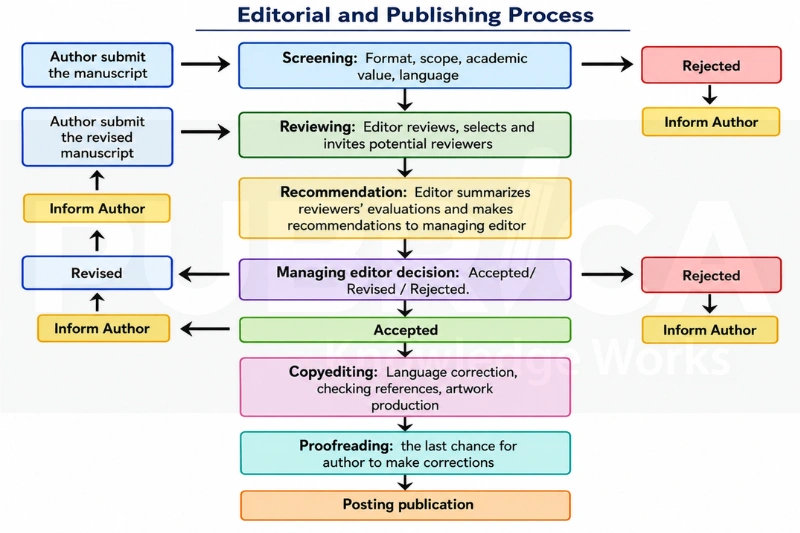
Professional editors usually include:
- Language editing
- Scientific editing
- Technical editing
- Journal formatting
- References and citations verification
The skills of the professionals facilitate clear communication of the research results to the editors and reviewers through scientific manuscript editing.
2. Why Academic Publications Require Professional Editing
Many manuscripts are rejected because of the way in which they are presented and not because of a lack of research quality. Some of the problems that arise include: [3]
- Clear writing
- Weak structure of the manuscript
- Terminology inconsistency
- Format problems
- Insufficient referencing
These issues highlight the importance of peer review preparation through professional editing before submission.
Benefits: Expert editing support significantly improves the overall quality of a manuscript by enhancing clarity, readability, and flow. It helps ensure that the content is easier for reviewers and readers to understand, reducing the chances of confusion or misinterpretation. With refined language and structure, the manuscript faces minimal language-related criticisms during peer review. Ultimately, professional editing increases the likelihood of acceptance and contributes to successful publication through publication readiness enhancement.
3. Core Responsibilities of Expert Editors
The responsibilities of expert editors vary depending on manuscript requirements and publication objectives. Journal formatting services are an essential part of this process.
| Editorial Function | Purpose | Benefit to Authors |
| Language Editing | Correct grammar and syntax | Improved readability |
| Scientific Editing | Improve technical accuracy | Stronger scientific communication |
| Structural Editing | Enhance logical organisation | Better flow of ideas |
| Formatting Review | Ensure journal compliance | Reduced desk rejection risk |
| Reference Checking | Verify citations and references | Increased credibility |
| Consistency Review | Standardise terminology and style | Professional presentation |
These editorial services collectively improve manuscript quality and research manuscript editing efficiency.
4. Enhancing Scientific Communication and Writing
One of the most important roles played by expert editors is to make scientific communication better. Scientists have vast knowledge of their areas of expertise but might have trouble presenting their ideas well. [4] This is where academic writing improvement becomes essential.
Editors do this by:
- Simple sentences
- Better paragraph transitions
- Easier-to-understand research aims
- Better results interpretations
- More effective discussions
Effective communication ensures that reviewers and readers can accurately understand the significance of the research.
5. Supporting Compliance with Journal Guidelines
All academic journals have certain criteria for submission in terms of formatting, citation style, word count, representation of figures and the overall structure of the article. This is an important part of journal formatting services.
Professional editors help authors:
- Meet the criteria of the journal
- Use the proper citation style
- Create tables and figures
- Prepare supplementary information
Violation of the rules leads to rejection without any regard to the quality of the research conducted.
6. Improving Manuscript Quality Before Peer Review
Manuscripts are judged by the peer reviewers based on scientific value, clarity, methodological aspects, and the quality of presentation. Manuscripts that have been properly edited enable peer reviewers to concentrate on science, not on language or formatting. [5] This strengthens peer review preparation.
Pre-submission editing of manuscripts by experts can help to:
- Avoid unnecessary mistakes
- Contribute to the confidence of reviewers
- Provide a professional appearance
- Avoid any need for revisions.
7. Benefits for Non-Native English-Speaking Researchers
Many authors write for English journals even though English is not their native language. Communication becomes challenging due to language difficulties.
This is where scientific manuscript editing plays a crucial role.
- Imparting fluency in language
- Dealing with grammatical errors
- Auditing the scholarly tone
- Using appropriate subject-specific vocabulary
Such editing helps researchers to compete in the global publishing world.
8. Challenges Addressed by Expert Editors
Researchers commonly face several publication challenges that editors help overcome through research manuscript editing.

Common Challenge | Editorial Solution |
Language errors | Professional language editing |
Weak structure | Manuscript restructuring |
Reviewer misunderstandings | Improved clarity and explanation |
Formatting issues | Journal-specific formatting |
Citation inconsistencies | Reference verification |
By addressing these issues early, editors improve manuscript quality and publication readiness enhancement.
9. Future of Expert Editing in Academic Publishing
Advancements in technology, like AI and automated linguistic technologies, have increasingly been assisting in preparing manuscripts. Human experts, however, will still be vital. [6] This strengthens overall manuscript publication support.
The future editorial services will incorporate:
- AI-based language corrections – Uses intelligent tools to quickly detect and fix grammar, spelling, and language errors.
- Human-based scientific editing – Expert editors improve clarity, accuracy, and academic tone of the manuscript.
- Publication strategies assistance – Helps select suitable journals and increases chances of manuscript acceptance.
- Research integrity evaluations – Ensures originality, ethical compliance, and proper research reporting.
- Manuscript optimisation – Enhances structure, readability, and overall quality to meet journal requirements.
Human experts will continue playing a vital part in ensuring the communication of research is done efficiently and effectively.
Connect with us to explore how we can support you in maintaining academic integrity and enhancing the visibility of your research across the world!
Conclusion
The expertise of these editors is crucial for the academic process of publishing papers to increase the quality of the manuscripts, improve science communication, ensure compliance with the journals, and provide good peer reviews. Expert editors can help researchers to publish papers successfully and eliminate possible obstacles along the way. With the development of the academic publishing field, this resource becomes more important.
What Role Do Expert Editors Play in Academic Publication? Our Pubrica consultants are here to guide you. [Get Expert Publishing Support] or [Schedule a Free Consultation]
Frequently Asked Questions (FAQs)
Expert editing is the process of improving a research manuscript by correcting language, enhancing clarity, improving structure, and ensuring compliance with journal guidelines before publication.
Researchers need expert editors to improve writing quality, reduce language errors, and increase the chances of acceptance in peer-reviewed journals.
Proofreading focuses on correcting grammar and spelling errors, while expert editing improves structure, clarity, scientific accuracy, and overall manuscript quality.
Expert editing ensures that manuscripts are well-structured, clear, and formatted according to journal standards, reducing rejection risk during peer review.
Yes, non-native English researchers often benefit more because expert editors help improve fluency, grammar, and academic tone for international journals.
References
- Louie, A.K., Beresin, E.V., Coverdale, J. et al.Editorial Work and Scholarship: Would You Thrive as a Journal Editor? Acad Psychiatry 49, 305–310 (2025). https://doi.org/10.1007/s40596-025-02170-2
- Glonti, K., Boutron, I., Moher, D., & Hren, D. (2019). Journal editors’ perspectives on the roles and tasks of peer reviewers in biomedical journals: a qualitative study. BMJ open, 9(11), e033421. https://doi.org/10.1136/bmjopen-2019-033421
- Wager, E., & Kleinert, S. (2013). Why do we need international standards on responsible research publication for authors and editors? Journal of global health, 3(2), 020301. https://doi.org/10.7189/jogh.03.020301
- Bautista, C., Alfuraiji, N., Drangowska-Way, A., Gangwani, K., de Flamingh, A., & Bourne, P. E. (2022). Ten simple rules for improving communication among scientists. PLoS computational biology, 18(6), e1010130. https://doi.org/10.1371/journal.pcbi.1010130
- Jawaid S. A. (2023). Improving the quality of Peer Review and accelerating the peer review process. Pakistan journal of medical sciences, 39(1), 1–3. https://doi.org/10.12669/pjms.39.1.7236
- Casadevall, A., Clark, L. F., & Fang, F. C. (2024). The changing roles of scientific journals. mBio, 15(11), e0251524. https://doi.org/10.1128/mbio.02515-24
WhatsApp us