
- Services
- Discovery & Intelligence Services
- Publication Support Services
- Sample Work
Publication Support Service
- Editing & Translation
-
Editing and Translation Services
- Sample Work
Editing and Translation Service
-
- Research Services
- Sample Work
Research Services
- Physician Writing
- Sample Work
Physician Writing Service
- Statistical Analyses
- Sample Work
Statistical Analyses
- Data Collection
- AI and ML Services
- Sample Work
AI and ML Services
- Medical Writing
- Sample Work
Medical Writing
- Research Impact
- Sample Work
Research Impact
- Medical & Scientific Communication
- Sample Work
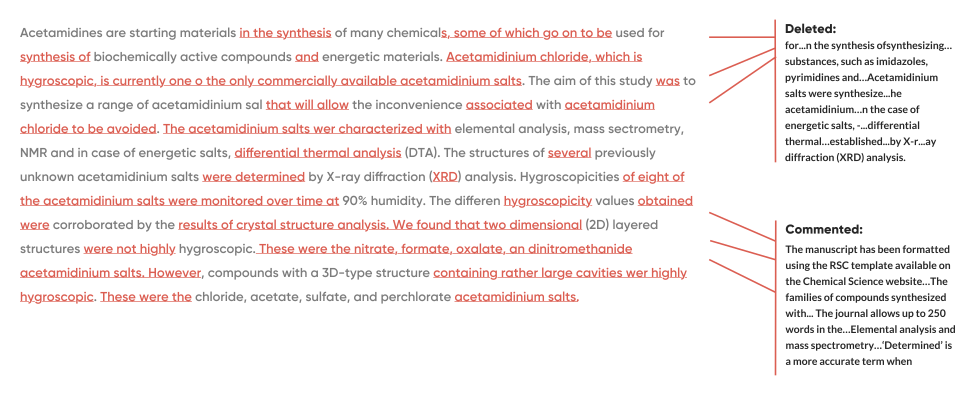
Medical & Scientific Communication
- Medico Legal Services
- Educational Content
- Academic Editorial Services
- Sample Work
Academic Editorial Services
- Educational Editorial Service
-
Education Editorial Services
- Sample Work
Education Editorial Services
-
- Industries
- Subjects
- About Us
- Academy
- Insights
- Contact Us
Mastering Research Grant Writing in 2026: Navigating New Policies and Funder Demands
- Home
- Academy
- Grant writing service
- Mastering Research Grant Writing in 2026: Navigating New Policies and Funder Demands
High-Impact Journals
Interesting topics
Mastering Research Grant Writing in 2026: Navigating New Policies and Funder Demands
Table of Contents
1. The Changing Landscape of Research Funding in 2026
2. Key Expectations from Funding Agencies
3. Essential Components of a Successful Grant Proposal
4. Common Challenges Faced by Researchers
5. Strategies to Improve Grant Success
6. The Role of Technology and AI in Grant Writing
7. Conclusion
For grant proposal writing in 2026, there will be more competition compared to previous years. Agencies tend to fund research that is directly linked to problems of global interest, such as environmental issues, artificial intelligence, and health care. It becomes essential for the proposal to contain scientific ingenuity with practical outcomes, ethics, multi-disciplinary teamwork, sustainable implementation, and policy implications. The researchers will have to plan strategically, communicate effectively, and create an appropriate budget for gaining funds. Understanding how to write a grant proposal correctly will be critical for success. [1]
1. The Changing Landscape of Research Funding in 2026
There have been many modifications in the methods used by the agencies in evaluating proposals in recent years. The past proposals mostly considered technical and publication issues, but the current system evaluates the impact of the proposed research. [2]
Some notable changes that will shape the grant application process in 2026 include:
- Elevation of the importance of interdisciplinary work
- The need for mandatory data sharing/open science
- Diversity, equity and inclusiveness issues
- Ethical issues in artificial intelligence research
- Sustainability, Societal impact
International funders are also requiring comprehensive risk management and plans for reproducibility of results. Applicants are expected to show the practical use of the findings in an ethical manner. Moreover, several agencies are using AI tools for screening the proposals in terms of coherence and ethical issues like plagiarism. Utilising grant writing services or a grant writing consultant can help researchers adapt to these new requirements.
2. Key Expectations from Funding Agencies
Funding organisations now expect researchers to provide comprehensive and well-structured applications that clearly justify the significance of the study.
Key Requirement | Description |
Innovation | The proposal must address a novel scientific problem |
Societal Impact | Research should contribute to society or industry |
Feasibility | Objectives and methodology must be realistic |
Collaboration | Interdisciplinary or international partnerships are encouraged |
Budget Transparency | Clear financial planning is essential |
Ethical Compliance | Human, animal, and AI ethics must be addressed |
Open Science | Data accessibility and reproducibility are important |
Researchers are also expected to present measurable outcomes, publication plans, and long-term implementation strategies. Proposals with vague objectives or weak methodology often fail during peer review. Mastering research grant proposal writing ensures alignment with these expectations. Review.

3. Essential Components of a Successful Grant Proposal
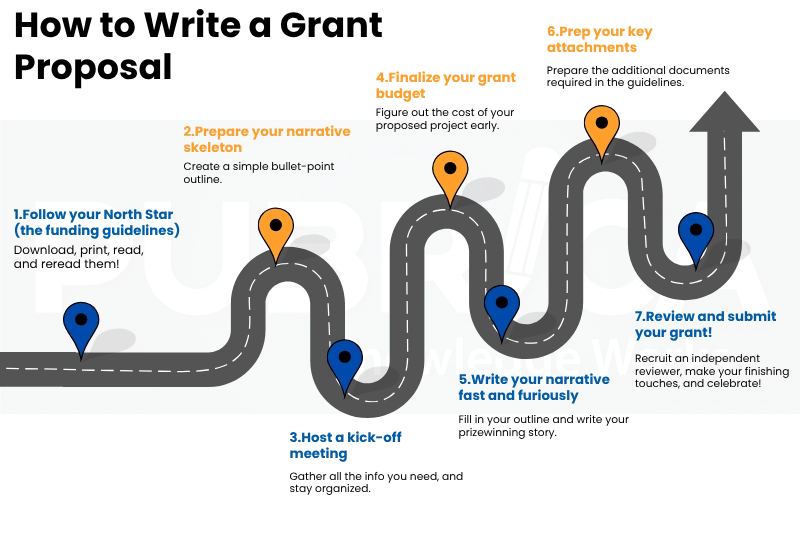
A good grant proposal must be logically structured and professionally written, ensuring that all sections support a persuasive case showcasing the importance of the proposed study. [3]
- Title and abstract
- Background and problem statement
- Literature review
- Research aims
- Methodology
- Anticipated results
- Budget analysis
- Timeframe and deadlines
- Ethics and Results Dissemination Strategy
The abstract plays a vital role in a research proposal since it may be the basis on which the reviewer forms his/her first impression regarding the entire proposal. A powerful abstract makes the proposal more likely to receive a thorough examination.
The methodology section needs to describe the research methodology, sample selection, data analysis techniques, and the validation of the findings.
4. Common Challenges Faced by Researchers
Researchers often face problems in grant proposal writing because of insufficient preparation and high competition. These may include inadequate structure of the research proposal, lack of clear objectives, shortage of preliminary data, and budgeting discrepancies. [4]
Some of the most common problems include:
- Difficulties in comprehending the guidelines of the funding agency
- Insufficient persuasion in writing
- Insufficient statistical analysis
- Lack of demonstration of importance
- Weak literature basis
- Time management problems
Young researchers can also find it hard to compete with experienced researchers who already have experience in getting grants. A grant writing consultant or grant writing services can provide guidance in overcoming these challenges.
Some advanced services also include plagiarism checking, reference verification, and peer-review preparation.
5. Strategies to Improve Grant Success
Strategic development of proposals could enhance the chances of securing funding.
Effective Techniques for Grant Applications
- Serious study of grant requirements
- Matching proposal goals to funder interests, having a realistic timeline and budget planning
- Use of concise academic language and showing uniqueness and significance
- Making use of peer review
- Incorporation of preliminary data, Maintenance of proper formatting
Professional grant writing and editing services have recently been adopted by many researchers, as they help ensure higher-quality grants. Proposals for collaborative research tend to be more favoured because of increased expertise and collaboration.
6. The Role of Technology and AI in Grant Writing
Artificial intelligence technology is revolutionising grant proposal writing in 2026. Researchers utilise AI-supported systems to check grammar, conduct research on the literature, manage references, detect plagiarism, and structure proposals.
The role of artificial intelligence technology includes the following aspects:
- Improving language quality
- Creating outline suggestions
- Suggesting funding possibilities
- Analysing comments made by reviewers
- Formatting the manuscript correctly
It should be noted that researchers need to be responsible when using artificial intelligence technology, since most of the funding bodies are demanding that researchers disclose the use of AI. Human intervention is important for the process of reasoning scientifically, innovation creation, and making ethical decisions.
Connect with us to explore how we can support you in maintaining academic integrity and enhancing the visibility of your research across the world!
Conclusion
Grant writing in 2026 demands not just knowledge of science. Scientists need to know about the changing policies regarding funding, interdisciplinary research, ethics, and global research interests. Good proposals should be innovative, clear, methodologically sound, socially significant, and well-presented.
As the competition for research funding grows increasingly fierce, scientists who are skilled in grant proposal writing, how to write a grant proposal, and research grant proposal preparation will find themselves better equipped to receive grants and make important discoveries. With strategic thinking, collaboration, and up-to-date technologies, scholars can successfully cope with the challenge. Using grant writing services or consulting a grant writing consultant can further enhance the chances of success.
Mastering Research Grant Writing in 2026: Navigating New Policies and Funder Demands. Our Pubrica consultants are here to guide you. [Get Expert Publishing Support] or [Schedule a Free Consultation]
References
- Grants, H. Q. (2026, February 4). 2026 grant writing guide: Trends, requirements, and winning proposal strategies. Grants. https://grants.com/2026-grant-writing-guide-trends-requirements-and-winning-proposal-strategies/
- Siddiqui, S., Khanna, A., Tung, A., Duranteau, O., Pearl, R., Nagrebetsky, A., O’Connor, M., Chow, J., Deshpande, R., Hicks, M., Krause, M., Moll, V., Verdiner, R. E., Karamchandani, K., Tawil, J., Njoku, D., & Frendl, G. (2026). The Changing Landscape of Academic Anesthesiology Research Funding: Preliminary Insights from a National Survey. Cureus, 18(2), e103599. https://doi.org/10.7759/cureus.10359
- Chung, K. C., & Shauver, M. J. (2008). Fundamental principles of writing a successful grant proposal. The Journal of hand surgery, 33(4), 566–572. https://doi.org/10.1016/j.jhsa.2007.11.0
- Nomali, M., Mehrdad, N., Heidari, M. E., Ayati, A., Yadegar, A., Payab, M., Olyaeemanesh, A., & Larijani, B. (2023). Challenges and solutions in clinical research during the COVID-19 pandemic: A narrative review. Health science reports, 6(8), e1482. https://doi.org/10.1002/hsr2.1482