
- Services
- Publication Support Services
-
Publication Support Service
-
- Editing & Translation
-
Editing and Translation Service
-
- Research Services
-
Research Services
-
- Physician Writing
-
Physician Writing Service
-
- Statistical Analyses
-
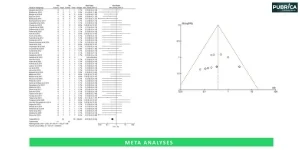
Statistical Analyses
-
- AI and ML Services
-
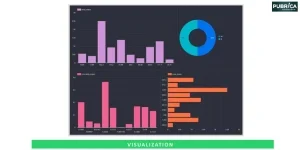
AI and ML Services
-
- Medical Writing
-
Medical Writing
-
- Research Impact
-
Research Impact
-
- Medical & Scientific Communication
-
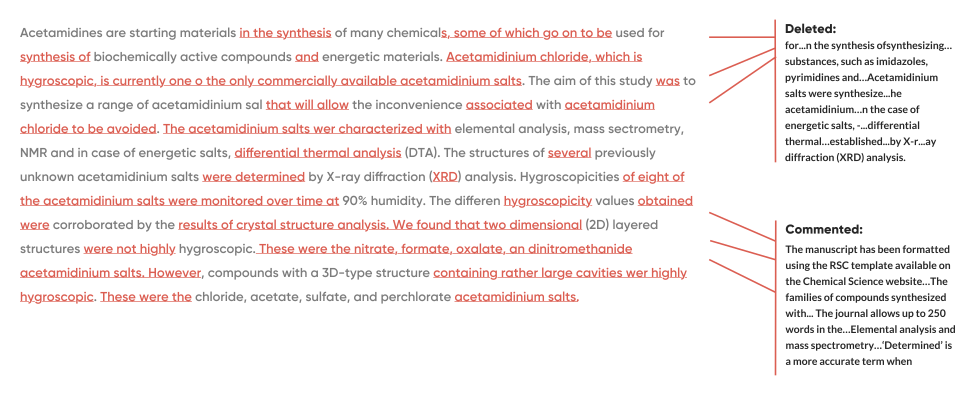
Medical & Scientific Communication
-
- Academic Editorial Services
-
Academic Editorial Services
-
- Educational Editorial Service
-
Education Editorial Services
-
- Publication Support Services

Reactor Design & Analysis
Goals are to design and optimize nuclear reactors for maximum efficiency, safety & sustainability of energy production.

Radiation Physics &
Shielding
The study of radiation interactions, shielding materials and their use in both nuclear facilities (industry) and medical applications.

Nuclear Fuel Cycle Engineering
Evaluating nuclear fuel from the production phase through use, reprocessing, and finally to waste management. This will help to create a sustainable nuclear power system.

Computational Modelling
Provides simulated tools to predict reactor behaviour, neutron transport, thermal-hydraulic behaviour; and hence assists in decision making.

Nuclear Safety and Risk Assessment
Evaluates the reactor safety systems and risk mitigation strategies and ensures compliance with international (global) nuclear safety standards.

Thermal Hydraulics
Examining heat transfer & fluid flow in industry; then helps optimise both the reactor cooling and reactor performance.

Fusion and Advanced Reactor Technologies
Investigating next-generation nuclear technologies, including fusion reactors & small modular reactors (SMRs).

Material Science in Nuclear Systems
The research and development of materials that are resistant to damage (radiation) for both reactors and structural components.










Electricity Generation - The generation of electricity through the use of nuclear power plants.

Medical Use - Medical imaging, radiation therapy (for the treatment of cancer), and other medical applications.

Industrial Use - Non-destructive testing, material properties analysis, and radiation processing.

Environmental Protection - Monitoring and controlling radioactive materials in the environment.

Space Exploration - Providing power systems for spacecraft (including power systems used for deep space missions).

Research and Development - Researching the development of nuclear reactor technologies and nuclear materials.

Agriculture - Use of radiation techniques to increase crop production or to medicate crops from pests.

Security and Defence - The use of radiation detection systems and nuclear safety systems.


The editorial team demonstrated exceptional expertise in nuclear reactor modelling. Their revisions improved the clarity and technical accuracy of my manuscript significantly.


Pubrica helped refine our research on radiation safety and compliance. Their detailed editing ensured our paper met international standards and was accepted quickly.


Their understanding of advanced nuclear systems and simulations was impressive. They enhanced both the structure and impact of our research article.


"Pubrica’s team provided exceptional support throughout my meta-analysis cardiovascular drug efficacy. Their adherence to PRISMA guidelines and attention to statistical detail helped me publish in the European Heart Journal. Highly recommended"
— Dr. Anna Müller
Cardiologist, University Hospital Munich, Germany

"The meta-analysis manuscript I co-authored with Pubrica’s experts was accepted by BMC Public Health without major revisions. Their data synthesis and transparent methodology were critical to this success."
— Dr. Rohan Mehta
Public Health Researcher,
All India Institute of Medical Sciences (AIIMS), India

"Thanks to Pubrica’s guidance, our meta-analysis on paediatric nutrition was published in The Lancet Child & Adolescent Health. The methodological rigor and rewriting support were key contributors to the paper’s clarity and impact."
— Dr. Luis Fernández
Pediatrician & Research Fellow, University of Barcelona, Spain


How to Structure Case Reports and Review Articles for Medical Journals
Medical journals expect a structure for case reports and review articles, with clear objectives....

How Should Physicians Choose the Right Journal for Submitting a Case...
Publishing a case report involves more than clinical knowledge; it also demands strategic journal ....

How Physicians Can Write Clear and Impactful Patient Education Materials
Effective patient education materials (PEMs) are crucial for promoting health literacy, enhancing....