
- Services
- Publication Support Services
-

Publication Support Service
-
- Editing & Translation
-

Editing and Translation Service
-
- Research Services
-
Research Services
-
- Physician Writing
-
Physician Writing Service
-
- Statistical Analyses
-
Statistical Analyses
-
- AI and ML Services
-

AI and ML Services
-
- Medical Writing
-
Medical Writing
-
- Research Impact
-
Research Impact
-
- Medical & Scientific Communication
-
Medical & Scientific Communication
-
- Academic Editorial Services
-
Academic Editorial Services
-
- Educational Editorial Service
-
Education Editorial Services
-
- Publication Support Services

Heat Transfer Models
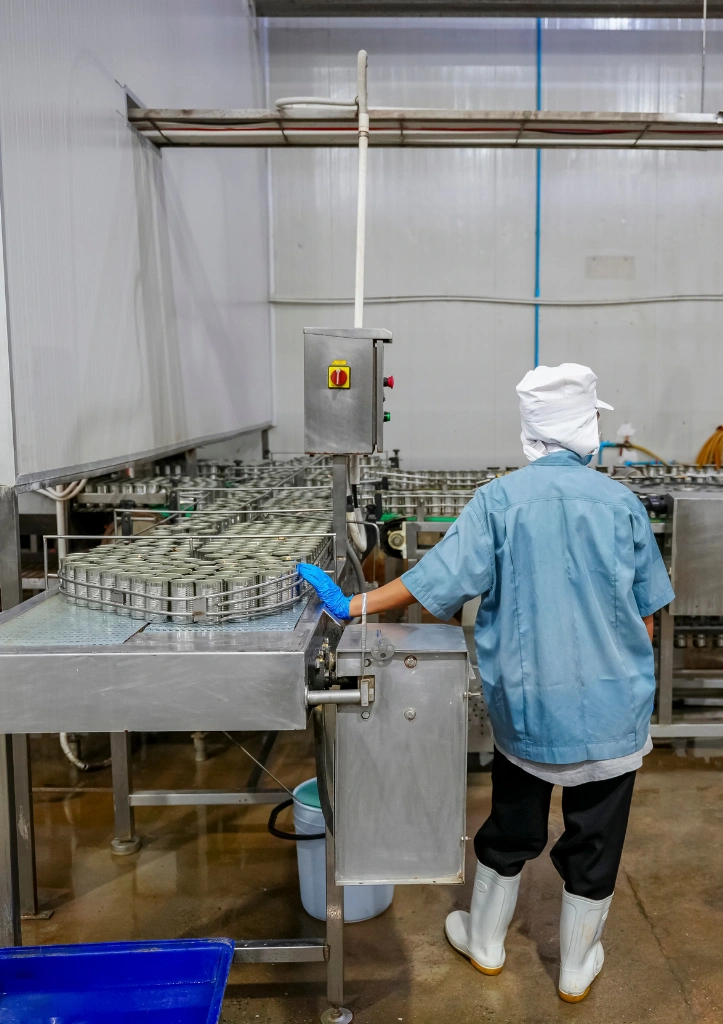
To guarantee the quality of food and ensure its safety during its production process, you need to know the temperature distribution throughout the food or ingredients' surface. This temperature distribution is determined by mathematical models that are based on Fourier's Law of Heat Conduction and Newton's Law of Cooling. These models are widely utilised in the evaluation of thermal processing techniques such as pasteurisation and cooking to guarantee proper penetration of heat and survival of bacterium.

Mass Transfer Models
Mass transfer models form an integral part in processes that involve the movement of moisture or solute. Models that follow Fick’s laws of diffusion apply in drying, extraction, and osmotic dehydration.

Kinetic models
Kinetic models can be used to assess the rate of chemical and biochemical changes in food systems. These models can support the study of the degradation of nutrients, enzymes, and the inactivation of microorganisms, which can be used to make accurate predictions.

Microbial Growth Models
Models of microorganisms' growth are very important in helping to maintain safe and high-quality food products. Predictive models of the growth of microorganisms (the logistic growth model) are used to determine the possibilities for the growth, survival and inactivation of microorganisms due to various environmental conditions and are used to assist in hazard analysis as well as in risk assessment.

Drying Models
Moisture is an important aspect of drying food products, and drying models provide a way to understand how moisture is removed from food products. Thin-layer and diffusion drying models help optimise drying processes while maintaining the texture and nutritional value of the finished product.

Rheological Models
Rheological models are used to characterise the flow and deformation of food materials. The models are often used in the processing of liquid and semi-solid food products, where control of viscosity, texture, and consistency of food products is required.

Computational Fluid Dynamics (CFD) Models
Computational Fluid Dynamics (CFD) models are sophisticated computer models used in the analysis of fluid flow, heat transfer, and mass transfer in food processing operations.

Process Optimisation
Models
Response Surface Methodology (RSM) and Artificial Neural Networks (ANN) are optimisation models that are used in determining the processing conditions. These models increase efficiency, reduce costs, and improve the quality of products.

Packaging and Shelf Life Models
These models are used in predicting the stability of the product under various storage conditions. The models are important in the development of an effective packaging system.










Food Industry, to make sure that food products are produced according to the best methods (for example, by utilising the best procedures and equipment for creating quality food products, producing safe foods, etc.).

Public Health, to make sure that foods produced for consumption are safe by using predictive microbial and thermal models.

Sustainable Practices, to reduce energy use and food waste, while improving the performance of food processing systems.

Research and Innovation to promote the development of new technologies and intelligent systems for food processing.

Policy and Regulation to assist with compliance with food safety standards and laws.





As a researcher in food processing and engineering, I found Pubrica’s editing support extremely valuable. Their team refined my process modelling, improved the clarity of thermal analysis, and strengthened the overall scientific presentation. Their expertise in food processing is truly commendable.


My manuscript on advanced food processing techniques was significantly improved after Pubrica’s editing. The team enhanced the technical explanations, corrected structural issues, and ensured clarity throughout the paper. With their support, my work was accepted without major revisions.


Pubrica provided exceptional support for my research on drying and preservation technologies. The editors improved the coherence of my manuscript and ensured all processing concepts were clearly presented. Their contribution greatly increased my chances of publication.


"Pubrica’s team provided exceptional support throughout my meta-analysis cardiovascular drug efficacy. Their adherence to PRISMA guidelines and attention to statistical detail helped me publish in the European Heart Journal. Highly recommended"
— Dr. Anna Müller
Cardiologist, University Hospital Munich, Germany

"The meta-analysis manuscript I co-authored with Pubrica’s experts was accepted by BMC Public Health without major revisions. Their data synthesis and transparent methodology were critical to this success."
— Dr. Rohan Mehta
Public Health Researcher,
All India Institute of Medical Sciences (AIIMS), India

"Thanks to Pubrica’s guidance, our meta-analysis on paediatric nutrition was published in The Lancet Child & Adolescent Health. The methodological rigor and rewriting support were key contributors to the paper’s clarity and impact."
— Dr. Luis Fernández
Pediatrician & Research Fellow, University of Barcelona, Spain


How to Structure Case Reports and Review Articles for Medical Journals
Medical journals expect a structure for case reports and review articles, with clear objectives....

How Should Physicians Choose the Right Journal for Submitting a Case...
Publishing a case report involves more than clinical knowledge; it also demands strategic journal ....

How Physicians Can Write Clear and Impactful Patient Education Materials
Effective patient education materials (PEMs) are crucial for promoting health literacy, enhancing....