
- Services
- Discovery & Intelligence Services
- Publication Support Services
- Sample Work
Publication Support Service
- Editing & Translation
-
Editing and Translation Services
- Sample Work
Editing and Translation Service
-
- Research Services
- Sample Work
Research Services
- Physician Writing
- Sample Work
Physician Writing Service
- Statistical Analyses
- Sample Work
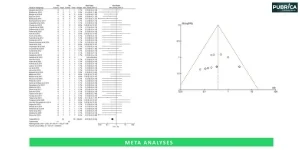
Statistical Analyses
- Data Collection
- AI and ML Services
- Sample Work
AI and ML Services
- Medical Writing
- Sample Work
Medical Writing
- Research Impact
- Sample Work
Research Impact
- Medical & Scientific Communication
- Sample Work
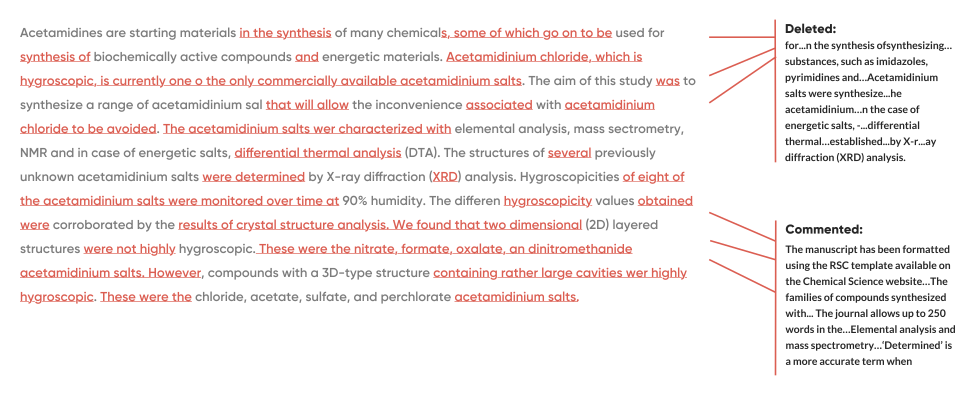
Medical & Scientific Communication
- Medico Legal Services
- Educational Content
- Academic Editorial Services
- Sample Work
Academic Editorial Services
- Educational Editorial Service
-
Education Editorial Services
- Sample Work
Education Editorial Services
-
- Industries
- Subjects
- About Us
- Academy
- Insights
- Contact Us
Navigating WAME: Essential Insights for Medical Editors
- Home
- Publication Support
- Journal Selection
- Navigating WAME: Essential Insights for Medical Editors
An Academy Guide
Interesting topics


Navigating WAME: Essential Insights for Medical Editors
The World Association of Medical Editors (WAME) is an organizational entity meant to assist medical editors and the publishers of medical journals in adhering to the highest standards of ethical publishing. WAME promotes the highest standards of practice in medical journal publishing, promotes cooperation, transparency, and integrity in the editorial process. Part of the quality publication of medical research is sticking to well-established reporting guidelines such as CONSORT (Consolidated Standards of Reporting Trials).

1. What is WAME?
The WAME is committed to the quality of medical publications. WAME provides resources, education, and guidance to medical journal editors. The priority is to ensure that medical research is reported to people, ethically, and effectively for the sake of improving healthcare and the quality of patient outcomes. WAME facilitates editors and promotes best practices, provides education and training, and encourages respect for international accounting for scientific integrity and editorial transparency, especially in medical publications [1]
1.1. Key Functions of WAME
- Professional Development: WAME offers educational resources to editors to enhance their editorial skills and knowledge of new developments in medical publishing
- Ethical Publishing: WAME advocates for ethical standards such as transparency, integrity, and proper use of research data
- Guides and Best Practice: WAME endorses complying with reporting standards, like the CONSORT statement, to ensure clinical trials are published transparently and to a high standard
2. The Role of CONSORT Guidelines in Medical Publishing
Key Elements of CONSORT Guidelines
| Section | Purpose | Key Information |
|---|---|---|
| Title and Abstract | Overview of the trial | Title, objectives, trial design, key outcomes |
| Introduction | Provides background and research question | Background, literature review, research objectives, and hypothesis |
| Methods | Details trial design and methodology | Randomization, participant selection, interventions, and statistical analysis |
| Results | Presents study findings | Outcome measures, data analysis, figures, and tables |
| Discussion | Interpretation of findings and clinical relevance | Explanation of results, comparison with previous studies, and limitations |
3. Types of Studies Requiring CONSORT Reporting
Although the CONSORT guidelines are specifically designed for randomized controlled trials, they can be applied to other forms of clinical research to foster transparency and reproducibility.
- Randomized Controlled Trials (RCTs): The highest form of validity in research, RCTs determine the outcome of an intervention-type study by randomly assigning a participant to an intervention group or a control group.
- Systematic Reviews and Meta-Analyses: These summarize RCTs assessing how effective a specific treatment or intervention is and provide the evidence from several studies combined.
- Observational Studies: These studies observe participants’ outcomes without being randomized. While they inform researchers about outcomes in real-world settings, they are beneficial in seeing how effective and safe treatments are.
4. How WAME Supports Editors in Implementing CONSORT Guidelines
WAME has a critical responsibility to help editors make use of, and do their best to implement, the CONSORT guidelines for clinical trial reporting. By providing training, resources, and editorial support, WAME ensures that the medical journals are publishing high-quality, transparent, and reproducible research.
4.1. Steps for Editors to Follow CONSORT Guidelines
- Understanding CONSORT: Editors must ensure that authors understand and adhere to the CONSORT statement when submitting RCTs
- Evaluating Trial Transparency: Editors need to thoroughly evaluate randomization methods, inclusion/exclusion criteria, and statistical methods reporting
- Ensuring Completeness: Editors must ensure that the trial report includes the necessary report components (e.g., participant flow diagram, participant baseline characteristics, outcome data)
- Encouraging ethical reporting: Editors should promote adherence to ethical reporting (e.g., clinical trial registration and conflicts of interest)
Conclusion
The WAME plays a key role in encouraging ethical conduct and best practices in publishing in the medical field. With the support of CONSORT guidelines, WAME can foster transparency, reliability, and reproducibility in clinical trial reports with the goal of strengthening patient care and healthcare decision making. Editors can be a driving force in increasing medical knowledge and improving public health by embracing these reporting standards and working hard to ethically and effectively communicate their research.
Understanding WAME: A Comprehensive Guide for Medical Journal Editors? Our academic consultants are here to guide you. [Get Expert Publishing Support] or [Schedule a Free Consultation]
References
- Launch of the World Association of Medical Editors. (n.d.). JAMA: The Journal of the American Medical Association, 273. https://jamanetwork.com/journals/jama/article-abstract/387676
- Cuschieri S. (2019). The CONSORT statement. Saudi journal of anaesthesia, 13(Suppl 1), S27–S30. https://doi.org/10.4103/sja.SJA_559_18