
- Services
- Discovery & Intelligence Services
- Publication Support Services
- Sample Work
Publication Support Service
- Editing & Translation
-
Editing and Translation Services
- Sample Work
Editing and Translation Service
-
- Research Services
- Sample Work
Research Services
- Physician Writing
- Sample Work
Physician Writing Service
- Statistical Analyses
- Sample Work
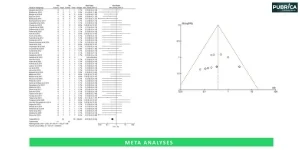
Statistical Analyses
- Data Collection
- AI and ML Services
- Sample Work
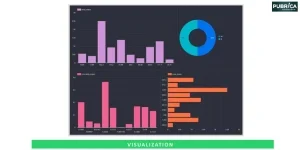
AI and ML Services
- Medical Writing
- Sample Work
Medical Writing
- Research Impact
- Sample Work
Research Impact
- Medical & Scientific Communication
- Sample Work
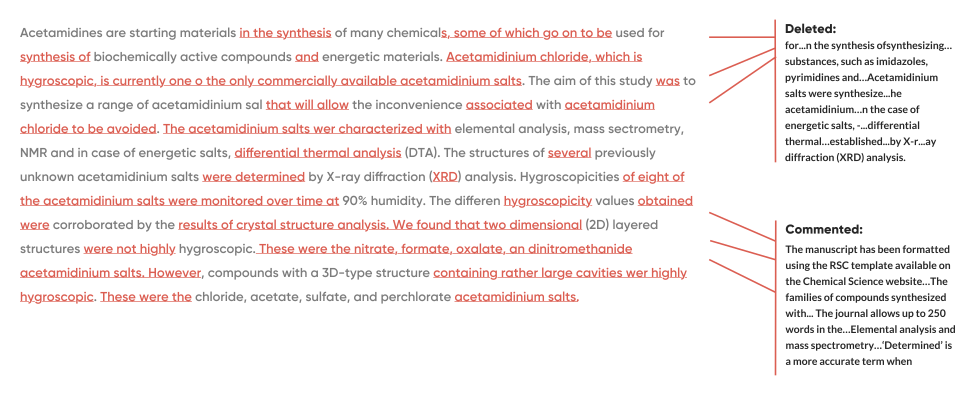
Medical & Scientific Communication
- Medico Legal Services
- Educational Content
- Academic Editorial Services
- Sample Work
Academic Editorial Services
- Educational Editorial Service
-
Education Editorial Services
- Sample Work
Education Editorial Services
-
- Industries
- Subjects
- About Us
- Academy
- Insights
- Contact Us
SCOPUS-Indexed Journals: A Comprehensive Guide for Authors
- Home
- Publication Support
- Journal Selection
- SCOPUS-Indexed Journals: A Comprehensive Guide for Authors
An Academy Guide
Interesting topics


SCOPUS-Indexed Journals: A Comprehensive Guide for Authors
Introduction
SCOPUS, created by Elsevier which indicates they are a leading abstract and citation database of peer-reviewed literature containing journals, books, and conference proceedings. Researchers and authors recognize SCOPUS as an academic standard for publishing in high-quality journals with academic impact. SCOPUS recognised journals are noted for quality assurance, ethical publication practices, and adherence to international guidelines (CONSORT / PRISMA / CARE) for specific study designs.

1. Key Features of SCOPUS-Indexed Journals

1.1. High Citation Impact
Journals indexed in SCOPUS are usually ranked by Cite Score, SJR (SC Imago Journal Rank), as well as SNIP (Source Normalized Impact per Paper)
1.2. Rigorous Peer Review
Submissions undergo a strict review process to ensure scientific accuracy and originality.
1.3. Global Visibility
Articles published in SCOPUS journals can be read by all, which will increase the chances of citation and collaboration.
1.4. Ethical Publishing Standards
Follow COPE (Committee on Publication Ethics) and standardized reporting guidelines.
2. Types of SCOPUS-Indexed Journals
| Journal Type | Scope | Example |
|---|---|---|
| Open Access Journals | Freely accessible research articles | PLOS Medicine, BMJ Open, and Frontiers in Medicine |
| Subscription-Based Journals | Access via institutional or personal subscription | The Lancet, British Medical Journal (BMJ), and Annals of Internal Medicine |
| Hybrid Journals | Offers both Open Access and subscription options | JAMA Internal Medicine, Cell Reports, and Nature Medicine |
3. Examples of Leading SCOPUS Journals
- The Lancet (General Medicine)
- The American Journal of Clinical Nutrition (Clinical Nutrition)
- International Journal of Food Microbiology (Food Science)
- The New England Journal of Medicine (Clinical Medicine)
All these journals have solid acceptance rates and high-impact factors that speak to their reputation for scholarship
4. Essential Guidelines for Submission to SCOPUS Journals
4.1. Pre-Submission Checklist
- Select an appropriate journal that covers the scope of your manuscript on Elsevier Journal Finder.
- For randomised controlled trials (CONSORT), for systematic reviews (PRISMA), and observational studies (STROBE) [1]
- Follow the author guidelines for the journal, considering formatting, structure, and reference style.
4.2. Ethical Compliance Requirements
- Plagiarism Check using tools like Turnitin.
- Disclosure of conflict of interest and funding.
- Trial registration numbers (for clinical studies) and follow-up reporting checklists
4.3. Manuscript Components Checklist
- Title and Abstract, with Keywords.
- Introduction that includes Background and Objectives.
- Methods that describe study design, analysis, etc.
- Results that include statistics and figures.
- Discussion that includes implications and limitations.
- References formatted according to the requirements of the journal.
Case Example
An investigator who is conducting a randomized controlled trial of a new diabetic medication is submitting to the Journal of Clinical Endocrinology & Metabolism.
[2]
- Adheres to CONSORT 2010 Checklist.
- Registers the trial with ClinicalTrials.gov.
- Discloses conflict of interest and funding sources.
- Manuscript passes iThenticate screening with <10% similarity.
Results: Manuscript accepted after peer review, cited within 6 months, enhancing researcher visibility.
Conclusion
Publishing in SCOPUS-indexed journals is crucial for establishing a global reputation. Success relies on selecting a high-quality journal, adhering to SCOPUS reporting guidelines, and maintaining research integrity. SCOPUS journals offer enhanced visibility, citations, and academic prestige, amplifying the impact of your work.
Frequently Asked Questions (FAQ)
1. How can I check if a journal is SCOPUS indexed?
You can check a journal’s indexing status using the SCOPUS Source List on the SCOPUS website.
- Search by journal title, ISSN, or publisher.
- Check indexing year and pointing.
2. What are the benefits of publishing in a SCOPUS-indexed journal?
- International Publication: Increased academic credibility and citation possibilities
- Peer-Reviewed Quality: Ensures methodological rigor
- International Standard of Practice: May necessitate compliance with guidelines such as CONSORT, PRISMA, or STROBE
- Career Advancement: Preferred use in academic promotion and research funding proposals
3. Do all SCOPUS journals require adherence to CONSORT or other guidelines?
- CONSORT for Randomized Controlled Trials (RCTs)
- PRISMA for Systematic Reviews and Meta-Analyses.
- STROBE for Observational Studies
4. How important is ethical compliance for SCOPUS journals?
- No plagiarism.
- Disclosure of conflicts of interest.
- Proper trial registration (for clinical studies).
References
- Wang, C.-Y., Huang, K.-C., Lu, C.-W., Chu, C.-H., Huang, C.-N., Chen, H.-S., Lee, I.-T., Chen, J.-F., Chen, C.-C., Chen, C.-S., Hsieh, C.-H., Tien, K.-J., Chien, H.-Y., Huang, Y.-Y., Hsu, J.-P., Shane, G.-T., Chang, A.-C., Wu, Y.-C., & Sheu, W. H.-H. (2022). A randomized controlled trial of R-form verapamil added to ongoing metformin therapy in patients with type 2 diabetes. The Journal of Clinical Endocrinology and Metabolism, 107(10), e4063–e4071. https://doi.org/10.1210/clinem/dgac436
- Cuschieri S. (2019). The STROBE guidelines. Saudi journal of anaesthesia, 13(Suppl 1), S31–S34. https://doi.org/10.4103/sja.SJA_543_18