Pubrica

May 2025 | Source: ​Sage Publishing

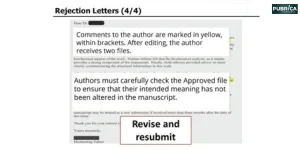
SAGE Publications has implemented a response to reviewers template to take the manuscript revision process to the next level. As authors prepare and generate a structured response to peer review, the expectation is that this template will enhance both the quality and clarity of scholarship.

Debates Over Open Access Policies: Navigating the Future of Research Publication

Debates Over Open Access Policies: Navigating the Future of Research Publication

September: 2025 | Source: Open-access

The demand for open access (OA), publishing has grown and spurred debate within the academic/research community. Many of the most far-reaching new policies for OA are stemming from Plan S, a policy requiring that publicly funded research be made freely available to anyone. Plan S was implemented in 2018, by a collective of international research funders known as Coalition S. This policy has irrevocably changed the process for sharing research and prompted changes in publishers preventing to how they operate. All stakeholders from researchers, to publishers, are debating and addressing how effective are open access policies, what are the benefits and disadvantages of open access. [1],[2]

Understanding Open Access and Plan S

Understanding Open Access and Plan

Its fundamental principles are. [3]

  • Free Access: Research supported by public money should be made available to all users, with no paywalls.
  • Copyright retention: The author should retain copyright and freely distribute and reuse their work.
  • Open Access publication: Research should only be made available in open access journals or platforms, providing broad and equal access. [4]
Impact on the Publishing Industry

Impact on the Publishing Industry

The transition to open access is changing the academic publishing sector.

  • Article Processing Charges (APC): The trend towards APCs is increasingly gaining traction, placing an emphasis on payment by authors (or some other entity) so that their research can be made available for no cost. While APC’s model creates free access to content, it raises the issue of equity as authors may not be able to afford to pay for that. [5]
  • Hybrid models: Many publishers are beginning to employ hybrid model which combine subscription and open access content. These models only just emerging aim to offer support both sustainability and access. [6]
  • Institutional partnerships. Institutions and funders are absorbing some or parts of publishing costs through agreements that take away some or all the burden of out-of-pocket expenses for researchers. The agreements do not guarantee how researchers will be treated and bring up issues of fairness and transparency.
Benefits of Open Access

Benefits of Open Access

Open access is typically seen as a positive move towards democratizing knowledge. Some of the benefits of open access include.[7]

  • Broader Reach: Open access increases the visibility of research and allows it to be read by a global (as opposed to restricted) audience.
  • More Collaboration: Fewer barriers to research access allow for more collaboration across institutional and national borders.
  • More Citations: Research published openly typically have better citation rates which is valuable for authors.
Challenges and Criticisms

Challenges and Criticisms

While the benefits provided by open access publishing are compelling, there are many challenges and criticisms that surround it too, including. [8]

  • Financial Costs to Researchers: APCs could be very high especially in low-income countries or at institutions that cannot afford APCs.
  • Quality: Critics mention that the rush to publish research without the inundation of previous subscription-based filters may reduce the overall quality and rigor of peer-reviewed
  • Sustainability: Even if Plan S and other open access options see publisher profits begin to diminish, questions remain about the sustainability of open access as long-term model. Especially in the case of small publishers and niche journals.
The Global Perspective

The Global Perspective

 Different countries and regions currently employ different strategies to open access.[9]

  • Europe: Those in Europe, particularly the European Union, the UK, and the Netherlands, have made great strides toward adopting open access policies. Various major initiatives also support the promotion of open access, including Plan S to enforce full open access for publicly funded research.
  • United States: The United States seems to be slower to enact full open access policies. The National Institutes of Health (NIH) has long required full open access for its financed research. However, there is still considerable negotiation regarding the impact of open access on businesses that publish academic work.
  • Asia and the Global South: Some countries such as India, Brazil, and China are adapting to open access, but financial and infrastructural issues will continue to be major obstacles before local open access can be widespread.
Outlook and Policy Debate

Outlook and Policy Debate

As open access policies continue to change, there is more certainty about believing that   research should be open to all.

  • Can publishers operate on a financially viable model with open access?
  • What is the role of government and funding agency support of open access, especially where developing countries are concerned?
  • How do we ensure research quality in an open access world?

Table: Overview of Open Access Models

Open Access Models Table
Model Description Pros Cons
Gold Open Access Authors pay article processing charges (APCs) to publish in fully open access journals. Immediate availability to everyone. High APCs may limit access for some researchers.
Green Open Access Authors self-archive their papers in institutional repositories. No publication fees. Limited availability if journals impose restrictions.
Hybrid Open Access Some content in subscription-based journals is made open access. Balanced approach. APCs may not cover all articles.
Diamond Open Access No costs for either authors or readers; typically supported by institutions or grants. Fully accessible without costs. Financial sustainability may be a challenge.
Conclusion

Conclusion

The JAPH is a positive step towards changing scientific publishing. The focus on open access and academic freedom will provide researchers with an important opportunity to enter the field with an open dialogue. This will foster a more vibrant and inclusive environment for public health research and create models for potential scholarly communication in the future. The role of this journal and its impact will grow over time as it continues to develop in the public health and research community.

Ready to publish in open-access journals like JAPH? Partner with Pubrica for expert manuscript, submission, and peer-review support to maximize your research impact.

References

References

  1. Abbasi K. (2012). The debate around open-access publishing. Journal of the Royal Society of Medicine105(5), 185. https://doi.org/10.1258/jrsm.2012.12k035
  2. (N.d.). Retrieved August 28, 2025, from Nih.gov website: https://pmc.ncbi.nlm.nih.gov/articles/PMC2286552/
  3. Understanding open access. (2021, December 10). Retrieved August 28, 2025, from Citystgeorges.ac.uk website: https://libguides.citystgeorges.ac.uk/understanding-oa/Plan-S
  4. Open access publication. (n.d.). Retrieved August 28, 2025, from Open access. Network website: https://open-access.network/en/information/publishing/open-access-publishing
  5. Article Publication Charges. (n.d.). Retrieved August 28, 2025, from Wiley.com website: https://authorservices.wiley.com/author-resources/Journal-Authors/open-access/article-publication-charges/index.html
  6. (N.d.). Retrieved August 28, 2025, from Sciencedirect.com website: https://www.sciencedirect.com/topics/engineering/hybrid-model
  7. Benefits of open access publishing. (2021, March 2). Retrieved August 28, 2025, from Author Services website: https://authorservices.taylorandfrancis.com/choose-open/publishing-open-access/oa-benefits/
  8. Bosch, X. (2008). An open challenge. Open access and the challenges for scientific publishing: Open access and the challenges for scientific publishing. EMBO Reports9(5), 404–408. https://doi.org/10.1038/embor.2008.60
  9. (N.d.). Retrieved August 28, 2025, from Ucpress.edu website: https://online.ucpress.edu/gp/pages/open_access