
- Services
- Discovery & Intelligence Services
- Publication Support Services
- Sample Work

Publication Support Service
- Editing & Translation
-
Editing and Translation Services
- Sample Work

Editing and Translation Service
-
- Research Services
- Sample Work

Research Services
- Physician Writing
- Sample Work
Physician Writing Service
- Statistical Analyses
- Sample Work
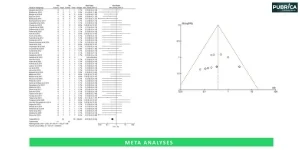
Statistical Analyses
- Data Collection
- AI and ML Services
- Sample Work

AI and ML Services
- Medical Writing
- Sample Work
Medical Writing
- Research Impact
- Sample Work

Research Impact
- Medical & Scientific Communication
- Sample Work
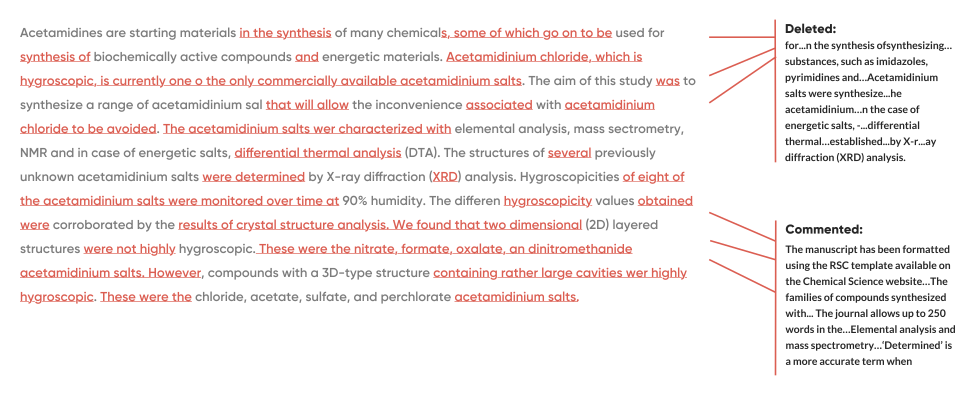
Medical & Scientific Communication
- Medico Legal Services
- Educational Content
- Academic Editorial Services
- Sample Work
Academic Editorial Services
- Educational Editorial Service
-
Education Editorial Services
- Sample Work
Education Editorial Services
-
- Industries
- Subjects
- About Us
- Academy
- Insights
- Contact Us
Define systematic review
- Home
- Publication Support
- Journal Selection
- Define systematic review
An Academy Guide
Interesting topics

Define systematic review
A systematic review is a rigorous research method that uses explicit and reproducible steps to identify, appraise, and synthesize all available high-quality evidence on a specific topic or research question. Unlike a traditional literature review, it is a formal, structured process designed to minimize bias and provide a reliable summary of existing knowledge to inform decision-making. The systematic review methodology ensures a comprehensive, objective, and transparent approach, making it the highest level of evidence in evidence-based research.[1]
1. What are the stages of a systematic review?
Systematic reviews begin with asking a research question and a protocol or research plan. A review team conducts a resource-intensive search for the literature involved in answering the research question using an extremely sensitive search strategy. They then screen the studies they have retrieved against the eligibility (inclusion exclusion) criteria. The study data are then extracted based on the inclusion criteria, and the studies included are assessed for rigour or quality. Finally, the studies’ data are synthesised (possibly via meta-analysis) and presented. [2]
2. What is the minimum sample size for a systematic review? [
The minimum number of samples to perform a systematic review is not specified in the literature. The quality of systematic reviews can be affected by the number of studies included; therefore, it is important to include only the quality studies necessary to answer the review question. Examples of the supporting methodology for conducting systematic reviews include:
- A comprehensive and transparent search strategy
- Defined inclusion and exclusion criteria
- Following an established framework such as PRISMA.
3. When Should It Be Reported vs. When Should It Not Be Reported
A systematic review should be reported | A systematic review should NOT be reported |
A complete and systematic search has been conducted (multiple databases, clear keywords). | The search was incomplete, not systematic, or biased. |
Predefined inclusion/exclusion criteria are used. | Inclusion/exclusion criteria were not defined in advance. |
At least one study meets the criteria. | The methodology is unclear, poorly documented, or not reproducible. |
The review follows PRISMA or other reporting guidelines. | No studies meet the criteria (unless you intentionally report an empty review, which is a special case). |
The methods and results are transparent, unbiased, and reproducible. | The topic is too broad, vague, or irrelevant, producing no meaningful evidence. |
The findings provide useful evidence, even if the number of included studies is small. | The review does not add scientific or practical value to the field. |
PRISMA Checklist 2020: https://www.prisma-statement.org/s/PRISMA_2020_checklist-ab3g.pdf
PRISMA 2020 expanded checklist: https://www.prismastatement.org/s/PRISMA_2020_expanded_checklist-w7ra.pdf
4. Why Systematic Reviews Are Important
Give an All-Encompassing Review: Synthesizing all the relevant literature on a specified issue [4]
- Decrease researcher bias: Following a rigorous, structured approach allows lasting less bias in the researcher in the reporting of research
- Improve evidence-based practice: Alongside the rigor, it can also be used to support evidence-based research, supporting decision-making in healthcare, policy, and education
- Evaluate the quality of studies: One must evaluate the studies’ reports on reliability and validity
- Establish research gaps: One of the most valuable tasks that the systematic review process can do is to identify research gaps or even a need to engage in grant submissions.
5. Other Types of Systematic Review?
Besides the standard systematic review, there are other types of systematic review that contribute to the understanding of research in a different, but also valuable way.
Scoping Review [5] | This type of review is mainly around mapping and identifying key concepts, types of evidence, and the gaps in the research about a wide-ranging topic. A scoping review does not summarize or analyze specific outcomes; rather, it intends to clarify or map the scope of a topic |
Rapid Review [6] | This is a systematic review that has been expedited and produced more quickly and across fewer datasets, thus providing timely evidence for decision-making making |
Umbrella Review [7] | This type of review collects and summarizes existing systematic reviews. An umbrella review summarizes the findings of multiple systematic reviews about a particular topic, providing a cumulative level of evidence. |
6. AI & Systematic Reviews
AI algorithms can identify pertinent studies, extract pivotal information, and undertake meta-analysis at a much quicker pace, with strong precision and less incidence of error and bias in comparison to the traditional process. This improvement benefits systematic reviews by increasing efficiency, consistency, and reliability in the analysis. Nevertheless, there are still important issues regarding the verification of the output generated by AI programs and the transparency of the decision-making process of AI. As the technology of AI develops, it will be more integrated into systematic reviews by making the process more efficient and improving the quality of the review.[8]
7. Which Reporting Standard Should Systematic Reviewers Use?
To maintain transparency and rigor, systematic reviewers should use recognized reporting standards. The two most common reporting standards are: [9]
- PRISMA: The gold standard for systematic reviews and meta-analyses to ensure that all elements of reporting are met.
- AMSTAR: An instrument to evaluate the quality of the systematic review with a focus on methodology.
- Cochrane Handbook: A guide for conducting systematic reviews, perhaps focused on health care studies.
- MOOSE: Guidelines for systematic reviews that evidence observational studies, primarily in epidemiology.
Conclusion
Systematic reviews provide for the synthesis of research, minimizing bias, and achieving trustworthy, evidence-based conclusions. They enable thoughtful decision-making and reveal research gaps. Other systematic types of review, including scoping reviews, rapid reviews, and umbrella reviews, provide sufficient flexibility depending on the scope and urgency of the research. Systematic reviews and AI expand the speed and accuracy of reviews, and models like PRISMA and AMSTAR provide guidance, transparency, and rigor, which meaningfully support systematic reviews and promote high-quality research.
Define systematic review. Our Pubrica consultants are here to guide you. [Get Expert Publishing Support] or [Schedule a Free Consultation]
References
- Russell R, Chung M, Balk EM, et al. Issues and Challenges in Conducting Systematic Reviews to Support Development of Nutrient Reference Values: Workshop Summary: Nutrition Research Series, Vol. 2. Rockville (MD): Agency for Healthcare Research and Quality (US); 2009 Mar. (Technical Reviews, No. 17.2.) 2, Systematic Review Methods. Available from: https://www.ncbi.nlm.nih.gov/books/NBK44088/
- Khan, K. S., Kunz, R., Kleijnen, J., & Antes, G. (2003). Five steps to conducting a systematic review. Journal of the Royal Society of Medicine, 96(3), 118–121. https://doi.org/10.1177/014107680309600304
- Gordon, M., Daniel, M., & Patricio, M. (2019). What do we mean by ‘systematic’ in health education systematic reviews and why it matters!. Medical teacher, 41(8), 956–957. https://doi.org/10.1080/0142159X.2018.1504164
- Bangdiwala, S. I. (2024). The importance of systematic reviews. International Journal of Injury Control and Safety Promotion, 31(3), 347–349. https://doi.org/10.1080/17457300.2024.2388484
- Mak, S., & Thomas, A. (2022). Steps for Conducting a Scoping Review. Journal of Graduate Medical Education, 14(5), 565–567. https://doi.org/10.4300/JGME-D-22-00621.1
- Smela, B., Toumi, M., Świerk, K., Francois, C., Biernikiewicz, M., Clay, E., & Boyer, L. (2023). Rapid literature review: definition and methodology. Journal of market access & health policy, 11(1), 2241234. https://doi.org/10.1080/20016689.2023.2241234
- Choi, G. J., & Kang, H. (2023). Introduction to Umbrella Reviews as a Useful Evidence-Based Practice. Journal of lipid and atherosclerosis, 12(1), 3–11. https://doi.org/10.12997/jla.2023.12.1.3
- van Dijk, S. H. B., Brusse-Keizer, M. G. J., Bucsán, C. C., van der Palen, J., Doggen, C. J. M., & Lenferink, A. (2023). Artificial intelligence in systematic reviews: promising when appropriately used. BMJ open, 13(7), e072254. https://doi.org/10.1136/bmjopen-2023-072254
- Institute of Medicine (US) Committee on Standards for Systematic Reviews of Comparative Effectiveness Research; Eden J, Levit L, Berg A, et al., editors. Finding What Works in Health Care: Standards for Systematic Reviews. Washington (DC): National Academies Press (US); 2011. 5, Standards for Reporting Systematic Reviews. Available from: https://www.ncbi.nlm.nih.gov/books/NBK209507/