
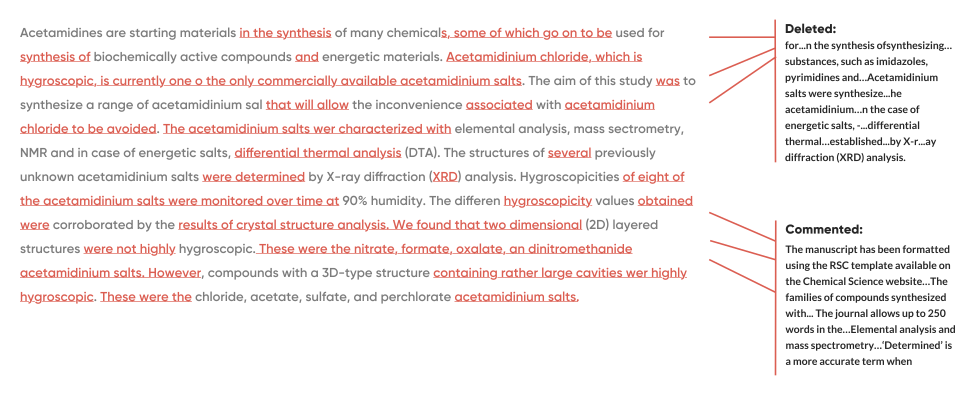









Post-editing is defined as the process of reviewing and, if necessary, revising machine-generated or pre-edited text to ensure its accuracy, clarity, consistency, tone, and quality, etc., before its final publication.
Machine translation is the process of automatically translating text from one language to another, while post-editing refers to reviewing and revising machine translation to ensure its accuracy, clarity, grammar, terminology, etc.
Human post-editing is needed to ensure correction of errors, context accuracy, natural language, terminology, etc., and academic/professional quality, etc.
The quality of AI-generated or translated text is improved through post-editing, which corrects errors, improves clarity, ensures contextual correctness, refines terminology, and improves readability and quality.
Authors should use post-editing services for machine-translated or AI-generated text to ensure accuracy, clarity, consistency, proper terminology, and academic or journal requirements.
Errors in grammar, translation, clarity, terminology, context, formatting, and overall readability are corrected in the text through post-editing.
Post-editing services help in ensuring clarity, accuracy, and consistency through expert reviews, terminology matching, context verification, structured editing, quality checks, and style or journal requirements.
Yes, professional post-editing is beneficial for translated manuscripts as it ensures the quality and accuracy of language, clarity, terminology, formatting, and quality for journal readiness.