How to Publish a Literature Review: Journal Types, Invited vs Unsolicited Reviews, Indexing and APCs
Literature review publication raises questions an original paper rarely does: does the journal take reviews at all, is an invitation needed, is it still indexed, and what will it cost? This guide answers each in order, using peer-reviewed studies from 2021 to 2026.

On this page
- Quick answer
- Why positioning matters in a crowded field
- Journal types that publish reviews
- Invited vs unsolicited reviews
- Register the protocol before you search
- Journal indexing: what it signals and how to check it
- Article processing charges: what publishing will cost
- Avoid predatory journals, and screen what you include
- Pre-submission checklist
- Questions
- References
Quick answer
- Pick the journal type first: many review journals publish reviews only by invitation.
- If the journal accepts proposals, send a short pre-submission enquiry before writing.
- Register the protocol for systematic and scoping reviews, for example on PROSPERO, before you search [2].
- Check indexing in Scopus or Web of Science’s own source lists: 18.61% of journals ever in Scopus had been de-indexed by 2019 [4].
- Budget the article processing charge (APC) before journal selection, not after acceptance.
01Why positioning matters in a crowded field
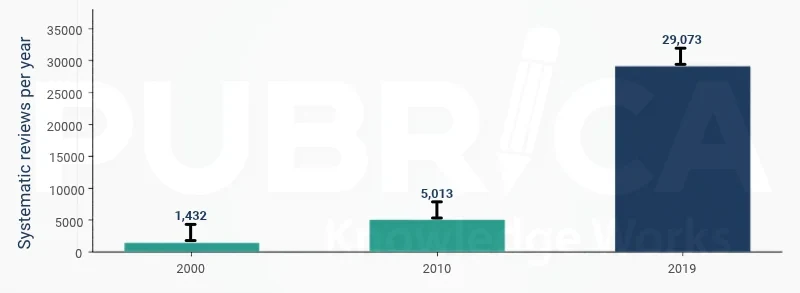
Reviews are no longer rare. Hoffmann and colleagues estimated that systematic reviews indexed in PubMed rose from about 1,432 a year in 2000 to 29,073 in 2019, roughly 80 a day; 58.9% included a meta-analysis [1].
- Editors see many reviews on popular topics, so a clear statement of the gap matters more than length.
- Duplicate reviews are common, so search registries and recent publications before writing, not after.
02Journal types that publish reviews
Not every journal publishes a review article, and review journals handle them differently. Confirm accepted article types in the author guidelines before journal selection.
| Journal type | What it publishes | Typical route | Best fit |
|---|---|---|---|
| Review-only journals | Narrative and systematic reviews only | Often by invitation; some accept proposals | Broad, authoritative overviews |
| Research journals with a review section | Mainly original research, a few reviews | Invitation or pre-submission enquiry | Reviews closely matched to the readership |
| Evidence-synthesis journals | Systematic reviews, meta-analyses, protocols | Usually open submission | Protocol-driven reviews with registered methods |
| Broad-scope open access journals | Reviews across many disciplines | Open submission; an APC is usually charged | Reviews needing fast, open publication |
| Specialty society journals | Field-specific reviews and updates | Mixed; often invited | Clinically or professionally focused reviews |
This table is a general guide; always check the target journal’s own policy.
03Invited vs unsolicited reviews
Many high-profile review journals commission most reviews. In an invited review, an editor approaches the author and agrees the scope in advance. An unsolicited review is submitted without invitation and goes through standard peer review; some journals do not accept them at all. We found no recent study comparing their acceptance or citation, so Table 2 reflects editorial practice.
| Aspect | Invited review | Unsolicited review |
|---|---|---|
| How it starts | Editor approaches the author | Author submits or sends a proposal |
| Scope | Agreed with the editor in advance | Set by the author; must match journal scope |
| Peer review | Usually still peer reviewed | Standard peer review |
| Fees | Some journals waive or reduce APCs | Standard APC applies where charged |
| Main risk | Fixed deadlines set by the editor | Desk rejection if the journal rarely takes unsolicited reviews |
A pre-submission enquiry should cover the working title and question, why the review is needed now (naming the latest reviews), the review type and methods, the authors’ expertise and conflicts, and the expected length and date.
04Register the protocol before you search
For a systematic review or scoping review, protocol registration shows the methods were fixed in advance, and many journals ask for the number at submission. Pieper and Rombey identified five places to register: PROSPERO, Research Registry, INPLASY, OSF Registries and protocols.io. The three review-specific registries differ in cost and processing time, and all five let you search for reviews already in progress [2].
For health topics many journals expect PROSPERO registration; see our PROSPERO registration guide. A registered protocol also lets reviewers compare published methods with the plan.
05Journal indexing: what it signals and how to check it
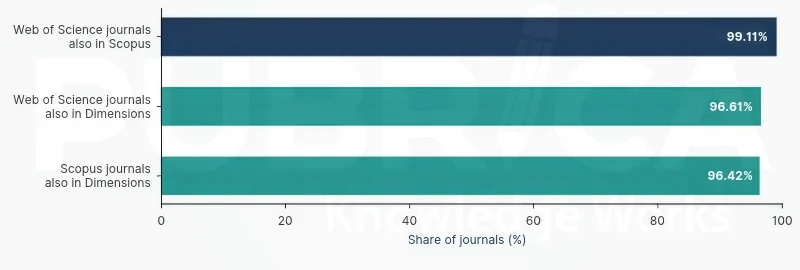
Journal indexing decides who finds the review. Singh and colleagues found 99.11% of Web of Science journals were also in Scopus, while Dimensions covered 82.22% more journals than Web of Science and 48.17% more than Scopus; Web of Science was the most selective [3].
Indexing is not permanent: 6,059 journals, 18.61% of all ever indexed in Scopus, were de-indexed by 2019, 44% of them in medicine [4]. De-indexed journals may still claim “Scopus indexed” on their websites. Check the database’s own source list, whether coverage is active, subject databases such as MEDLINE, and DOAJ for open access titles. Our guide to Scopus-indexed journals explains the checks.
06Article processing charges: what publishing will cost
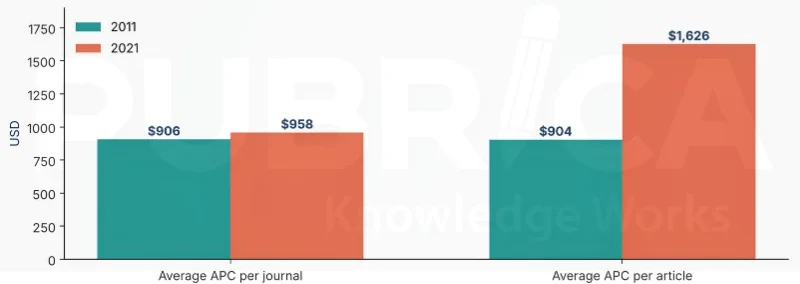
Morrison and colleagues tracked DOAJ journals from 2011 to 2021: most charged no APC. Among those that did, the average APC per journal rose only from 906 to 958 USD, but the average per article rose from 904 to 1,626 USD, as authors chose costlier journals [5]. Authors paid an estimated 1.06 billion USD in publication fees to the five largest publishers in 2015–2018, 612.5 million for gold open access and 448.3 million for hybrid journals [6].
| Route | Who pays | What to check |
|---|---|---|
| Gold open access | Author or funder pays an APC | Price, waivers, funder rules |
| Hybrid journals | APC to open one article in a subscription journal | Whether an institutional agreement covers it |
| Subscription only | No APC; readers or libraries pay | Self-archiving policy and embargo |
| Diamond open access | No fees for authors or readers | Indexing status and editorial standards |
Check institutional agreements and funder rules before journal selection; switching late means reformatting. With no funding, diamond open access removes the fee.
07Avoid predatory journals, and screen what you include
Predatory journals target review authors with fast acceptance and low fees, so confirm indexing and DOAJ status before submitting; see our predatory journal checks. The same risk applies to included studies, which can distort summary estimates. Rice and colleagues recommend stating in the protocol how such articles will be handled, checking open access sources against DOAJ, and running a sensitivity analysis without them [7].
08Pre-submission checklist
- The journal accepts this review type, and you know whether an invitation is required.
- The protocol is registered for systematic and scoping reviews.
- Indexing is confirmed in the database’s own list, with active coverage.
- The APC, waivers and institutional agreements are checked.
- Included studies are screened for predatory sources.
- A reporting checklist matching the review type is complete.
Questions
Can I submit a literature review without an invitation?
Often, yes. Many journals accept unsolicited reviews or proposals, but some review journals publish only invited reviews. Check the author guidelines, and send a pre-submission enquiry where one is accepted.
Do I need to register a literature review protocol?
For systematic and scoping reviews, registration is strongly advised and often requested at submission. Narrative reviews are rarely registered.
How much does it cost to publish a review article open access?
It varies widely. Most DOAJ journals charge no APC, while the average paid per article in 2021 was about 1,626 USD. Diamond open access journals charge nothing.
References
- Hoffmann F, Allers K, Rombey T, et al. Nearly 80 systematic reviews were published each day: observational study on trends in epidemiology and reporting over the years 2000–2019. Journal of Clinical Epidemiology. 2021;138:1–11. https://doi.org/10.1016/j.jclinepi.2021.05.022
- Pieper D, Rombey T. Where to prospectively register a systematic review. Systematic Reviews. 2022;11:8. https://doi.org/10.1186/s13643-021-01877-1
- Singh VK, Singh P, Karmakar M, Leta J, Mayr P. The journal coverage of Web of Science, Scopus and Dimensions: a comparative analysis. Scientometrics. 2021;126(6):5113–5142. https://doi.org/10.1007/s11192-021-03948-5
- Pandita R, Singh S. Compromising quality parameters lead to fallout: a study of de-indexing of research journals. Malaysian Journal of Library & Information Science. 2023;28(2):29–45. https://doi.org/10.22452/mjlis.vol28no2.2
- Morrison H, Borges L, Zhao X, Kakou TL, Shanbhoug AN. Change and growth in open access journal publishing and charging trends 2011–2021. Journal of the Association for Information Science and Technology. 2022;73(12). https://doi.org/10.1002/asi.24717
- Butler LA, Matthias L, Simard MA, Mongeon P, Haustein S. The oligopoly’s shift to open access: how the big five academic publishers profit from article processing charges. Quantitative Science Studies. 2023;4(4):778–799. https://doi.org/10.1162/qss_a_00272
- Rice DB, Skidmore B, Cobey KD. Dealing with predatory journal articles captured in systematic reviews. Systematic Reviews. 2021;10:175. https://doi.org/10.1186/s13643-021-01733-2