An Overview of PRISMA Guidelines for Systematic Reviews and Meta-Analyses
High-Impact Journals
Interesting topics
An Overview of PRISMA Guidelines for Systematic Reviews and Meta-Analyses
Systematic reviews and meta-analyses are one of the most reliable forms of evidence in scientific research because they compile results from several studies to give answers to certain research questions. The accuracy of such studies largely relies on how comprehensively they are reported. To increase reporting efficiency, many researchers have adopted the Preferred Reporting Items for Systematic Review and meta-analysis approach (PRISMA guidelines).
The Preferred Reporting Items for Systematic Review and Meta-analysis offers a guide for the accurate reporting of systematic reviews and meta-analyses by researchers. The approach was first developed in 2009 and revised as PRISMA 2020 guidelines. It is aimed at assisting researchers, reviewers, editors, and readers in understanding how evidence was obtained, selected, analysed, and interpreted. [1]
1. What Are PRISMA Guidelines?
PRISMA stands for “Preferred Reporting Items for Systematic Reviews and Meta-Analyses.” It is an evidence-based reporting guideline intended to increase the comprehensiveness and transparency of systematic reviews and meta-analyses. The PRISMA checklist includes a 27-item checklist and flow diagram to help conduct systematic reviews. [2]
The major aims of PRISMA reporting guidelines are as follows:
- Improve the quality of reporting
- Increase transparency and reproducibility
- Decrease reporting bias
- Conduct critical evaluation of evidence
- Guide evidence-based decisions
The systematic literature review process using PRISMA can be applied across multiple fields, including medicine, social sciences, education, engineering, and business studies.
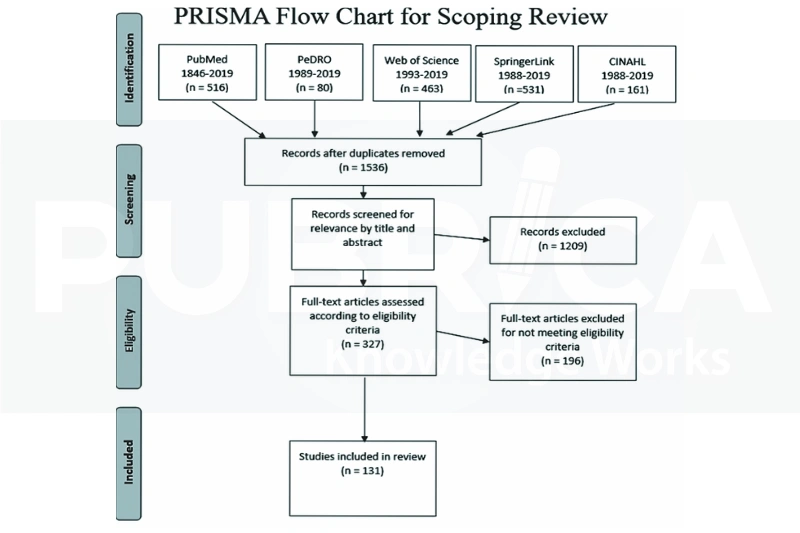
Example of a PRISMA flow diagram illustrating study identification, screening, eligibility assessment, and inclusion.
2. Importance of PRISMA in Research
Prior to PRISMA, systematic reviews often had insufficient reporting regarding the search strategy, criteria used for selecting studies, and risk of bias appraisals. This made the evaluation of the reliability of results very difficult. This is why systematic review guidelines like PRISMA were introduced. [3]
PRISMA allows researchers to:
- Report each step of evidence selection.
- Clarify inclusion and exclusion criteria.
- Report on their search methods in detail.
- Ensure that reviews are replicable.
- Facilitate manuscript acceptance in journals.
Many top-ranking journals have started to require PRISMA compliance for manuscript publication.
3. Core Components of the PRISMA Checklist
The PRISMA 2020 checklist contains 27 reporting items organized across several sections of a manuscript.
Major Sections of the PRISMA Checklist
Section | Purpose |
Title | Identify the study as a systematic review |
Abstract | Provide a structured summary |
Introduction | Present rationale and objectives |
Methods | Describe eligibility criteria, search strategy, and analysis methods |
Results | Report study selection and findings |
Discussion | Interpret findings and limitations |
Other Information | Funding, registration, and conflicts of interest |
These reporting elements ensure consistency and transparency throughout the review process.
4. PRISMA 2020 Updates
PRISMA 2020 made several enhancements, which accounted for changes that had taken place in the methodology of conducting evidence synthesis.
These improvements include, but are not limited to:
- Broadened reporting guidelines
- More effective abstract checklist
- Modified flow diagrams
- Search strategy reporting improvements
- Risk-of-bias reporting enhancements
The new iteration incorporates changes associated with technological innovations, automation software and improved methodologies.
5. PRISMA and Meta-Analysis Reporting
When conducting a meta-analysis, PRISMA provides structured guidance on reporting statistical synthesis. [4]
Some of the issues that need to be reported include:
- Efficacy metrics used
- Models employed statistically
- Heterogeneity testing
- Sensitivity analysis
- Publication bias testing.
6. Common Reporting Errors PRISMA Helps Prevent
PRISMA helps researchers avoid several common reporting problems.
Common Errors and PRISMA Solutions
Reporting Issue | PRISMA Solution |
Incomplete search strategy | Detailed database reporting |
Unclear inclusion criteria | Explicit eligibility criteria |
Missing risk-of-bias assessment | Structured bias reporting |
Poor study selection transparency | Flow diagram documentation |
Inadequate statistical reporting | Detailed synthesis methods |
By following PRISMA recommendations, researchers can substantially improve manuscript quality.
7. Benefits of Using PRISMA
Use of PRISMA provides multiple benefits for researchers and readers.
- Greater transparency in methodology
- Increased research replicability
- Facilitation of quality reporting
- Better confidence in the results
PRISMA is also helpful for policymakers, practitioners, and researchers who use systematic review evidence to make decisions.
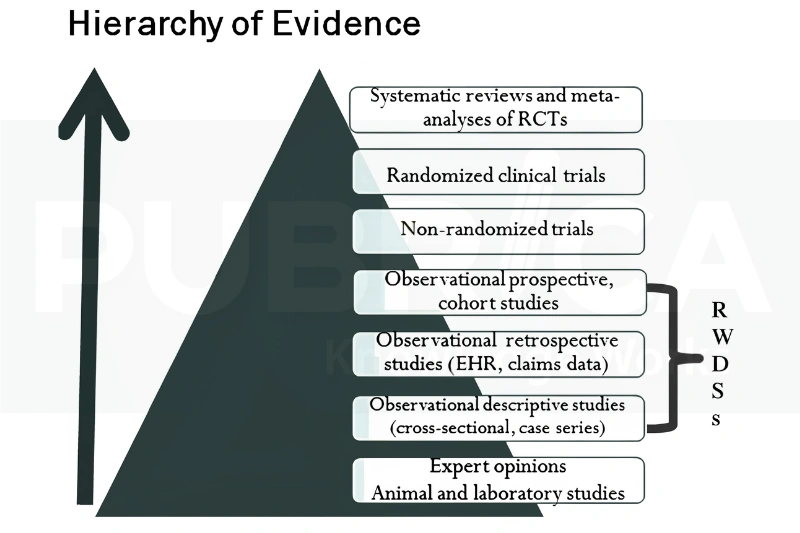
Position of systematic reviews and meta-analyses within the evidence hierarchy.
8. Challenges in Implementing PRISMA
Despite improved reporting using PRISMA guidelines, some researchers face difficulties in applying them.
Difficulties faced by the researcher can include the following:
- Lack of understanding of PRISMA criteria
- Complexity of literature search
- Time-consuming screening process
- Difficult documentation of decisions
- Inconsistencies in the reporting process among team members.
Connect with us to explore how we can support you in maintaining academic integrity and enhancing the visibility of your research across the world!
Conclusion
The PRISMA reporting guidelines for systematic reviews and meta-analyses are internationally accepted standards for conducting high-quality evidence synthesis. The PRISMA 2020 guidelines improve transparency, reproducibility, and research quality through structured reporting. Adoption of systematic literature review guidelines like PRISMA strengthens the reliability of scientific evidence.
An Overview of PRISMA Guidelines for Systematic Reviews and Meta-Analyses. OurPubrica consultants are here to guide you. [Get Expert Publishing Support] or [Schedule a Free Consultation]
Frequently Asked Questions (FAQs)
PRISMA stands for Preferred Reporting Items for Systematic Reviews and Meta-Analyses. It is a standardized reporting guideline used to improve transparency and quality in systematic reviews and meta-analyses.
The main purpose of PRISMA guidelines is to ensure clear, complete, and transparent reporting of systematic reviews and meta-analyses. It helps researchers reduce bias, improve reproducibility, and strengthen the reliability of evidence synthesis.
The PRISMA checklist includes 27 items covering major sections such as title, abstract, introduction, methods, results, discussion, and other information like funding and conflicts of interest.
PRISMA is important because it improves the quality and transparency of systematic reviews. It ensures that search strategies, study selection, and risk-of-bias assessments are clearly reported, making studies easier to evaluate and replicate.
PRISMA 2020 is an updated version of the original 2009 guidelines. It includes improved reporting standards, updated flow diagrams, better abstract guidelines, and enhanced methods for reporting search strategies and risk-of-bias assessments.
References
- Page, M. J., McKenzie, J. E., Bossuyt, P. M., Boutron, I., Hoffmann, T. C., Mulrow, C. D., Shamseer, L., Tetzlaff, J. M., Akl, E. A., Brennan, S. E., Chou, R., Glanville, J., Grimshaw, J. M., Hróbjartsson, A., Lalu, M. M., Li, T., Loder, E. W., Mayo-Wilson, E., McDonald, S., McGuinness, L. A., … Moher, D. (2021). The PRISMA 2020 statement: An updated guideline for reporting systematic reviews. PLoS medicine, 18(3), e1003583. https://doi.org/10.1371/journal.pmed.1003583
- Page, M. J., Moher, D., Bossuyt, P. M., Boutron, I., Hoffmann, T. C., Mulrow, C. D., Shamseer, L., Tetzlaff, J. M., Akl, E. A., Brennan, S. E., Chou, R., Glanville, J., Grimshaw, J. M., Hróbjartsson, A., Lalu, M. M., Li, T., Loder, E. W., Mayo-Wilson, E., McDonald, S., McGuinness, L. A., … McKenzie, J. E. (2021). PRISMA 2020 explanation and elaboration: updated guidance and exemplars for reporting systematic reviews. BMJ (Clinical research ed.), 372, n160. https://doi.org/10.1136/bmj.n160
- Page, M. J., McKenzie, J. E., Bossuyt, P. M., Boutron, I., Hoffmann, T. C., Mulrow, C. D., Shamseer, L., Tetzlaff, J. M., Akl, E. A., Brennan, S. E., Chou, R., Glanville, J., Grimshaw, J. M., Hróbjartsson, A., Lalu, M. M., Li, T., Loder, E. W., Mayo-Wilson, E., McDonald, S., McGuinness, L. A., … Moher, D. (2021). The PRISMA 2020 statement: an updated guideline for reporting systematic reviews. BMJ (Clinical research ed.), 372, n71. https://doi.org/10.1136/bmj.n71
- Dagher, D., & Khan, M. (2025). Writing a Systematic Review and Meta-analysis: A Step-by-Step Guide. Sports health, 17(5), 885–890. https://doi.org/10.1177/19417381251364686