
- Services
- Discovery & Intelligence Services
- Publication Support Services
- Sample Work
Publication Support Service
- Editing & Translation
-
Editing and Translation Services
- Sample Work

Editing and Translation Service
-
- Research Services
- Sample Work
Research Services
- Physician Writing
- Sample Work

Physician Writing Service
- Statistical Analyses
- Sample Work
Statistical Analyses
- Data Collection
- AI and ML Services
- Sample Work
AI and ML Services
- Medical Writing
- Sample Work
Medical Writing
- Research Impact
- Sample Work
Research Impact
- Medical & Scientific Communication
- Sample Work
Medical & Scientific Communication
- Medico Legal Services
- Educational Content
- Academic Editorial Services
- Sample Work
Academic Editorial Services
- Educational Editorial Service
-
Education Editorial Services
- Sample Work
Education Editorial Services
-
- Industries
- Subjects
- About Us
- Academy
- Insights
- Contact Us
The Application of Machine Learning for Predicting Research Trends: An Empirical Analysis
- Home
- Academy
- Predictive analytics
- The Application of Machine Learning for Predicting Research Trends: An Empirical Analysis
High-Impact Journals
Interesting topics
The Application of Machine Learning for Predicting Research Trends: An Empirical Analysis
Machine Learning (ML) is transforming research by enabling efficient prediction of emerging trends from vast scientific data. Machine learning research trends prediction allows researchers to go beyond traditional manual methods, which are slow and limited in scale. ML algorithms analyse large datasets of journals, patents, citations, and repositories to identify patterns and forecast future developments. Machine learning applications in research analysis, including NLP, deep learning, clustering, and predictive analytics, help researchers, universities, and funding agencies make informed decisions on investments, collaborations, and scientific priorities. [1]
1. Role of Machine Learning in Research Trend Prediction
Learning machines play an extremely important part in spotting trends and predicting future directions in the domain of academic research. Machine learning for scientific trend prediction allows researchers to automatically process massive volumes of academic datasets.[2]
Main Features of Machine Learning:
- Detection of emerging trends in research
- Citation trend identification
- Forecast of future trends
- Analysis of co-authorship networks
- Classification of scientific publications
The system uses historical data about published articles and predicts future trends using machine learning. The algorithms include decision trees, neural networks, support vector machines, and cluster analysis algorithms. This aligns with predictive analytics a review of trends and techniques, where machine learning models analyse past research patterns to forecast future developments.
2. Data Sources and Collection
Research trend prediction requires high-quality datasets collected from reliable academic databases and digital libraries. The quality and quantity of data directly influence the effectiveness of ML models, which is highlighted in predictive analytics articles.
Common Data Sources:
Data Source | Purpose |
Scopus | Citation and publication analysis |
Web of Science | Research indexing |
Google Scholar | Academic article collection |
IEEE Xplore | Engineering and technology papers |
PubMed | Medical and healthcare research |
The collected data typically includes:
- Research titles
- Abstracts
- Keywords
- Author information
- Citation counts
- Publication year
Natural Language Processing techniques are often applied to preprocess textual data before model training, forming the backbone of AI-based research pattern detection.
3. Methodology
The methodology of predicting research trends through machine learning is made up of certain significant stages.[3]
- Data Gathering: Information regarding academic papers and their citations is collected from online databases.
- Data Preprocessing: It includes data cleaning, normalisation, and tokenisation to enhance the quality of data processing.
- Feature Extraction: Certain keywords, citation count, increase in publications, and semantical relations are extracted using NLP tools.
- Machine Learning Model Building: Machine learning algorithms are built through analysing past research patterns and predictions.
- Trend Predictions: Trends in future research are predicted based on past behaviour and emerging topics, a fundamental step in machine learning research trends prediction.
4. Applications of Machine Learning in Trend Prediction
Trend prediction using machine learning is applicable in several industries and research fields. [4]
Main applications include:
- Prediction of innovations in the healthcare industry
- Prediction of developments in the Artificial Intelligence field
- Research on climate change analysis
- Trends prediction for drug discovery
- Progressions in technology and engineering
Examples include predicting new trends like the use of generative AI, the development of renewable energy technologies, personalized medicine, among others. This demonstrates the utility of machine learning for scientific trend prediction.
5. Benefits and Challenges of Machine Learning in Research Trend Prediction
Machine learning accelerates research trend prediction, improves accuracy, detects emerging topics early, and aids decision-making. Challenges include data quality, model complexity, rapidly changing fields, and ethical concerns.[5]
Aspect | Description |
Faster Analysis | Automates large-scale data processing |
Improved Accuracy | Reduces human bias |
Early Trend Detection | Identifies emerging topics quickly |
Better Decision Making | Supports research funding strategies |
Data Quality Issues | Incomplete or biased datasets |
Model Complexity | Requires technical expertise |
Dynamic Research Fields | Rapidly changing topics |
Ethical Concerns | Data privacy and transparency |
Despite these challenges, predictive analytics articles and empirical studies show that ML continues to improve research analytics significantly.
6. Empirical Analysis
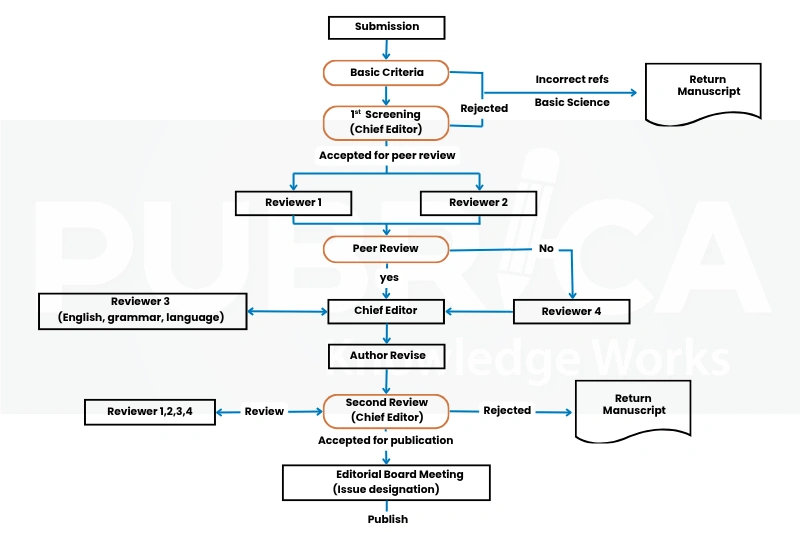
An empirical study using machine learning for scientific trend prediction through citation analysis, keyword analysis, and publication counts for the domains of AI, blockchain, and renewable energy in Scopus and IEEE Xplore from 2015 to 2025 showed that AI had the greatest growth in terms of literature produced. Deep learning and NLP studies increased exponentially after 2020 in the domain of AI. Regression analysis was highly accurate for prediction.[6]
7. Future Scope
The prospects for using machine learning technology in predicting research trends are very bright indeed. Utilization of advanced technologies with Big Data analysis is believed to enhance predictive capabilities greatly.
Future Developments:
- Integration with real-time research database
- Automated literature analysis with AI technology
- Better prediction models with Deep Learning
- Cross-disciplinary trend analysis
- Advanced visualisation technology
In the future, researchers will be able to get their real-time recommendations and forecast dashboards.
Connect with us to explore how we can support you in maintaining academic integrity and enhancing the visibility of your research across the world!
Conclusion
Machine learning research trends prediction has emerged as an indispensable tool for forecasting research developments within contemporary scientific environments. Using ML algorithms on large amounts of research data, trends may be detected, publication rates can be forecasted, and research activities can be planned strategically. Empirical evidence shows that such predictions are accurate and highly efficient.
Further development of digital scientific data and innovations in artificial intelligence will significantly increase the capacity of trend prediction systems. Machine learning applications in research analysis and predictive analytics a review of trends and techniques will be crucial to future innovations and discoveries.
The Application of Machine Learning for Predicting Research Trends: An Empirical Analysis. Our Pubrica consultants are here to guide you. [Get Expert Publishing Support] or [Schedule a Free Consultation]
References
- Yu, Y., Diaz, J., Kuo, T. T., Mo, A., Pope, Z., Hwang, H. S., & Sitapati, A. M. (2026). Application of a machine learning model to predict the estimated primary care patient time consumption. npj health systems, 3(1), 12. https://doi.org/10.1038/s44401-025-00061-0
- Sarker I. H. (2021). Machine Learning: Algorithms, Real-World Applications and Research Directions. SN computer science, 2(3), 160. https://doi.org/10.1007/s42979-021-00592-x
- Weissler, E. H., Naumann, T., Andersson, T., Ranganath, R., Elemento, O., Luo, Y., Freitag, D. F., Benoit, J., Hughes, M. C., Khan, F., Slater, P., Shameer, K., Roe, M., Hutchison, E., Kollins, S. H., Broedl, U., Meng, Z., Wong, J. L., Curtis, L., Huang, E., … Ghassemi, M. (2021). The role of machine learning in clinical research: transforming the future of evidence generation. Trials, 22(1), 537. https://doi.org/10.1186/s13063-021-05489-x
- Zhou, X., Chen, L., & Liu, H. X. (2022). Applications of Machine Learning Models to Predict and Prevent Obesity: A Mini-Review. Frontiers in nutrition, 9, 933130. https://doi.org/10.3389/fnut.2022.93
- Ajibade, S.-S. M., Alhassan, G. N., Zaidi, A., Oki, O. A., Awotunde, J. B., Ogbuju, E., & Akintoye, K. A. (2024). Evolution of machine learning applications in medical and healthcare analytics research: A bibliometric analysis. Intelligent Systems With Applications, 24(200441), 200441. https://doi.org/10.1016/j.iswa.2024.20
- Dwan, K., Gamble, C., Williamson, P. R., Kirkham, J. J., & Reporting Bias Group (2013). Systematic review of the empirical evidence of study publication bias and outcome reporting bias – an updated review. PloS one, 8(7), e66844. https://doi.org/10.1371/journal.pone