
- Services
- Discovery & Intelligence Services
- Publication Support Services
- Sample Work
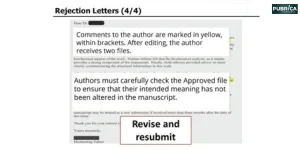
Publication Support Service
- Editing & Translation
-
Editing and Translation Services
- Sample Work

Editing and Translation Service
-
- Research Services
- Sample Work

Research Services
- Physician Writing
- Sample Work
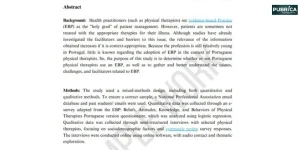
Physician Writing Service
- Statistical Analyses
- Sample Work

Statistical Analyses
- Data Collection
- AI and ML Services
- Sample Work

AI and ML Services
- Medical Writing
- Sample Work
Medical Writing
- Research Impact
- Sample Work
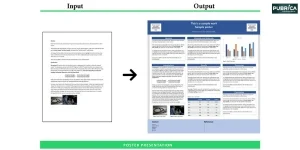
Research Impact
- Medical & Scientific Communication
- Sample Work
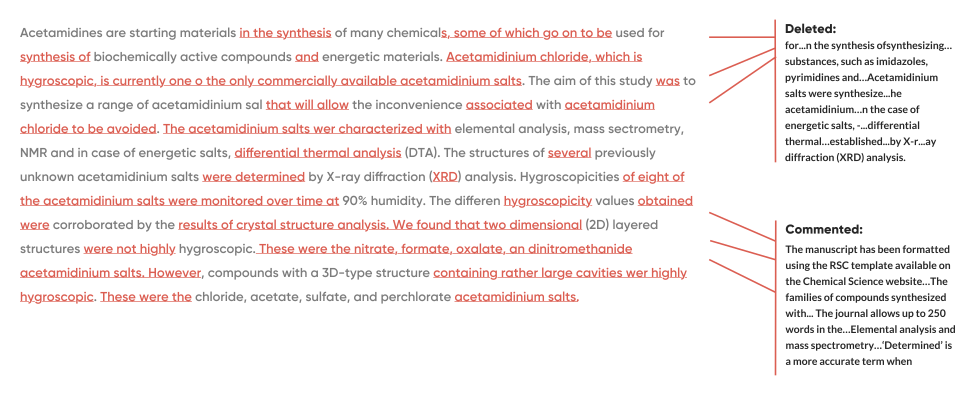
Medical & Scientific Communication
- Medico Legal Services
- Educational Content
- Academic Editorial Services
- Sample Work
Academic Editorial Services
- Educational Editorial Service
-
Education Editorial Services
- Sample Work
Education Editorial Services
-
- Industries
- Subjects
- About Us
- Academy
- Insights
- Contact Us
What Is the Purpose and Importance of Literature Reviews in Research?
- Home
- Academy
- Literature review
- What Is the Purpose and Importance of Literature Reviews in Research?
High-Impact Journals
- Understanding the Purpose of a Literature Review
- Importance of Literature Reviews in Research
- Types of Literature Reviews
- Steps in Conducting a Literature Review
- Role of Literature Reviews in Identifying Research Gaps
- Challenges in Writing Literature Reviews
- Best Practices for Effective Literature Reviews
- Visual Overview of the Literature Review Process
- Importance of Critical Analysis in Literature Reviews
- Conclusion
Interesting topics
What Is the Purpose and Importance of Literature Reviews in Research?
Table of Contents
1. Understanding the Purpose of a Literature Review
2. Importance of Literature Reviews in Research
3. Types of Literature Reviews
4. Steps in Conducting a Literature Review
5. Role of Literature Reviews in Identifying Research Gaps
6. Challenges in Writing Literature Reviews
7. Best Practices for Effective Literature Reviews
8. Visual Overview of the Literature Review Process
9. Importance of Critical Analysis in Literature Reviews
10. Conclusion
The literature review can be considered an essential element in both academic and scientific research. This process refers to the analysis, evaluation, and synthesis of previous studies associated with a particular theme. While a literature review aims to summarise some studies, its main idea is to identify patterns, gaps in research, and theoretical and methodological approaches, which will allow the researcher to lay a solid foundation for future studies.
When talking about academic research, the role played by literature reviews is crucial as it contributes to the overall quality and originality of the research. Regardless of the field (health care, social sciences, business, engineering, education, etc.), the literature review allows the researcher to place his/her research in a broader context of existing knowledge and to justify the research problem. Understanding the importance of the literature review is key to conducting credible studies. [1]
1. Understanding the Purpose of a Literature Review
A literature review aids in gaining knowledge about the areas that have already been explored and the topics that need further exploration. A literature review sample often helps guide new researchers in understanding structure and approach. A literature review is essential to set the foundation for the research topic. [2]
Major purposes of a literature review include:
- To determine the available body of knowledge and theoretical framework
- To identify the gaps in existing research
- To ensure that the same research is not repeated
- To support the formulation of research questions
- To aid methodology
- To construct a theoretical foundation
It also shows that the researcher is familiar with the subject area, which highlights the importance of literature review in the research process.
2. Importance of Literature Reviews in Research
Literature reviews play a vital role as they assist in formulating the overall direction of the study. The absence of a literature review will make it very hard to determine whether the proposed study is significant or innovative. Understanding the importance of the literature review is critical for all scholars. [3]
Significant importance:
- Contributes to high-quality research
- Aids evidence-based arguments
- Guides in determining research aims
- Discovers the merits and demerits of earlier research
- Selects appropriate methods
- Makes better interpretation of results
Postgraduate and PhD research often uses a literature review sample to demonstrate the significance of the problem and its contributions.
3. Types of Literature Reviews
Different research objectives require different forms of literature reviews.
Type of Literature Review | Purpose |
Narrative Review | Provides a broad overview of a topic |
Systematic Review | Uses structured methods to identify and analyse studies |
Scoping Review | Explores the range of available research |
Critical Review | Critically evaluates existing literature |
Integrative Review | Combines findings from different methodologies |
Meta-analysis | Statistically combines quantitative research findings |
Each type serves a different research purpose depending on the depth and methodology of the study.
4. Steps in Conducting a Literature Review
Literature reviews involve a systematic approach for accurate and reliable results.[4]
- Topic Identification – Define a clear, focused research question.
- Database Search – Look for relevant articles, books, and papers using academic databases.
- Selection of Studies – Choose studies that meet the inclusion criteria.
- Source Evaluation – Assess the quality, credibility, and relevance of the sources.
- Theme Organisation – Group findings into themes or categories.
- Gap Identification – Find areas lacking research or needing further study.
- Synthesis Writing – Summarise and analyse the literature to conclude.
5. Role of Literature Reviews in Identifying Research Gaps
Among the various roles of a literature review is that of spotting research gaps. Research gaps are those areas that have not yet been explored or whose results may be inconclusive.[5]
Various Types of Research Gaps:
- Gaps based on theory – When there are gaps in explaining phenomena using available theories or when there are insufficient theories in a subject area. For example, there are a few cases where an established theory has been used to analyse online learning behaviour.
- Gaps based on method – When prior literature lacks rigorously developed methodologies, such as small sample size, old methods, or poor research design. For example, many papers about working from home employ survey methodology alone without incorporating qualitative methods.
- Gaps based on empirical evidence – When there is insufficient data or evidence in a subject area. For example, few papers have investigated the impact of AI on mental well-being among young people.
- Gaps based on context – When there is little research conducted within a specific setting. For example, Research into leadership concentrates primarily on Western nations while disregarding other regions.
- Gaps based on conflicting conclusions – When there are contradictory findings in literature. For example: Some researchers argue that exercise alleviates stress, while others state the contrary.
Spotting these research gaps can help researchers conduct unique research.
6. Challenges in Writing Literature Reviews
While literature reviews play an important role, they may prove to be difficult for researchers.
- Dealing with a large amount of literature
- literature review samples: Avoiding descriptive writing
- Staying analytical
- Proper organization
- Proper citation
Unstructured literature reviews tend to undermine the overall quality of research.
7. Best Practices for Effective Literature Reviews
However, even though literature reviews play an important role, they pose certain difficulties to researchers.
Typical Difficulties:
- Locating pertinent studies – Focus on relevant, high-quality sources to avoid overload.
- Preventing descriptive accounts – Summarise critically rather than just listing studies.
- Preserving a critical perspective – Evaluate strengths, weaknesses, and gaps in the research.
- Sorting information appropriately – Organise studies by themes, methods, or relevance.
- Providing adequate citations – Give proper credit to sources to maintain credibility and avoid plagiarism.
Poorly organised literature reviews tend to impair the quality of research.
8. Visual Overview of the Literature Review Process

9. Importance of Critical Analysis in Literature Reviews
Critical analysis forms an important part of the literature review. It involves: [6]
- Evaluation of strengths and weaknesses of existing research
- The accuracy of evidence
- The methodology employed in study design
- The contradictions found within research results
- The limitations in previous research
Critical analysis sharpens analytical skills.
Connect with us to explore how we can support you in maintaining academic integrity and enhancing the visibility of your research across the world!
Conclusion
The significance of conducting a literature review is crucial for high-quality scholarly research. A literature review sample can guide researchers on how to effectively structure and synthesise existing knowledge. The literature review provides an extensive overview of what is already known about the topic and helps in identifying the research gap, which is important for formulating a good research question, theoretical framework, and study design. Understanding the importance of literature review in research process makes the research more credible, original, and impactful. As science expands across disciplines, literature reviews will continue to play a pivotal role.
What Is the Purpose and Importance of Literature Reviews in Research? Our Pubrica consultants are here to guide you. [Get Expert Publishing Support] or [Schedule a Free Consultation]
References
- Leite, D. F. B., Padilha, M. A. S., & Cecatti, J. G. (2019). Approaching literature review for academic purposes: The Literature Review Checklist. Clinics (Sao Paulo, Brazil), 74, e1403. https://doi.org/10.6061/clinics/2019/e1403
- Maggio, L. A., Sewell, J. L., & Artino, A. R., Jr (2016). The Literature Review: A Foundation for High-Quality Medical Education Research. Journal of graduate medical education, 8(3), 297–303. https://doi.org/10.4300/JGME-D-16-00175.1
- Poojary, S. A., & Bagadia, J. D. (2014). Reviewing literature for research: Doing it the right way. Indian journal of sexually transmitted diseases and AIDS, 35(2), 85–91. https://doi.org/10.4103/0253-7184.142387
- Mak, S., & Thomas, A. (2022). Steps for Conducting a Scoping Review. Journal of graduate medical education, 14(5), 565–567. https://doi.org/10.4300/JGME-D-22-00621.1
- Wong, E.C., Maher, A.R., Motala, A. et al.Methods for Identifying Health Research Gaps, Needs, and Priorities: a Scoping Review. J GEN INTERN MED 37, 198–205 (2022). https://doi.org/10.1007/s11606-021-07064-1
- Kara-Junior N. (2024). Value of critical literature analysis for knowledge development. Arquivos Brasileiros de Oftalmologia, 87(2), e2024-1008. https://doi.org/10.5935/0004-2749.2024-1008