Things to Do Before Sending Your Manuscript for Scientific Editing
High-Impact Journals
Interesting topics
Things to Do Before Sending Your Manuscript for Scientific Editing
The writing of a scientific manuscript constitutes just one step in the entire process of publishing. Any researcher must make sure that their manuscript is scientifically complete, well-organised, and in conformity with the expectations of the target journal before submitting it to a scientific editor. Proper research manuscript preparation ensures that editors can focus on improving clarity rather than correcting avoidable issues. Although scientific editors can make your language more precise, clear and readable, they will not be able to fix an incomplete study, inconsistent results or a lack of ethical information in your paper. This scientific editing guide for researchers outlines what to check before scientific editing to maximise the chances of successful publication. [1]
1. Finalise the Scientific Content
All the sections of the manuscript should be completed before sending for scientific editing. Scientific editing works best where the content of the research has been finalised, and no further changes will be needed. Scientists need to ensure that all the objectives, methods, results, and conclusions of the research match perfectly. Anything that is missing or any incomplete analysis needs to be sorted out before the manuscript undergoes scientific editing. Effective research manuscript preparation begins with ensuring that the scientific content is complete. [2]
2. Review the Overall Structure and Flow
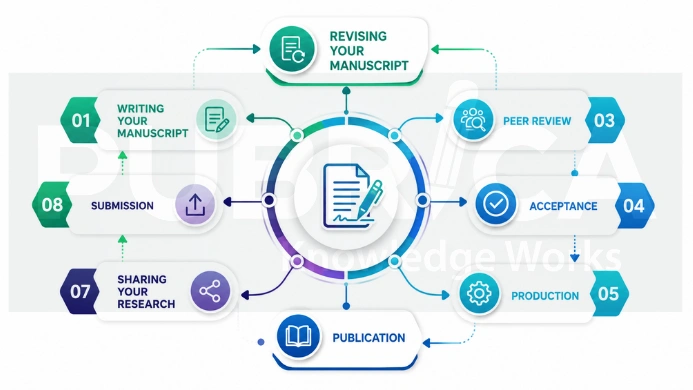
The well-organized structure will allow the editor to concentrate only on the enhancement of scientific writing instead of solving organizational issues. Each paragraph should logically lead to another one starting from the formulation of the problem to its solution through research results.
Introduction – Research Problem, Methods – Study Description, Results – Objective Research Findings, and Discussion – Interpretation of Research Findings within the framework of the existing scientific literature.
3. Journal Requirements
All scientific journals provide information on how manuscripts should be written and formatted. It is advisable to check these instructions first before editing the manuscript because it would save time when the manuscript is being submitted. Manuscripts should also meet the citation style recommended by the journal. This step is an important part of manuscript preparation for scientific editing.
4. Check Data Accuracy and Scientific Consistency
The role of editors is to improve language usage and not verify science. It is therefore up to researchers to ensure that everything regarding numbers, statistics, measurements, formulas, tables, and graphics is carefully checked before editing. [3]
There must be consistency between the text, tables, and graphics. A contradiction between any of these can confuse reviewers and slow down the publishing process.
5. Prepare High-Quality Figures and Tables
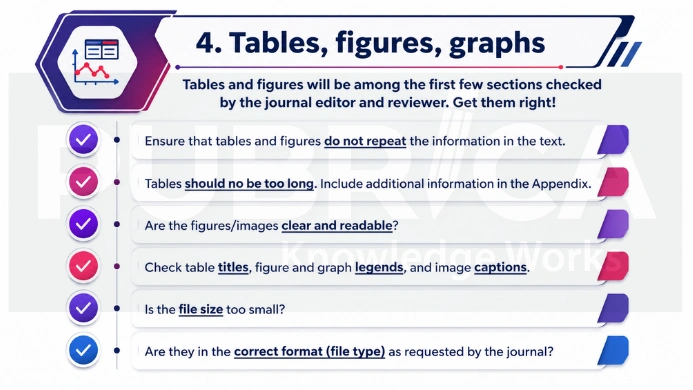
Tables and figures should convey research results clearly without necessitating a lot of explanation in the body of text.
Before scientific editing, authors need to ensure that all their figures are numbered properly and have legends and the correct resolution per the guidelines of the journal being targeted. The same applies to the formatting of tables.
6. Review References and Citations
Citation is a fundamental tool used to improve the reliability of scientific research works. The authors must ensure that all in-text citations are cited within the reference section, and the references adhere to the format of the target journal.[4]
There are tools available to assist authors in citing their references, but manual checking of the citation is important. This is another essential step in research manuscript preparation.
7. Ensure Ethical and Publication Compliance
Ethical compliance is an essential component of scientific publishing. Before submitting a manuscript for editing, researchers should ensure that all required ethical declarations are included.
Requirement | Purpose |
Ethics approval | Confirms institutional approval for the research |
Informed consent | Protects participant rights |
Conflict of interest statement | Ensures transparency |
Funding information | Acknowledges financial support |
Author contributions | Defines individual responsibilities |
Data availability statement | Promotes research transparency |
Including these statements before editing reduces the need for additional revisions during journal submission.
8. Perform a Final Quality Review
A thorough review at the end can also help spot some minor details which might go unnoticed. The manuscript read from a reviewer’s point of view will also reveal some areas which have unclear explanations or repetition or misuse of terms. [5]
There may also be a benefit for researchers to have one of their colleagues or co-authors read their manuscript before professional editing. If you are wondering what to check before scientific editing, this final review is one of the most valuable steps.
Connect with us to explore how we can support you in maintaining academic integrity and enhancing the visibility of your research across the world!
Conclusion
Preparing the manuscript before getting it edited scientifically is one of the key elements of its successful publishing. Completing the scientific material, checking the manuscript structure, satisfying journal guidelines, data verification, and ethical aspects will enable professional editors to make the text readable and comprehensible and not to correct mistakes that could have been avoided. A well-prepared manuscript can ensure good editing, peer review, and journal acceptance. Following this scientific editing guide for researchers supports thorough manuscript preparation for scientific editing and helps authors seeking English editing for researchers submit a stronger manuscript.
Things to Do Before Sending Your Manuscript for Scientific Editing. OurPubrica consultants are here to guide you. [Get Expert Publishing Support] or [Schedule a Free Consultation]
Frequently Asked Questions (FAQs)
Manuscript preparation for scientific editing involves ensuring that your research paper is complete, accurate, well-structured, and compliant with journal guidelines before professional editing.
Before scientific editing, check your scientific content, manuscript structure, journal formatting, data accuracy, figures, tables, references, ethical declarations, and overall consistency.
Proper research manuscript preparation helps editors focus on improving language and readability while reducing delays caused by incomplete content or formatting issues.
No. Scientific editors improve language, clarity, grammar, and consistency, but they do not verify research findings, statistical analyses, or experimental results.
Yes. Following the target journal’s formatting, citation style, and submission requirements before editing saves time and reduces revisions during submission.
Include ethics approval, informed consent (where applicable), conflict of interest statements, funding information, author contributions, and data availability statements.
Complete all sections, verify data, review references, ensure consistency between text and figures, follow journal guidelines, and have a colleague review the manuscript.
References
- Macdonald, N. E., Ford-Jones, L., Friedman, J. N., & Hall, J. (2006). Preparing a manuscript for publication: A user-friendly guide. Paediatrics & child health, 11(6), 339–342. https://doi.org/10.1093/pch/11.6.339
- Kambhampati, S. B. S., & Maini, L. (2019). Formatting References for Scientific Manuscripts. Indian journal of orthopaedics, 53(3), 381–383. https://doi.org/10.4103/ortho.IJOrtho
- Bhatt A. (2023). Data quality – The foundation of real-world studies. Perspectives in clinical research, 14(2), 92–94. https://doi.org/10.4103/picr.picr_12_23
- Divecha, C. A., Tullu, M. S., & Karande, S. (2023). The art of referencing: Well begun is half done!. Journal of postgraduate medicine, 69(1), 1–6. https://doi.org/10.4103/jpgm.jpgm
- Mohty, M., & Melo, J. V. (2025). How to perform a high-quality peer review. Clinical hematology international, 7(1), 10–13. https://doi.org/10.46989/001c.128601