
- Services
- Discovery & Intelligence Services
- Publication Support Services
- Sample Work
Publication Support Service
- Editing & Translation
-
Editing and Translation Services
- Sample Work
Editing and Translation Service
-
- Research Services
- Sample Work
Research Services
- Physician Writing
- Sample Work
Physician Writing Service
- Statistical Analyses
- Sample Work
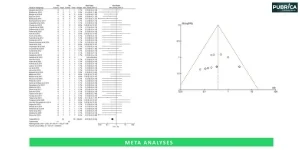
Statistical Analyses
- Data Collection
- AI and ML Services
- Sample Work
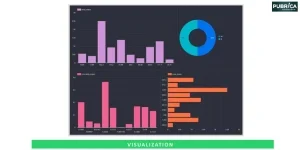
AI and ML Services
- Medical Writing
- Sample Work
Medical Writing
- Research Impact
- Sample Work
Research Impact
- Medical & Scientific Communication
- Sample Work
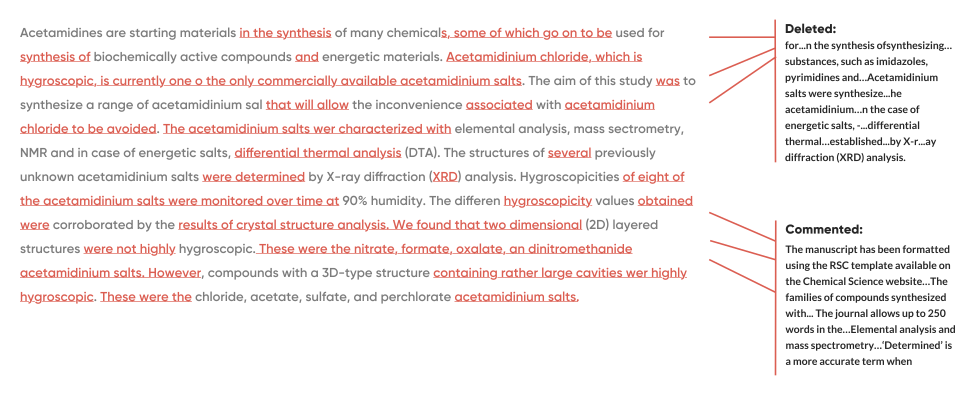
Medical & Scientific Communication
- Medico Legal Services
- Educational Content
- Academic Editorial Services
- Sample Work
Academic Editorial Services
- Educational Editorial Service
-
Education Editorial Services
- Sample Work
Education Editorial Services
-
- Industries
- Subjects
- About Us
- Academy
- Insights
- Contact Us
Evaluating ChatGPT’s Role in Scientific Abstract Writing: Strengths, Challenges, and Future Implications
High-Impact Journals
Interesting topics
Evaluating ChatGPT’s Role in Scientific Abstract Writing: Strengths, Challenges, and Future Implications

Dr.Olivia | Research Writing and Formatting Consultant
27 Mar, 2025
Introduction
Lately, there has been an increased interest towards leveraging the potential of artificial intelligence (AI) within academic writing. Out of other AI tools currently available, recent studies have observed that ChatGPT is extensively used to produce scientific abstracts [1]. ChatGPT has also been used for writing literature reviews, especially systematic reviews.
The purpose of this research is to investigate the effectiveness of ChatGPT in producing scientific abstract related to biomedical research. This research will also evaluate the AI outputs with human-written abstract, including readability, quality, and adherence to regular guidelines [2].
Though AI has the potential to effectively summarize papers with impressive readability, there are concerns regarding precision, adherence to scientific benchmarks, and the scope for biases [3]. Therefore, this research systematically analyses the findings while showcasing the main insights for academic professionals, authors, and researchers as well.
Performance of ChatGPT in Scientific Abstract Generation
1. Comparative Quality Assessment
- The Consolidated Standards of Reporting Trials for Abstracts (CONSORT-A) checklist was used to assess abstracts produced using ChatGPT and was compared with manually written abstracts from high-impact journals through quality assessment [4].
2. Adherence to CONSORT-A checklist
- Adherence with CONSORT-A checklist revealed that both 3.5 and 4.0 versions of ChatGPT underperformed in 10 and 14 out of 18 checklist items, respectively [5].
3. Readability and Clarity
- Though ChatGPT abstracts scored low in terms of quality, abstracts generated by ChatGPT 3.5 were found to be most readable in 62.22% of instances [3].
- Abstracts by ChatGPT conveyed the research findings in a simple manner, which increased accessibility to a wider audience [6].
4. Minimal Errors and Hallucinations
- A low hallucination rate of 0.03 errors in each ChatGPT abstract was noticed, which was substantially lower than rates as recorded through other studies.
- Precise extraction of objectives and conclusions was specifically effective using ChatGPT 3.5 [7].
Figure.1 Abstract generated from ChatGPT 4.0 (Source: Li, D., et al. (2023)
Factors Influencing ChatGPT’s Performance
The limitations noticed in ChatGPT while generating scientific abstracts were based on diverse factors.
1. Comparison with High-Impact Journal Abstracts
- Abstracts used for comparing with ChatGPT abstracts were sourced from journals having a high impact factor. Such journals are notorious for a thorough process of peer review and observance of reporting standards [8].
- On average, human abstracts had an OQS of 66.06%, which was much greater than scores usually recorded in wider journal collections (32.6%-54.1%) [3].
2. Adherence to Guidelines
- Outputs from ChatGPT were not consistent in adhering to CONSORT-A benchmarks, probably owing to its training on varied datasets, where stringent adherence is not necessary [9].
3. Prompt Engineering Limitations
- A uniform prompt was used in the research while producing an abstract to sustain consistency, instead of optimizing the design prompts for enhanced outputs
- Research in the future needs to examine the impact of structured prompts on abstracts that are AI-generated [3].
4. Comparative Model Performance
- It was also observed that version 3.5 of ChatGPT outperformed version 4 while producing abstract, realizing a high score of 15.06% with less hallucination.
- This finding is in tandem with studies that hint that ChatGPT 3.5 is superior in terms of its ability to resolve challenges (reasoning, chain of thoughts) in specific tasks [10].
Strengths of ChatGPT in Academic Writing
Though there were certain restrictions in duplicating abstracts authored by humans, several advantages were also observed:
1. Concise Summarization
Abstracts produced using ChatGPT were structured and concise, presenting the findings in an effective manner [2].
2. Enhanced Readability
The potential of ChatGPT to convert intricate scientific jargon into accessible material could allow the research findings to be widely distributed [6].
3. Potential for Literature Reviews
Research objectives and conclusions were precisely recognized and summed up by AI, rendering it as an impactful tool in literature synthesis and systematic reviews [3].
4. Writing Assistance for Non-Native Authors
Further, ChatGPT could also act as a powerful tool that supports language. This could assist non-native English speakers to refine scientific abstracts while ascribing to formatting and word limits as recommended by journals [11].
Limitations and Risks of AI-Generated Abstracts
Though the application of AI is promising, the research underlined many crucial risks related to AI-generated abstracts:
1. Lack of Detail and Scientific Rigor
Though ChatGPT-generated abstracts are readable, they frequently lack crucial methodological aspects, which affect their adherence to reporting guidelines [12].
2. Potential Bias in AI Training Data
AI models are trained on datasets primarily extracted from well-funded institutions and English language materials, which could introduce biases in content generation [13].
3. Ethical Considerations in AI-Assisted Writing
The spurt in utilising AI within academic circles also raises ethical concerns pertaining to originality, attribution, and the need to disclose the use of AI in research manuscripts [14].
Implications for Future Research and Academic Writing
In view of such findings, it is recommended that researchers and academic professionals:
1. Best Practices for Using AI in Scientific Writing
- Limit to drafting: The use of ChatGPT should be restricted to drafting. However, it must not be used as a substitute for human oversight in scientific writing.
- Manual verification of AI outputs: Content produced using ChatGPT must be critically assessed for accuracy, validity of references, and guideline adherence
- Transparency and ethical disclosure: Journals and academic institutions should mandatorily ask authors to disclose the use of AI while developing manuscripts [15].
2. Future Research Directions
- Evaluate AI’s performance with optimized prompts: Studies need to be carried out to examine whether ChatGPT’s accuracy and adherence to standards can be augmented with refining prompts.
- Assess AI’s utility in systematic reviews: Considering its expertise in summing up conclusions and objectives, additional examination of AI should be conducted to help with systematic reviews and meta-analysis [16].
- Developing AI detection and verification tools: Developing AI detection tools by the research community will help differentiate AI and human content, maintaining integrity in academics [13].
Figure. 2 Quality, Compliance, and Readability of AI vs. Human-Written Abstracts (Source: (Hwang, Taesoon, et al, 2024)).
Connect with us to explore how we can support you in maintaining academic integrity and enhancing the visibility of your research across the world!
Conclusion
As a supportive tool, ChatGPT holds immense promise within scientific writing. This is particularly true when it comes to summing up abstracts, improving readability, and synthesizing literature reviews. Nonetheless, the adherence to reporting benchmarks, accuracy, and scientific rigor warrant human supervision.
Though certain facets of research writing can be streamlined with AI, it can never be a substitute for the critical thinking, expertise, or ethical responsibility needed in academics.
In the future, researchers need to embrace an approach that maintains equilibrium in approaches, harnessing the power of AI but at the same time ensuring rigor in validating content produced by AI for maintaining integrity in scientific research [15].
At Pubrica, our experts assist you in crafting simplified, clear, and effective scientific abstracts. We ensure that your abstract is written with highest standards of accuracy and integrity.